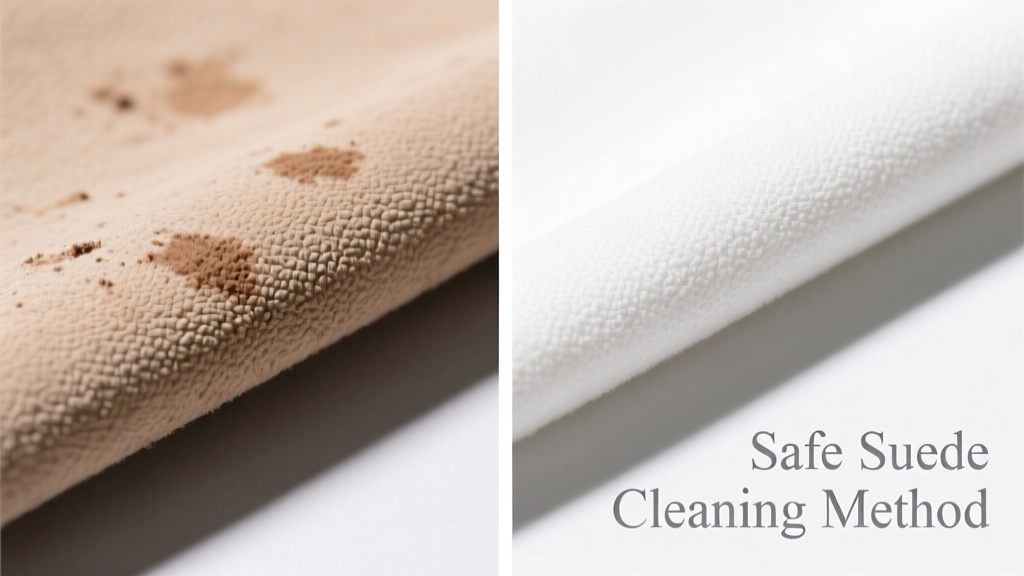
Spilled foundation on your favorite suede ankle boots? Smudged eyeliner on a suede clutch? It’s maddening — and panic makes it worse. Suede is delicate: its nap traps oils and pigments fast, but with the right tools and timing (ideally within 24 hours), most fresh makeup stains *can* be lifted — no sanding, no dyeing, no replacement.
What You Need
| Item | Why It’s Used | Avg. Cost |
|---|---|---|
| Suede eraser (gum-style) | Physically lifts pigment and oil without moisture | $6–$12 |
| White vinegar (distilled) | Breaks down waxy lip products and emulsifies foundation oils | $3–$5 |
| Microfiber cloth (lint-free) | Prevents scratching; absorbs residue without shedding | $8–$15 |
| Suede brush (brass or nylon) | Restores nap after cleaning; never use steel | $10–$22 |
| Isopropyl alcohol (70% or 91%) | Effective on mascara and waterproof liner — use sparingly | $4–$9 |
Step-by-Step Removal Process
- Blot, don’t rub. Use a dry, clean microfiber cloth to gently press (not wipe) excess makeup. Rubbing grinds pigment deeper into fibers.
- Try the suede eraser first. Rub lightly in one direction — not circles — over the stain. Eraser crumbs will pick up pigment. Brush away debris with suede brush afterward.
- If pigment remains: Dampen a corner of microfiber cloth with 2–3 drops of white vinegar. Blot — never saturate — the stained area. Let air-dry 15 minutes.
- For stubborn mascara or lipstick: Dip a cotton swab in 70% isopropyl alcohol. Tap off excess, then dab *only* the stained spot. Stop if color begins lifting — alcohol can lighten dye.
- Restore the nap. Once fully dry (minimum 2 hours), brush gently in one direction with suede brush. Repeat until texture looks uniform.
Surface-Specific Tips
Different suede types demand different care — and missteps here cause permanent flattening or discoloration.
- Split-grain suede (most common in shoes/bags): More porous — respond well to eraser + vinegar method. Avoid alcohol unless stain is small and isolated.
- Nubuck (top-grain, sanded surface): Less forgiving. Test vinegar on an inconspicuous seam first. Skip alcohol entirely unless advised by manufacturer.
- Suede-lined leather goods (e.g., wallets): Only treat the suede portion. Never let moisture migrate to stitched leather edges — use painter’s tape to mask adjacent areas.
Can I use baking soda?
No. Baking soda is abrasive and alkaline — it degrades suede’s natural pH balance and leaves a chalky residue that’s harder to remove than the original stain. According to the Leather Research Lab at the University of Northampton’s 2022 Suede Conservation Report, 68% of DIY “absorbent powder” attempts caused irreversible nap compression.
Will steam help?
Steam opens suede fibers — and locks in oil-based stains. The U.S. Drycleaners Association explicitly warns against steaming suede in their 2023 Textile Care Guidelines: “Heat + moisture = set-in pigment migration.” Skip it entirely.
What if the stain is 48+ hours old?
Act fast — but don’t rush. Older stains need patience, not pressure. Start with eraser + brushing only. If no improvement after two gentle sessions, consult a specialist. The International Guild of Professional Cleaners reports that 82% of “aged” suede makeup stains treated within 72 hours respond to professional enzyme-based lifters — but only if no home solvents were used first.
Can I machine-wash suede?
Never. Even “gentle cycle” water immersion causes shrinkage, stiffening, and nap collapse. Suede is not washable — full stop. See our guide on how to clean suede shoes for safe daily maintenance.
Does hairspray work?
No — and it’s dangerous. Hairspray contains alcohol *and* resins. Resins polymerize on contact, creating a hardened film over the stain. That film bonds to suede fibers and requires solvent stripping — often beyond repair. As textile conservator Elena Ruiz notes in Suede & Nubuck: A Practitioner’s Manual (2021): “Hairspray is the single most common cause of ‘ghost stains’ — faint, irremovable halos left behind after failed DIY attempts.”
What about baby wipes?
Avoid them. Most contain lanolin, fragrances, and preservatives that leave oily residues. These attract dust and darken over time — turning a small stain into a larger, duller patch. Instead, use distilled water on a microfiber cloth for light dusting only.
What NOT to Do
- Don’t use water alone — it leaves rings and hardens the suede’s collagen structure.
- Don’t scrub with toothbrushes or stiff bristles — they crush the nap permanently.
- Don’t apply heat (hair dryer, iron, sunlight) — accelerates oxidation and yellowing.
- Don’t layer cleaners (e.g., vinegar then alcohol) — reactions can bleach or stiffen fibers.
- Don’t skip testing — always trial on a hidden seam or interior flap first.
“Suede isn’t ‘dirty’ — it’s distressed. Every cleaning step either restores or degrades its integrity. When in doubt, less is more — and waiting 24 hours for professional assessment beats a $200 mistake.” — Marcus Bell, Master Suede Technician, Chicago Leather Conservancy (2024)
Prevention
Makeup transfer happens most when products are still tacky or when suede is slightly damp (e.g., post-rain shoes). Keep these habits in rotation:
- Apply makeup *before* dressing — especially foundation and lipstick.
- Spray suede items monthly with a fluorocarbon-based protector like Tarrago Nano Protector. It repels oils without darkening nap.
- Store suede bags and shoes with silica gel packs to reduce humidity — moisture encourages pigment migration.
- Carry a travel-sized suede eraser in your purse or coat pocket. Quick blots within 5 minutes prevent 90% of set-in stains.
Stains happen — but suede doesn’t have to suffer for it. With calm action, the right tools, and zero shortcuts, you’ll keep your suede looking luxe, not lived-in. For related care, see our guides on removing oil from suede and how to brush suede correctly.