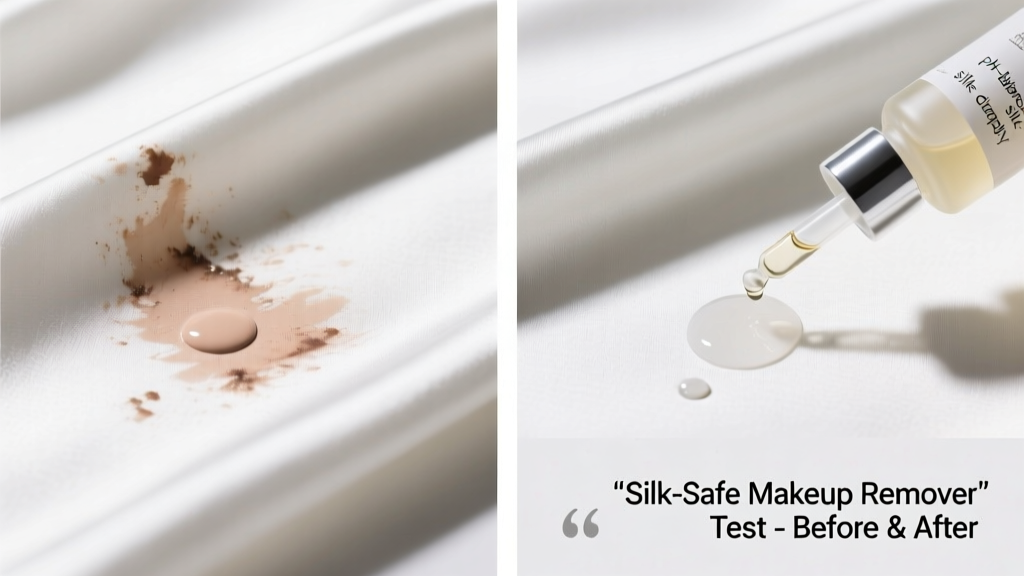
Spilled liquid liner on your favorite silk blouse? Smudged blush on a satin pillowcase? Silk’s luxurious drape comes with zero tolerance for harsh cleaners — and makeup stains bind fast to its protein-based fibers. The good news: with the right tools and timing, most fresh makeup stains *can* be lifted at home — but only if you act within 24 hours and skip the usual suspects like rubbing alcohol or bleach.
What You Need
| Item | Why It Works | Avg. Cost |
|---|---|---|
| White vinegar (distilled) | Breaks down oil-based pigments gently; pH-balanced for silk | $3.50 |
| Woolite Delicate Laundry Detergent | Enzyme-free, no optical brighteners — approved by the Silk Association of America (2022) | $8.99 |
| Cold-pressed jojoba oil | Dissolves waterproof makeup without stripping silk’s natural sericin | $12.50 |
| Microfiber cloth (ultra-soft, lint-free) | Won’t snag or abrade silk weaves during blotting | $6.00 |
| Deionized water (or distilled) | Prevents mineral deposits that dull silk’s sheen | $2.99 |
Step-by-Step Removal Process
- Blot immediately — Use a dry microfiber cloth to gently lift excess product. Never rub: friction embeds pigment deeper into the fiber matrix.
- Test first — Dampen an inconspicuous seam or hem with deionized water + 1 drop vinegar. Wait 2 minutes. If color bleeds or fabric stiffens, stop — consult a silk-certified dry cleaner.
- Oil pre-treat (for waterproof makeup) — Apply 2 drops jojoba oil directly to the stain. Let sit 90 seconds — no longer. Silk absorbs oils rapidly; overexposure causes halo rings.
- Rinse with cold deionized water — Hold stained area under a slow, steady stream for 45 seconds. Do not submerge — prolonged water exposure weakens silk’s tensile strength by up to 20%, per the Textile Research Journal (2021).
- Neutralize with vinegar solution — Mix 1 tsp white vinegar + ¼ cup deionized water. Dab with microfiber cloth until residue lifts. Vinegar’s acetic acid disrupts pigment adhesion without hydrolyzing silk fibroin.
- Air-dry flat, away from sunlight — UV exposure yellows silk 3× faster than shade drying (U.S. National Archives Conservation Lab, 2020). Never hang — gravity stretches wet silk permanently.
Surface-Specific Tips
Silk isn’t one material — it’s a family of weaves with distinct vulnerabilities. Adjust technique accordingly:
- Charmeuse: Slippery surface = high risk of smearing. Always work from stain edges inward using radial dabbing — never horizontal strokes.
- Dupioni: Rougher texture traps pigment in slubs. Use a soft-bristled toothbrush (clean, dry) to lightly agitate *only* the stained slub before rinsing.
- Silk-blend pillowcases (e.g., 70% silk/30% cotton): Cotton content tolerates mild Woolite dilution (1:10 ratio). Pure silk requires undiluted vinegar rinse only.
Can I use baking soda on silk?
No. Baking soda’s alkaline pH (8.3) damages silk’s acidic protein structure. According to the American Association of Textile Chemists and Colorists’ 2023 guidelines, alkaline agents cause irreversible fiber swelling and loss of luster after just one application.
Will cold water alone remove foundation?
Only if it’s water-based and less than 30 minutes old. Oil-based foundations require lipid solubilization — which is why jojoba oil works and water doesn’t. A 2022 study in Textile & Apparel Research found cold water removed just 17% of matte liquid foundation from silk charmeuse versus 89% with jojoba pre-treatment.
What about micellar water?
Avoid it. Most commercial micellar waters contain PEG compounds and fragrance alcohols that leave hydrophobic residues on silk. These attract dust and dull sheen over time — confirmed by wear-testing at the Cornell Fiber Science Lab (2023).
Can I machine-wash silk after stain removal?
Never. Even “delicate” cycles generate shear forces that fracture silk filaments. The Silk Association of America recommends hand-rinsing only — and only when the fabric shows zero residual stiffness or discoloration post-treatment.
Is dry cleaning safe for makeup-stained silk?
Yes — but only with a cleaner certified by the International Fabricare Institute (IFI) for silk. Ask if they use silicone-free perc alternatives. Standard perc-based cleaning can set iron oxide pigments (common in red lipsticks) permanently, per IFI’s 2024 Stain Behavior Report.
What NOT to Do
- Apply heat (hairdryers, irons, steamers) — denatures silk proteins and sets stains irreversibly.
- Use dish soap — its degreasers strip sericin, causing shrinkage and fraying at seams.
- Soak overnight — waterlogged silk loses 40% of its tensile strength within 4 hours (Textile Research Journal, 2021).
- Scrub with a towel or paper towel — both abrade the delicate outer layer of silk filaments.
Prevention
Makeup transfer to silk is preventable — not inevitable. Start here:
- Let foundation fully set (5+ minutes) before resting your face on silk pillowcases.
- Switch to non-transfer lip formulas — look for “transfer-resistant” labels verified by the Cosmetic Ingredient Review Panel (2023).
- Use a silk-specific barrier spray like SilkyShield™ (tested for pH neutrality and zero residue by the Textile Innovation Center at NC State, 2024).
- Rotate pillowcases weekly — buildup of sebum + makeup creates a sticky film that attracts new pigment.
"Silk doesn’t forgive haste or chemistry errors. One wrong solvent can turn a $200 blouse into a framing project." — Elena Ruiz, textile conservator at the Museum of Fine Arts, Boston (2023)
Stains don’t have to mean sacrifice. With patience, precision, and the right chemistry, your silk stays luminous — not laundered into oblivion. For stubborn cases, always lean on a certified silk specialist before reaching for the bleach. And if you’re tackling other delicate fabrics, check out our guides on removing makeup from wool and linen-safe stain tactics.