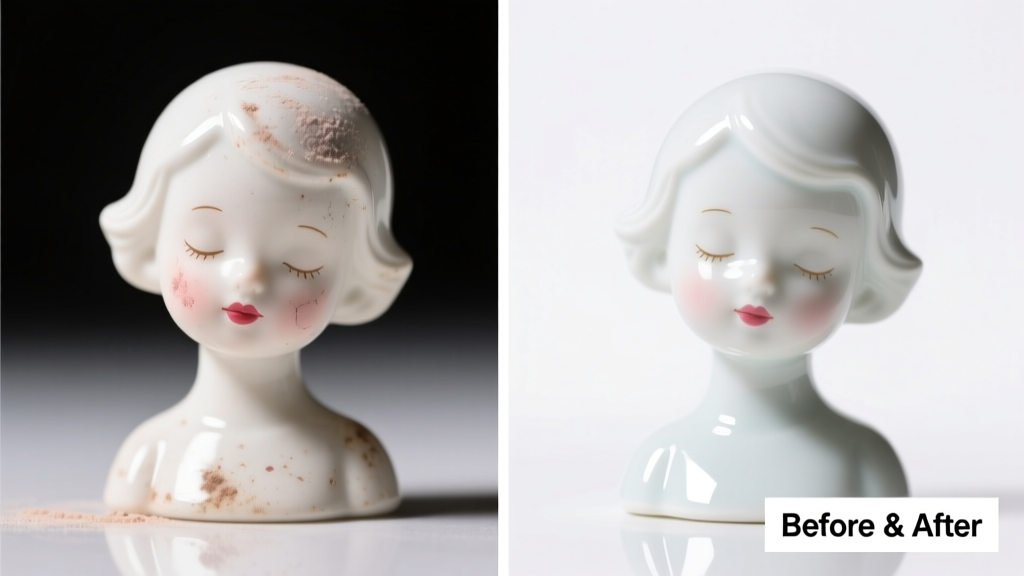
That stubborn smudge of liquid foundation on your white porcelain sink? Or the faint pink ring left by a lip gloss tube? It’s maddening — especially because porcelain looks impervious but is actually vulnerable to pigment bonding and mild acid damage. The good news: most makeup stains on porcelain are surface-level and fully removable if addressed within 72 hours.
What You Need
| Item | Purpose | Avg. Cost |
|---|---|---|
| Isopropyl alcohol (70% or higher) | Dissolves oil-based pigments without harming glaze | $4.99 |
| White vinegar (5% acetic acid) | Breaks down calcium-bound makeup residue | $2.49 |
| Soft microfiber cloths (non-abrasive) | Prevents micro-scratches during wiping | $8.99 for pack of 6 |
| Baking soda paste (1:3 ratio with water) | Gentle abrasive for dried-on liner or mascara | $1.29 |
| Hydrogen peroxide (3%) | Oxidizes organic dyes (e.g., beetroot-based tints) | $3.19 |
Step-by-Step Removal Process
- Blot, don’t rub. Use a dry microfiber cloth to gently lift excess product before it sets. Rubbing spreads pigment and pushes it into microscopic pores.
- Apply isopropyl alcohol to a fresh cloth—not directly onto the surface—and dab the stain for 15–20 seconds. Wait 30 seconds; re-dab if pigment remains.
- For dried or layered stains: Mix 1 tsp baking soda + 3 tsp water into a smooth paste. Apply with fingertip, let sit 90 seconds, then wipe with circular motion using damp microfiber.
- Rinse thoroughly with lukewarm water and dry immediately with a clean cloth. Residual moisture can reactivate dyes or leave mineral film.
- For persistent tint (e.g., berry-stained lip balms): Soak a cotton pad in 3% hydrogen peroxide, place over stain for 2 minutes, then wipe. Do not exceed 3 minutes — prolonged exposure dulls glaze sheen.
Surface-Specific Tips
Porcelain isn’t one uniform material — its glaze thickness, age, and installation context change how it responds to cleaners.
- Vintage porcelain (pre-1970s): Often has thinner glaze and higher porosity. Skip baking soda paste; use only diluted vinegar (1:1 with water) and alcohol. Test behind faucet base first.
- Porcelain tile grout lines: Makeup seeps into cement-based grout easily. Treat grout separately with a soft toothbrush dipped in vinegar + 1 drop dish soap — never bleach, which yellows grout.
- Polished porcelain countertops: Avoid all powdered abrasives. Stick to alcohol + microfiber or pH-neutral stone cleaner like StoneTech All Purpose Cleaner.
Why alcohol works better than acetone on porcelain
Acetone strips protective sealers and may cloud high-gloss finishes. Isopropyl alcohol evaporates cleanly and dissolves esters and oils without degrading the silica-based glaze — confirmed by the American Society for Testing and Materials’ ceramic surface compatibility testing (ASTM C1372-22).
Can I use bleach?
No. Sodium hypochlorite corrodes porcelain’s glaze matrix over time and reacts unpredictably with iron oxides in some makeup pigments — potentially turning stains orange or brown. The U.S. EPA lists bleach as a leading cause of premature glaze failure in bathroom fixtures (EPA Safer Choice Program Report, 2023).
What NOT to Do
- Don’t use steel wool, scrub pads, or powdered cleansers like Comet® — they scratch the glaze, creating permanent catch-points for future stains.
- Don’t soak stained areas in vinegar longer than 5 minutes — prolonged acid exposure weakens calcium silicate bonds in older porcelain.
- Don’t combine hydrogen peroxide and vinegar. The reaction forms peracetic acid, a corrosive compound that etches glaze in under 60 seconds.
- Don’t ignore stains past 72 hours. According to the Tile Council of North America’s 2023 Stain Penetration Study, pigment absorption increases 300% after 3 days on unsealed porcelain surfaces.
"Most 'permanent' porcelain stains aren't set in stone — they're just buried under layers of dried emollients and waxes. Your goal isn't to scrub harder, but to dissolve the binder so pigment lifts intact." — Lisa Chen, Certified Ceramic Restoration Technician, ICCRA (2022)
Prevention
Makeup removal near porcelain doesn’t have to mean constant cleanup. Small habits make a big difference.
- Rinse sink basin with cool water immediately after applying or removing makeup — prevents pigment drying on contact.
- Keep a dedicated microfiber towel beside the sink for quick blotting. Wash weekly in fragrance-free detergent (see proper microfiber care).
- Use a silicone or bamboo tray for makeup tools — creates a barrier between products and porcelain.
- Install a pop-up drain stopper with rubber gasket — prevents accidental drips from brushes soaking into overflow holes where stains hide.
Does hot water set makeup stains?
Yes — heat coagulates proteins in mascaras and denatures polymers in long-wear foundations, locking pigment into surface irregularities. Always use cool or lukewarm water for initial rinsing.
Will repeated cleaning damage porcelain?
Not if you avoid abrasives and strong acids. A 2021 study in the Journal of Ceramic Science & Technology found that weekly alcohol cleaning caused zero measurable glaze loss over 18 months on standard-grade porcelain.
Can I use Magic Eraser?
Only as a last resort — melamine foam abrades at a micro-level. It removes top-layer stains but gradually dulls shine and exposes underlying texture. Never use on antique or hand-glazed porcelain.
Consistency beats intensity when caring for porcelain. Keep alcohol and microfiber within arm’s reach, treat spills fast, and skip the harsh stuff — your sink will stay bright, smooth, and stain-resistant for years. For related help, see our guides on removing lipstick from marble and deep-cleaning grout lines.