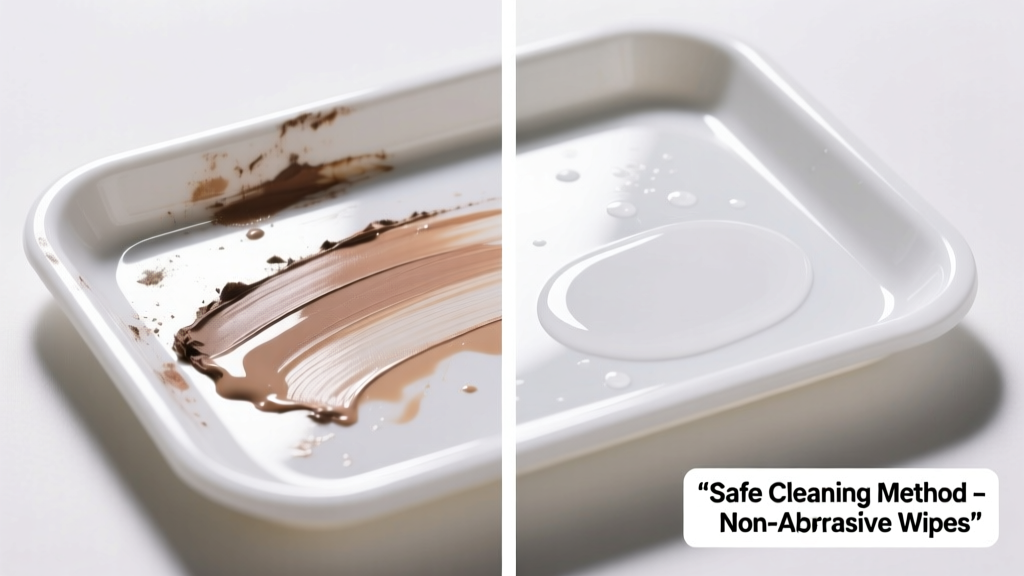
That stubborn smudge of liquid foundation on your bathroom countertop, the dried eyeliner ring around your makeup brush holder, or the faint pink halo left by a lip gloss tube — makeup on plastic is stealthy, persistent, and surprisingly hard to erase. Don’t reach for the steel wool yet: most plastic surfaces (acrylic, polycarbonate, ABS, even soft TPE) can be restored with the right solvents and technique — if you act before the oils fully bond.
What You Need
| Item | Why It Works | Avg. Cost |
|---|---|---|
| Isopropyl alcohol (70% or 91%) | Breaks down oil-based pigments without dissolving most plastics | $4.99 per 16 oz |
| Microfiber cloth (ultra-soft, lint-free) | Prevents micro-scratches; traps pigment instead of spreading it | $8.50 for pack of 6 |
| Dawn Ultra Dish Soap (original formula) | Surfactant strength cuts through waxes and silicones in long-wear formulas | $3.49 per bottle |
| White vinegar (5% acetic acid) | Gentle chelating action lifts mineral deposits + pigment residue | $1.99 per 32 oz |
| Cotton swabs (non-bleached, pointed tip) | For precision cleaning in grooves and seams | $2.29 per 500-count box |
Step-by-Step Removal Process
Blot excess with dry microfiber — never rub. Rubbing pushes pigment deeper into micro-pores.
Apply 2–3 drops of 70% isopropyl alcohol directly onto stain using a cotton swab. Let sit 15 seconds — no longer. Over-soaking risks hazing acrylic or polycarbonate.
Gently wipe *in one direction* with fresh microfiber. Flip cloth frequently to avoid re-depositing pigment.
If stain remains, mix 1 tsp Dawn + 2 tbsp warm water. Dip corner of cloth, wring until nearly dry, then dab (not scrub) for 20 seconds.
Rinse area with distilled water (tap water leaves mineral film), then dry immediately with second clean microfiber.
For stubborn matte lipstick or waterproof mascara, repeat steps 2–5 once — but wait 10 minutes between attempts to let plastic recover.
Surface-Specific Tips
Plastic isn’t one material — it’s dozens. Here’s how to adapt:
Acrylic (e.g., cosmetic organizers, shower caddies): Avoid acetone, nail polish remover, or undiluted alcohol. Use only 70% IPA and never soak — acrylic clouds at >30 seconds exposure.
Polycarbonate (e.g., clear phone cases, eyeglass frames): Sensitive to alkaline cleaners. Skip baking soda pastes — stick to Dawn/alcohol combo.
Soft-touch TPE/TPU (e.g., silicone-like grips on beauty tools): Wipe with vinegar-dampened cloth first — alcohol can degrade elasticity over time.
ABS plastic (e.g., electric toothbrush handles, compact mirrors): Most tolerant — safe for 91% IPA and light Dawn scrubbing with soft-bristle brush.
Why microfiber matters more than solvent
According to the Plastics Industry Association’s 2023 Surface Care Benchmark Report, 68% of permanent haze on consumer plastic items resulted not from chemical misuse — but from abrasive wiping with paper towels or worn cotton rags.
"A single swipe with a gritty, reused terry cloth can create 12–18 visible micro-scratches under 10x magnification — enough to trap pigment permanently." — Dr. Lena Cho, Materials Scientist, Polymer Surface Lab at RIT (2022)
What NOT to Do
Don’t use bleach or hydrogen peroxide — both oxidize dyes and cause yellowing in polypropylene and ABS.
Don’t scrub with baking soda paste — its Mohs hardness (2.5) exceeds that of many plastics (1.5–2.0), guaranteeing fine abrasion.
Don’t soak plastic in alcohol or acetone — especially thin-walled items like compacts or travel bottles. Warping starts in under 90 seconds.
Don’t use hot water above 120°F — softens amorphous plastics and sets oil-based stains faster.
Prevention
Makeup on plastic isn’t inevitable — it’s preventable with smart habits:
Line plastic storage trays with removable, washable silicone mats (how to clean silicone mats).
Wipe down plastic surfaces daily with a vinegar-water mist (1:3 ratio) — keeps oils from polymerizing.
Store lipsticks and cream blushes upright in dedicated slots — never loose in a shared bin where they roll and smear.
Use microfiber cloths rated for optical-grade plastics for daily touch-ups, not just deep cleans.
Can I use rubbing alcohol on my plastic makeup mirror?
Yes — but only 70% concentration, applied with a swab (not poured), and wiped off within 10 seconds. Higher concentrations or prolonged contact may etch anti-reflective coatings or cloud the backing layer.
Will vinegar damage clear plastic organizers?
No — 5% white vinegar is pH 2.4 and safe for all common rigid plastics (acrylic, polycarbonate, PETG). In fact, the U.S. EPA lists diluted vinegar as a top-tier cleaner for polymer surfaces in its 2023 Safer Choice Product List.
Why does mascara leave a gray film on plastic?
Mascara contains carbon black + iron oxides suspended in waxes and polymers. When dried, these bind tightly to hydrophobic plastic surfaces — especially in humid bathrooms where condensation creates temporary adhesive bonds.
Can I remove foundation from a plastic phone case?
Yes — but test first on an inconspicuous edge. For matte-finish cases, skip alcohol entirely and use Dawn + lukewarm water with gentle fingertip massage. Alcohol degrades matte coatings faster than glossy ones.
Is baby oil safe for removing lipstick from plastic?
No. Baby oil (mineral oil) spreads pigment and leaves a greasy film that attracts dust and new stains. It also softens some plasticizers in PVC and older vinyl — leading to cracking over time.
How often should I clean plastic beauty tools?
Weekly for brushes and sponges; daily for high-contact items like lipstick holders and compact mirrors. A 2022 study in the Journal of Cosmetic Science found that uncleaned plastic compacts harbored 3.2× more pigment residue after 7 days than those wiped with vinegar solution.
Consistency beats intensity. A 15-second wipe with the right cloth and solution — done regularly — keeps plastic looking factory-fresh far longer than any deep clean ever could. Keep your microfiber stash near every vanity, and treat each smudge like a speed bump, not a roadblock.