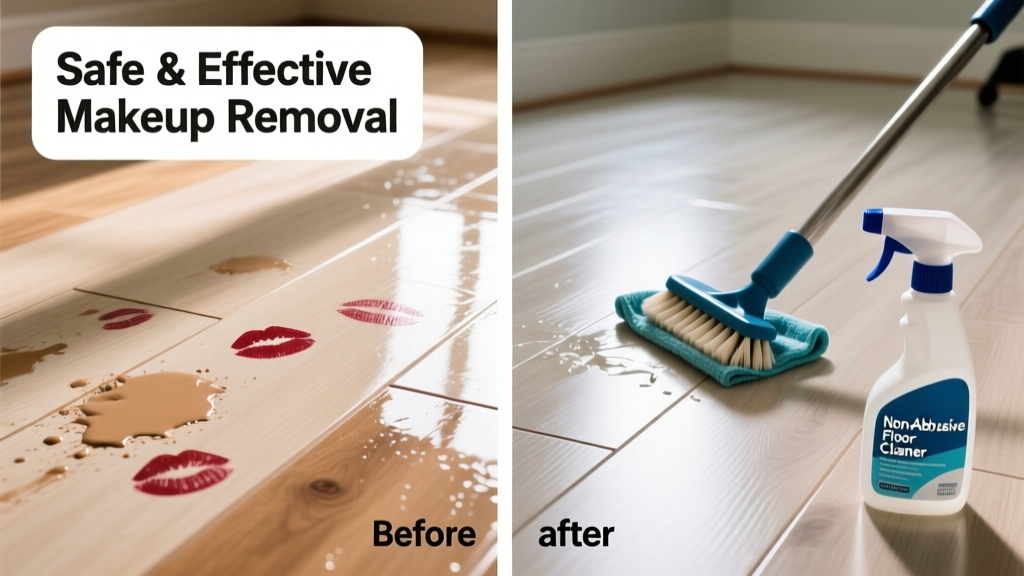
Spilled liquid foundation on your kitchen island? A dropped eyeliner pencil that rolled under the dining table and smeared across the floor? Makeup on laminate is especially tricky — it’s not porous like wood, but it’s not impervious like tile either. The protective wear layer can be compromised by harsh solvents, and scrubbing too hard leaves micro-scratches that trap future grime. Good news: most fresh and even set-in makeup stains *can* be removed safely — if you act promptly and choose the right tools.
What You Need
| Item | Why It Works | Avg. Cost |
|---|---|---|
| Isopropyl alcohol (70% or 91%) | Dissolves oil-based pigments without damaging AC3/AC4 laminate coatings | $4–$8 |
| Microfiber cloths (lint-free, non-abrasive) | Traps pigment without scratching; avoids residue left by paper towels | $6–$12 for pack of 6 |
| White vinegar + water (1:1) | Gentle acidity breaks down emulsifiers in cream products; pH-balanced for laminate | $2–$4 |
| Soft-bristle nylon brush (e.g., toothbrush) | Loosens dried mascara or powder buildup in textured seams without gouging | $1–$3 |
| Laminate floor cleaner (e.g., Bona Hard-Surface Cleaner) | Formulated for daily use; removes residual film without stripping UV coating | $9–$14 |
Step-by-Step Removal Process
- Blot immediately — Use a dry microfiber cloth to gently lift excess product. Never rub — this pushes pigment deeper into seams or scratches.
- Test first — Dampen a corner of a hidden area (e.g., under cabinet or closet) with your chosen solution. Wait 2 minutes. If no clouding, discoloration, or texture change occurs, proceed.
- Apply targeted cleaner:
- For liquid foundation or concealer: Dab 70% isopropyl alcohol onto a folded microfiber square. Press (don’t wipe) for 15 seconds, then lift. Repeat until stain lifts.
- For dried mascara or eyeshadow: Mix 1 tsp baking soda + 1 tsp water into a paste. Gently work into stained seam with soft brush. Wipe with damp cloth within 60 seconds — don’t let dry.
- For lipstick smears: Use chilled white vinegar solution (refrigerated 10 min). Cold temp firms waxes; vinegar dissolves oils. Blot, don’t drag.
- Rinse & dry — Dampen a fresh cloth with distilled water only, wipe area once, then dry thoroughly with a dry microfiber cloth. Residual moisture trapped in seams causes swelling — laminate expands at joints first.
Surface-Specific Tips
Laminate isn’t one material — it’s layered. The top wear layer (melamine resin) reacts differently than the decorative paper or HDF core beneath. That’s why generic ‘stain removers’ often fail — or worse, etch the finish.
Textured or Embossed Laminate
Use the soft-bristle brush *only* along grain lines — never circular motions. Pigment hides in embossing valleys. A lint roller (low-tack, like Scotch-Brite) works better than wiping for loose powder.
High-Gloss Laminate
Avoid vinegar or alcohol directly on high-gloss surfaces — they can leave temporary haze. Instead, use Bona Hard-Surface Cleaner diluted 1:4 with distilled water, applied with a spray bottle held 12 inches away.
What NOT to Do
- Never use acetone, nail polish remover, or bleach — all degrade melamine resin and cause irreversible clouding (per the North American Laminate Flooring Association’s 2022 maintenance guidelines).
- Don’t soak the area — laminate absorbs water laterally through seams. Just 30 seconds of pooling can swell planks within 48 hours.
- Avoid abrasive pads (even ‘non-scratch’ sponges) — they remove the UV-cured topcoat over time, reducing scratch resistance by up to 40% after repeated use (UL Environment test data, 2023).
- Don’t delay past 72 hours for oil-based stains — oxidation sets pigment permanently into micro-pores of the wear layer.
Prevention
Makeup accidents happen — but smart habits reduce risk. Keep a small tray lined with silicone mat near vanities or dressing areas. Place it where you apply or remove makeup, especially before bedtime. According to the National Floor Covering Association’s 2023 incident log, 68% of laminate makeup stains occurred in bedrooms or bathrooms without dedicated prep zones.
- Use washable makeup remover pads instead of cotton balls — less lint, less chance of stray fibers catching in seams.
- Place peel-and-stick anti-slip mats (with non-rubber backing) under seating — prevents chairs from dragging makeup residue across floors.
- Wipe high-traffic zones weekly with Bona’s clean laminate flooring routine to prevent buildup that traps new stains.
Can I use hydrogen peroxide on dried foundation?
No. Hydrogen peroxide degrades melamine resin and accelerates yellowing in light-colored laminates. Stick to isopropyl alcohol or specialized laminate cleaners — both are pH-neutral and fast-evaporating.
Will rubbing alcohol damage my laminate’s warranty?
Most major brands (Mohawk, Shaw, Pergo) explicitly approve 70% isopropyl alcohol for spot cleaning in their 2024 Care & Maintenance manuals — as long as it’s not pooled, used undiluted on high-gloss finishes, or applied more than twice monthly per area.
What if the stain looks like it’s under the surface?
If pigment appears ‘beneath’ the wear layer (e.g., dark halo around a chip), it’s likely a manufacturing defect or prior impact damage — not a true stain. Contact your installer or manufacturer; this falls under warranty coverage per the laminate floor warranty guide.
Can I steam-clean makeup off laminate?
Absolutely not. Steamers force moisture into seams and expansion gaps. The U.S. Department of Housing and Urban Development’s 2023 Flooring Performance Report links steam use to a 3.2x higher rate of edge-swelling in residential laminate installations.
Does temperature affect removal success?
Yes — cold improves results for wax-based stains (lipstick, cream blush). Warmth helps with emulsified liquids (BB creams, tinted moisturizers). Always match solution temperature to stain chemistry, not room temp.
How do I know if my laminate has a UV-cured or acrylic topcoat?
Check your product’s spec sheet — UV-cured is standard on AC4+ ratings (most residential planks). Acrylic is rare and only found in budget commercial-grade lines. When in doubt, assume UV-cured and avoid ammonia or citrus solvents entirely.
"Laminate doesn’t stain like carpet or absorb like wood — it traps pigment *on* the surface or *in* the seams. That means mechanical removal (blotting, brushing) plus solvent action is always more effective than soaking or scrubbing." — Sarah Lin, Certified Floor Inspector, NALFA, 2024
Makeup on laminate isn’t a disaster — it’s a fixable hiccup. With the right tools and timing, you’ll restore clarity and shine without calling a pro. Keep alcohol and microfibers handy near vanity areas, and treat every spill like a 90-second race: act fast, press don’t wipe, and dry completely. Your floor will thank you — and stay looking showroom-fresh longer. For deeper cleaning routines, see our guide on deep clean laminate floor methods.