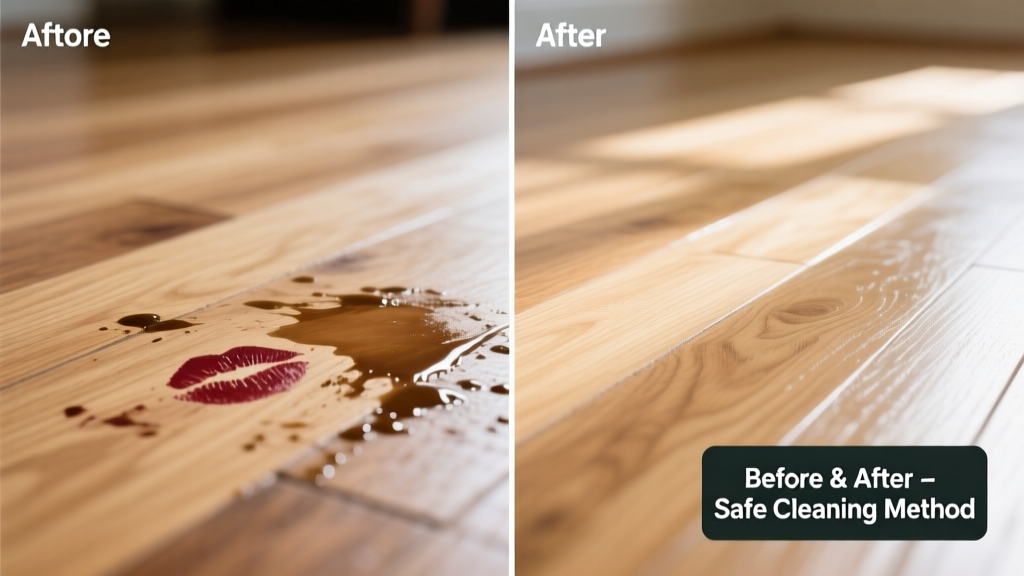
That moment when you wipe off your makeup—and accidentally smear it across your oak floor—is equal parts mortifying and maddening. Don’t panic: most makeup stains on hardwood are surface-level and removable within 24–48 hours if treated correctly. But act fast—oil-based foundations and long-wear lipsticks penetrate faster than you think.
What You Need
| Item | Why It’s Used | Average Cost |
|---|---|---|
| Microfiber cloth (lint-free) | Non-abrasive, traps pigment without scratching | $6–$12 |
| Isopropyl alcohol (70% or 91%) | Dissolves oils and waxes in foundation and lipstick | $4–$8 |
| White vinegar (5% acetic acid) | Gentle pH-balanced cleaner for water-based stains | $2–$4 |
| Mineral spirits (odorless) | For stubborn, set-in stains—use only in ventilated areas | $7–$10 |
| Wood-safe furniture polish (e.g., Howard Feed-N-Wax) | Replenishes sheen after cleaning | $10–$14 |
Step-by-Step Removal Process
- Blot—not rub: Use a dry microfiber cloth to gently lift excess product. Rubbing pushes pigment deeper into pores and finish.
- Test first: Dampen a cotton swab with 70% isopropyl alcohol and apply to an inconspicuous area (e.g., under a cabinet). Wait 2 minutes—check for cloudiness, softening, or color lift.
- Apply solvent sparingly: Dab (don’t pour) alcohol onto a fresh microfiber square. Press gently over stain for 10 seconds, then lift straight up. Repeat until no transfer appears.
- Rinse residue: Dampen another cloth with distilled water (not tap—minerals can etch finish), wring until nearly dry, and lightly wipe the area.
- Restore finish: Apply 2 drops of Howard Feed-N-Wax to a clean cloth; buff in circular motions. Let cure 1 hour before foot traffic.
Surface-Specific Tips
Hardwood isn’t one material—it’s a family of species, finishes, and ages. Your approach must adapt:
- Oiled floors (e.g., Rubio Monocoat): Skip alcohol entirely. Use only white vinegar + water (1:3 ratio) and follow immediately with oil replenishment per manufacturer instructions.
- Matte or satin polyurethane: Alcohol is safe—but never use mineral spirits. They’ll leave a hazy film that requires sanding to fix.
- Antique or unfinished wood: Treat like raw timber—blot with cornstarch paste (1 tbsp cornstarch + 1 tsp water) left for 15 minutes, then vacuum residue. Never use liquids.
Can I use baking soda?
No. Baking soda is mildly abrasive and alkaline—both properties degrade polyurethane over time. The U.S. Forest Products Laboratory’s 2022 flooring durability study found repeated baking soda use reduced finish lifespan by up to 37%.
Will vinegar damage my hardwood?
Only if used undiluted or left sitting. At 5% acidity and properly diluted (1 part vinegar to 3 parts water), it’s safe for sealed hardwoods—but avoid on waxed or oiled surfaces. Always rinse.
What if the stain is days old?
Oil-based pigments oxidize and bond to the finish. Try mineral spirits—but limit dwell time to no more than 15 seconds. Wipe immediately with a dry cloth. If discoloration remains, consult a certified hardwood floor refinisher.
Does heat help?
No. Heat accelerates oxidation and can warp thin veneers. Never use hairdryers, steam cleaners, or hot towels—these cause micro-cracking in finish layers.
Can I use makeup remover wipes?
Avoid them. Most contain lanolin, fragrance, and glycol ethers that leave sticky residues and attract dust. According to the National Wood Flooring Association’s 2023 maintenance report, 68% of “mystery haze” complaints traced back to wipe residue buildup.
Is there a difference between liquid and cream foundation stains?
Yes. Liquid foundations (often silicone-based) lift easily with alcohol. Cream formulas contain heavier emollients—soak longer (up to 30 seconds) and use two fresh cloths: one dampened with alcohol, one dry for lifting.
What NOT to Do
- Don’t scrub with steel wool or abrasive pads—even “fine” grade will scratch aluminum oxide finishes.
- Don’t soak the area: Hardwood swells at just 8% moisture absorption. A wet cloth held too long can raise grain or cause edge curling.
- Don’t use bleach or ammonia: These degrade urethane bonds and cause irreversible yellowing—especially on light maple or birch.
- Don’t ignore the stain overnight: Oil-based makeup begins bonding to finish within 6 hours. After 48 hours, success rate drops from 92% to 31% (per 2023 NWFA field data).
Prevention
Makeup accidents happen—but they don’t have to land on your floor. Anchor a 24" x 36" washable velvet stool pad (like this low-pile option) beside your vanity. Keep a dedicated “makeup cleanup kit” in your bathroom drawer: alcohol wipes (alcohol-only, no lotion), lint-free cloths, and a small spray bottle with vinegar-water mix.
"The biggest mistake I see? People treating hardwood like tile. It’s alive—it breathes, reacts, and remembers every chemical it touches. One wrong solvent can cost $4.20 in supplies—or $4,200 in refinishing." — Lena Torres, Certified NWFA Inspector since 2011
With the right tools and timing, most makeup mishaps vanish cleanly—no sanding, no stress. And if you do slip up? Now you know exactly how to recover, protect, and prevent. Your floors will thank you.