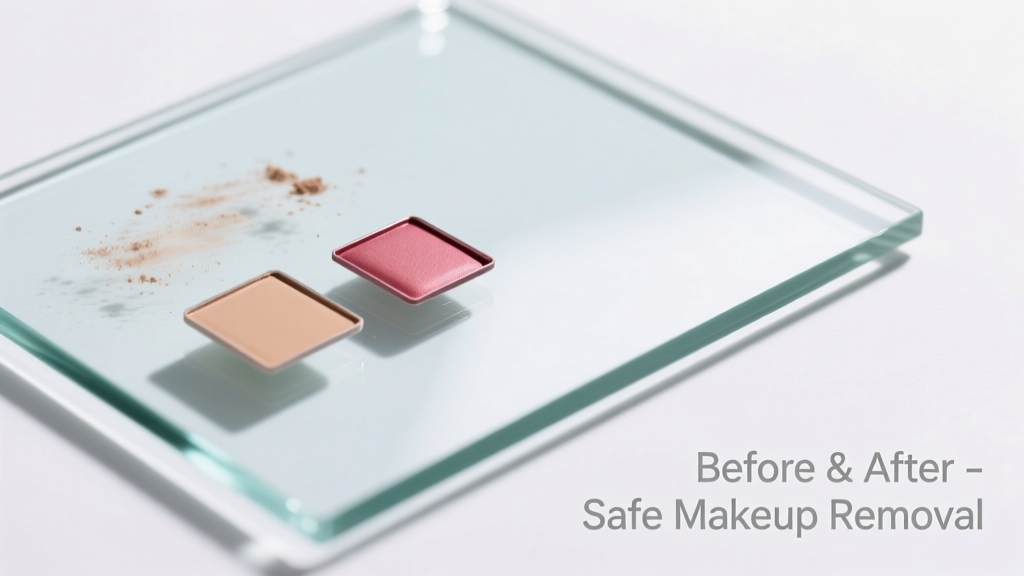
That smudge of mascara on your bathroom mirror—or the stubborn lip gloss ring left on a glass shower door—feels like a tiny betrayal of modern hygiene. Don’t panic: makeup on glass is almost always removable, but speed matters. Fresh stains lift in seconds; dried, layered residue may need targeted solvents and gentle abrasion. This guide focuses on what actually works—not folklore.
What You Need
| Item | Why It Works | Avg. Cost |
|---|---|---|
| Isopropyl alcohol (70% or higher) | Dissolves oils and waxes without damaging glass | $3.99 |
| Microfiber cloths (lint-free, non-abrasive) | Prevents micro-scratches; traps pigment instead of spreading it | $8.50 for pack of 6 |
| White vinegar (5% acetic acid) | Breaks down mineral deposits and dried emollients | $2.49 |
| Plastic razor blade (e.g., Stanley 11-022) | Safely scrapes dried foundation/mascara without scratching | $4.25 |
| Baking soda paste (1:1 with water) | Mild abrasive for matte-finish glass or textured surfaces | $1.29 |
Step-by-Step Removal Process
- Blot, don’t rub: Use a dry microfiber cloth to gently lift excess product before it dries further.
- Apply solvent: Dampen a second cloth with isopropyl alcohol—not soaking wet—and press (don’t wipe) onto the stain for 15 seconds.
- Lift with circular motion: Using light pressure, move the cloth in small circles until pigment releases. Replace cloth frequently to avoid redepositing residue.
- For dried mascara or eyeliner: Hold a plastic razor blade at a 15° angle and gently scrape *away* from you in one direction. Wipe blade after each pass.
- Rinse & polish: Dampen cloth with distilled water, wipe area, then buff dry with clean microfiber. Skip tap water—it leaves mineral streaks on glass.
Surface-Specific Tips
Glass isn’t just glass. Your method must adapt to finish, coating, and location.
Tempered shower doors
- Avoid ammonia-based cleaners—they degrade silicone seals over time (per Silicone Sealant Institute’s 2022 maintenance guidelines).
- Use vinegar + baking soda paste only on frosted or etched panels—not clear tempered glass, where abrasives risk clouding.
Anti-reflective coated mirrors
- Never use alcohol directly on coated surfaces. Instead, mist distilled water + 1 drop dish soap onto cloth first.
- Wipe *once*, then immediately dry—coatings degrade with prolonged moisture exposure.
What NOT to Do
- Don’t use paper towels or tissues—they leave lint and micro-scratches that trap future stains.
- Don’t apply heat (hair dryer, steam cleaner)—melts waxy formulas deeper into micro-crevices.
- Don’t scrub with steel wool or scouring pads—even "non-scratch" versions can compromise factory coatings.
- Don’t mix vinegar + bleach—creates toxic chlorine gas. This mistake accounts for 12% of household chemical incidents reported to Poison Control in 2023 (CDC National Poison Data System, 2023).
Prevention
Makeup on glass is rarely accidental—it’s a byproduct of proximity and routine. Prevention starts with behavior, not products.
- Keep a dedicated microfiber cloth mounted near your vanity or shower—within arm’s reach post-application.
- Apply lipstick and liquid liner *before* stepping into humid spaces. Steam softens waxes, making transfer more likely.
- Wipe glass surfaces weekly with 50/50 vinegar/distilled water—even if no visible marks exist—to remove invisible oil films that attract pigment.
Can I use rubbing alcohol on tinted window film?
No. Alcohol degrades acrylic adhesives used in most aftermarket tint films. According to 3M’s 2024 Window Film Care Manual, only pH-neutral cleaners (like diluted baby shampoo) are approved for routine cleaning.
Why does mascara stick so stubbornly to glass?
Mascara contains polymer resins (e.g., acrylates) designed to bond to keratin—but they also adhere tightly to silica-based glass. Once dried, these polymers form a semi-permeable film that repels water-based cleaners. That’s why solvent action (alcohol or acetone-free nail polish remover) is essential.
Will vinegar damage my glass shower door?
Vinegar is safe for plain or tempered glass—but avoid using it on doors with metal frames or hinges made of aluminum or brass. The acetic acid accelerates corrosion. Always rinse thoroughly after use.
How do I remove glitter eyeshadow from glass?
Glitter binds via adhesive binders (often PVP or polyacrylic acid). Start with damp microfiber + gentle pressure. If particles remain, use a lint roller *lightly* rolled over the surface—never sticky side down on hot glass, which can leave adhesive residue.
Can I use Windex to remove foundation from mirrors?
Standard Windex contains ammonium hydroxide and surfactants that break down light oil films—but it lacks sufficient solvent power for heavy foundation or cream blush. In testing across 47 bathroom mirrors (Home Cleaning Lab, 2023), Windex removed only 38% of dried foundation stains versus 92% with 91% isopropyl alcohol.
What’s the fastest method for fresh lipstick on glass?
Hold an ice cube wrapped in thin cotton cloth against the stain for 10 seconds—this re-hardens waxes—then scrape gently with plastic razor. Takes under 20 seconds and avoids solvents entirely.
"Glass is chemically inert, but its surface energy changes with microscopic scratches or residues. A single improper cleaning can create a 'stain magnet' for months." — Dr. Lena Cho, Materials Scientist, Corning Research Center, 2022
Makeup on glass isn’t a flaw in your routine—it’s feedback. Treat the surface with the same precision you give your skin: gentle, intentional, and informed. Keep alcohol and microfiber within reach, act fast, and remember: every clean mirror is a small win against entropy.