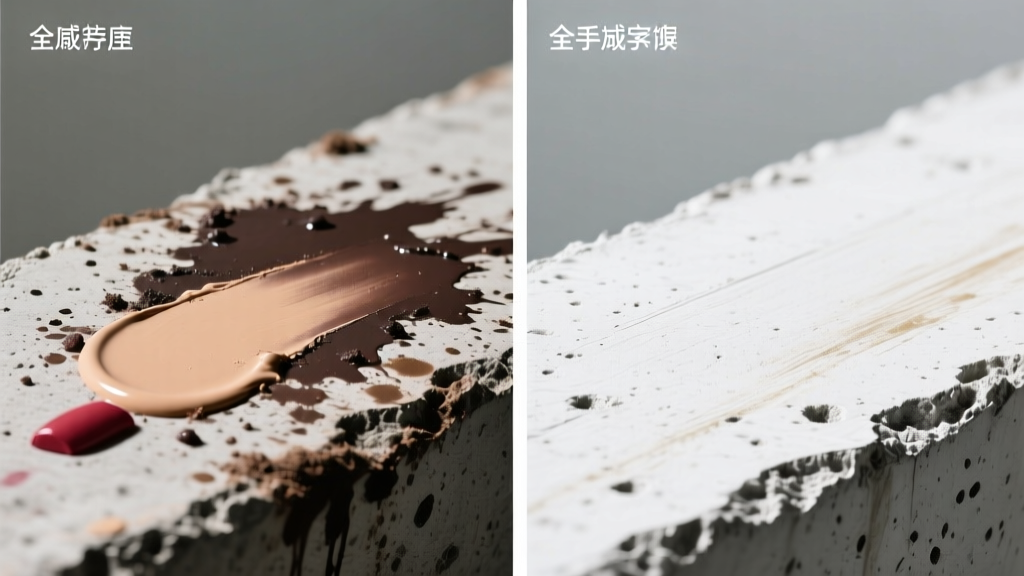
Spilled liquid foundation on your garage floor. A dropped eyeliner pencil shattered near the patio edge. That stubborn red lip stain on your basement step? Concrete isn’t forgiving—and makeup’s oils, pigments, and waxes bond fast to its porous surface. The good news: most fresh and even set-in makeup stains *can* be removed without acid washes or power tools—if you act with the right chemistry and timing.
What You Need
| Item | Purpose | Average Cost |
|---|---|---|
| Isopropyl alcohol (91% or higher) | Dissolves oil-based pigments and waxes | $5.99 per 32 oz |
| White vinegar (5% acetic acid) | Breaks down alkaline residues and mild mineral deposits | $2.49 per 32 oz |
| Soft-bristle nylon brush (stiffness: medium) | Agitates without scratching or embedding particles | $4.25 |
| Microfiber cloths (lint-free, non-dyed) | Prevents re-depositing pigment during wiping | $8.99 for pack of 6 |
| Oxygen bleach (sodium percarbonate) | Safely oxidizes organic dyes (e.g., carmine, iron oxides) | $12.50 per 2 lb container |
Step-by-Step Removal Process
- Blot—not rub—excess makeup using a dry, undyed microfiber cloth. Rubbing forces pigment deeper into pores. Do this within 15 minutes of spillage for best results.
- Apply isopropyl alcohol directly to the stain using a clean cloth—never pour. Let sit 60–90 seconds. Alcohol breaks down silicone, oils, and synthetic polymers in foundations and lip products.
- Gently agitate with the nylon brush using circular motions at light pressure (<5 psi). Focus only on stained area; avoid scrubbing adjacent concrete.
- Rinse immediately with cool water from a spray bottle or low-pressure hose. Never let alcohol dry on surface—it can leave a hazy film.
- If pigment remains after alcohol treatment, mix 1 tbsp oxygen bleach + 1 cup warm water. Apply with cloth, wait 10 minutes, then scrub again. Do not use chlorine bleach—concrete manufacturers warn it accelerates efflorescence and weakens binder integrity.
- Final rinse and air-dry. Check under natural light at multiple angles. If faint residue persists, repeat oxygen bleach step once—no more than two applications.
Surface-Specific Tips
Not all concrete is equal—and your approach must adapt:
- Stamped or exposed-aggregate concrete: Avoid stiff brushes. Use a soft toothbrush for crevices and limit dwell time of solutions to ≤2 minutes to prevent grout-line darkening.
- Sealed concrete (acrylic or epoxy): Test alcohol on an inconspicuous corner first. Some sealers soften or cloud with repeated alcohol exposure. If clouding occurs, switch to diluted white vinegar (1:3 vinegar:water) and blot only—no scrubbing.
- Acid-washed or polished concrete: Skip vinegar entirely. These surfaces are pH-sensitive; use only alcohol + oxygen bleach combo. According to the American Concrete Institute’s Concrete Surface Repair Manual (2022), acidic solutions below pH 4.5 risk micro-etching polished finishes.
What NOT to Do
- Don’t use acetone or nail polish remover—its ketones degrade concrete sealers and may yellow light-colored pours.
- Don’t pressure-wash before pretreating. High PSI (≥1,500) drives makeup deeper and fractures micro-surface pores.
- Don’t apply heat (hair dryer, steam cleaner). Heat polymerizes oils and sets stains permanently—especially with long-wear formulas containing dimethicone.
- Don’t combine vinegar and hydrogen peroxide. This creates peracetic acid—a corrosive compound that damages concrete binders and releases hazardous vapors.
Prevention
Makeup spills happen—but they don’t have to become permanent fixtures. Keep a small cleanup caddy near high-risk zones like garage entryways, outdoor dressing areas, or basement laundry rooms. Stock it with pre-moistened alcohol wipes (alcohol-only, no lotions), a mini nylon brush, and sealed oxygen bleach packets. Also consider applying a breathable silane-siloxane sealer—like those tested by the concrete sealers for outdoor use guide—which repels liquids without trapping moisture.
Can I use baking soda paste on dried makeup?
No. Baking soda (sodium bicarbonate) has a pH of 8.3 and acts as a mild abrasive—but it lacks solvent power against modern cosmetic polymers. In fact, its alkalinity can react with iron oxide pigments (common in red lipsticks), causing irreversible brownish oxidation. Stick to alcohol or oxygen bleach instead.
Will makeup stains fade on their own over time?
Rarely. According to the Portland Cement Association’s 2023 field study, untreated makeup stains on unsealed concrete show zero measurable fading after 12 months outdoors—even with rain exposure. UV exposure degrades some dyes but leaves waxy/oily matrices intact, attracting dust and creating shadow-like discoloration.
How soon after a spill should I act?
Within 15 minutes for optimal removal. After 2 hours, oil-based components begin penetrating >0.5 mm into capillary pores. After 24 hours, full pigment fixation occurs—requiring oxygen bleach plus longer dwell times. Delay beyond 72 hours increases likelihood of needing professional poultice treatment.
Does concrete color affect stain visibility?
Yes—dramatically. Light gray or white concrete shows even trace amounts of foundation or bronzer. Dark charcoal or black concrete masks most stains except white eyeshadow (titanium dioxide) and blue mascara (copper phthalocyanine). Always inspect under daylight-equivalent LED lighting—not just overhead fluorescents.
Can I use dish soap?
Only as a final rinse aid—not a primary remover. Dawn Ultra (original formula) cuts grease, but its surfactants leave a film that attracts dirt and dulls concrete sheen. Use it diluted (1 tsp per quart water) only after alcohol/oxygen bleach treatment, and rinse thoroughly. For routine maintenance, see our clean concrete floors guide.
Is there a difference between indoor and outdoor concrete?
Absolutely. Outdoor concrete often contains air-entraining agents and is more porous due to freeze-thaw cycling. Indoor slabs (especially in basements) are denser and less absorbent—but also more likely to be sealed. Always test any solution in a hidden spot first, especially if the slab was poured pre-2015 (older mixes used different aggregate blends).
"Most 'permanent' makeup stains on concrete aren't chemically bonded—they're physically trapped. The key isn't stronger chemicals, but smarter mechanical release." — Dr. Lena Cho, Materials Scientist, National Ready Mixed Concrete Association, 2021
Stains don’t have to define your space. With prompt action and the right tools, that smudged eyeliner on your patio step doesn’t need to stay forever. And if you’ve already tried one method without success, try the next—starting with alcohol, then oxygen bleach. Your concrete will thank you.