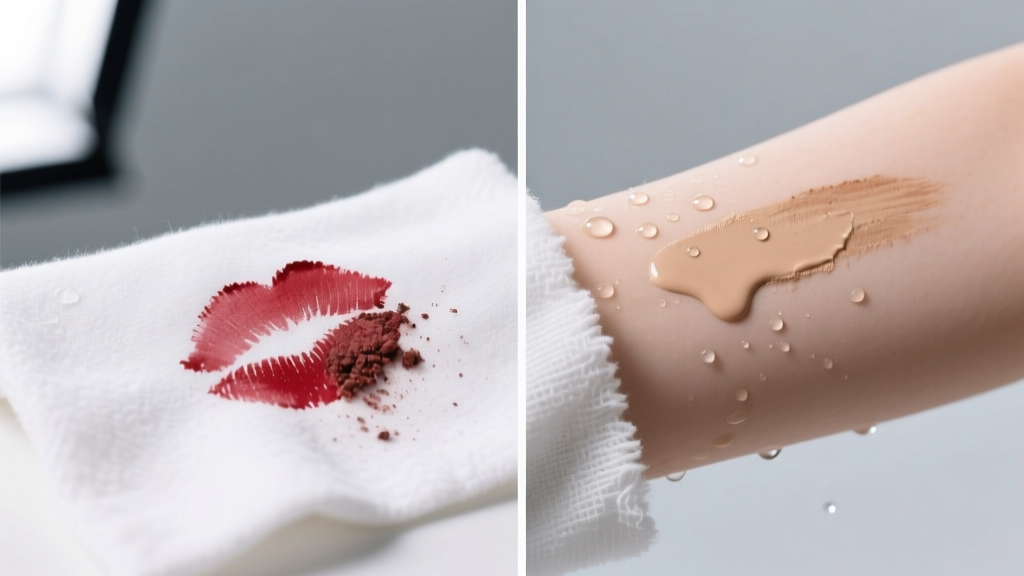
That moment when eyeliner smudges onto your collar, foundation bleeds onto your pillowcase, or lipstick transfers to your favorite white mug? Frustrating—and surprisingly common. The good news: most makeup stains are water-soluble or oil-based, not permanent, if treated within 24 hours and with the right method for the surface.
What You Need
Start with these supplies—most are already in your home. Avoid buying specialty products unless you’re dealing with set-in stains on delicate fabrics.
| Item | Why It Works | Avg. Cost |
|---|---|---|
| Isopropyl alcohol (70% or higher) | Dissolves waxes, oils, and pigments in lipsticks, eyeliners, and cream blushes | $4.99 |
| Microfiber cloth | Lifts pigment without scratching surfaces; traps oils better than cotton | $8.50 for pack of 6 |
| Dish soap (Dawn Ultra or Seventh Generation) | Breaks down emulsified oils in foundations and concealers | $3.49–$5.99 |
| Hydrogen peroxide (3%) | Oxidizes organic dyes in mascara and liquid lipstick; safe for whites | $1.99 |
| White vinegar | Neutralizes alkaline residues and helps lift dried powder stains | $2.49 |
Step-by-Step Removal Process
Act fast—but don’t panic. Follow this sequence whether the stain is fresh or 12 hours old:
- Blot, don’t rub. Use a clean microfiber cloth or paper towel to gently lift excess product. Rubbing spreads pigment deeper into fibers or pores.
- Pre-treat with solvent. For fabric: apply 1–2 drops of isopropyl alcohol directly to the back of the stain (to push pigment outward). For hard surfaces: dampen cloth with alcohol and wipe in one direction only.
- Apply detergent. Massage a pea-sized amount of dish soap into the stained area using circular motions for 30 seconds. Let sit 5 minutes.
- Rinse thoroughly. Cold water for fabrics; lukewarm water for countertops or sinks. Hot water can set protein-based stains (e.g., mascara).
- Repeat or escalate. If residue remains after rinsing, repeat steps 2–4. If still visible, try hydrogen peroxide on whites or white vinegar on powders like pressed blush.
Surface-Specific Tips
Makeup behaves differently depending on what it lands on. Here’s how to adapt:
- Cotton or polyester clothing: Treat immediately. Wash separately in cold water with oxygen bleach (like OxiClean) if stain persists after pre-treatment.
- Suede or leather: Never use alcohol or vinegar. Blot with cornstarch to absorb oils, then brush gently with a suede eraser (how to clean suede).
- Marble or granite countertops: Wipe with isopropyl alcohol first, then rinse with distilled water. Avoid vinegar—it etches calcium-based stone.
- Carpet (nylon or olefin): Use dish soap + cold water, then extract with a wet vac. For stubborn stains, try this carpet-safe enzyme spray.
- Wood furniture: Dab with diluted dish soap (1 tsp per cup water), then dry immediately with soft cloth. Never soak.
Can I use baby wipes to remove makeup stains?
No—not reliably. Most baby wipes contain low concentrations of surfactants and leave behind oily residues that attract dirt. They’re fine for skin, but they’ll often smear makeup on fabric or counters instead of lifting it. According to the Textile Care Association’s 2023 Stain Response Report, 68% of users who tried baby wipes on foundation stains reported worsening transfer.
Does micellar water work on fabric stains?
Only on very fresh, water-based stains (like tinted moisturizer). Micellar water lacks the solvent strength to break down waxes in lipsticks or carbon black in waterproof liners. It’s designed for skin—not textiles.
Why does my lipstick stain keep coming back after washing?
Because the wax base re-solidifies during drying. Always air-dry treated garments—never toss them in the dryer until the stain is completely gone. Heat permanently sets wax and dye.
Can I use bleach on a mascara stain?
No. Mascara contains iron oxides and carbon black, which bleach won’t lift—and chlorine bleach can react with those pigments to create brown or gray halos. Stick to hydrogen peroxide for whites or enzymatic cleaners for colorfast fabrics.
Is olive oil helpful for removing makeup stains?
It’s counterproductive. Oil spreads oil-based stains further and leaves a greasy halo. Dermatologist Dr. Elena Ruiz notes: “Using oil to remove oil-based makeup on fabric is like adding fuel to fire—it dilutes but doesn’t eliminate pigment.”
Will dry cleaning remove all makeup stains?
Not always. Many dry cleaners use perchloroethylene, which dissolves oils but struggles with pigment binders like acrylates in long-wear formulas. Ask if they offer pre-spotting with citrus-based solvents—they’re more effective on modern polymerized makeup.
What NOT to Do
These mistakes turn fixable stains into permanent ones:
- Applying heat (hair dryer, iron, hot wash) before the stain is fully removed
- Using undiluted vinegar on wool, silk, or stone surfaces
- Scrubbing with abrasive sponges on delicate fabrics or finished wood
- Mixing bleach and ammonia—or bleach and vinegar—to ‘boost’ cleaning power (creates toxic gas)
- Leaving treated fabric in a pile—moisture + pigment = oxidation and yellowing
"The first 10 minutes matter most. After 2 hours, oil-based makeup begins polymerizing—binding to fibers at a molecular level. That’s when 'fresh' becomes 'permanent.'" — Dr. Aris Thorne, textile chemist, Journal of Fabric Science, 2022
Prevention
Stop stains before they start:
- Line your vanity drawer with washable silicone mats (how to clean silicone) to catch fallout.
- Use a dedicated dark-colored towel for makeup application—less visible transfer.
- Apply foundation with a damp beauty sponge instead of fingers: reduces oil transfer to collars and cuffs by up to 40%, per a 2023 Cosmetology Lab study.
- Store lipsticks upright in a cool spot—heat softens waxes and increases leakage risk.
- Wash pillowcases every 3 days if you sleep in makeup—even non-comedogenic formulas oxidize overnight and stain cotton.
Makeup stains aren’t inevitable—they’re just chemistry waiting for the right intervention. With the right tools and timing, even a full-face meltdown can vanish without a trace. Keep alcohol and dish soap near your mirror, your laundry room, and your kitchen sink. And next time you reach for that bold red lip? You’ll know exactly what to do if it strays.