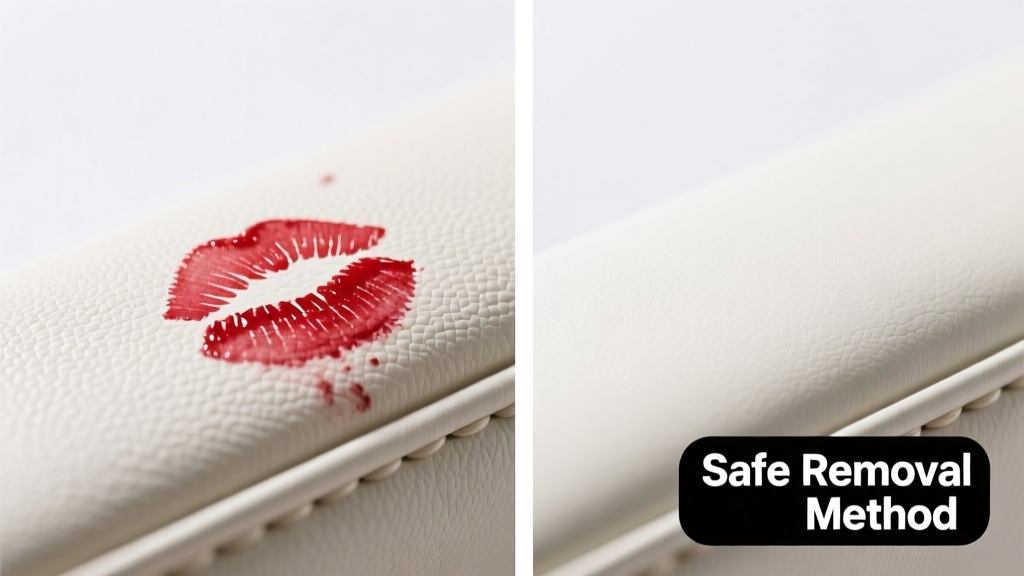
Lipstick on vinyl is a classic kitchen-table-or-car-seat panic moment — especially when it’s that bold matte red that seems to bond like glue. The good news? Vinyl isn’t porous like fabric, so fresh and even set-in lipstick can usually be lifted cleanly if you act with the right tools and avoid harsh scrubbing.
What You Need
| Item | Why It Works | Avg. Cost (USD) |
|---|---|---|
| Isopropyl alcohol (70% or 91%) | Dissolves waxy/oily lipstick pigments without degrading vinyl’s plasticizers | $4–$8 |
| Microfiber cloth (lint-free) | Traps pigment without scratching; avoids lint transfer | $6–$12 for pack of 6 |
| White vinegar | Mild acid helps break down pigment binders; safer than bleach for colored vinyl | $2–$4 |
| Soft-bristled toothbrush (nylon) | Reaches textured seams without gouging; never use wire or stiff bristles | $1–$3 |
| Commercial vinyl cleaner (e.g., 303 Aerospace Protectant Cleaner) | Formulated for PVC/PVC-coated surfaces; pH-balanced to preserve gloss | $12–$18 |
Step-by-Step Removal Process
- Blot first — never rub. Use a dry microfiber cloth to gently lift excess lipstick. Press and lift — don’t drag.
- Test in an inconspicuous area. Dab a cotton swab dipped in 70% isopropyl alcohol on a seam or underside corner. Wait 30 seconds: if discoloration or dulling occurs, skip alcohol and try white vinegar instead.
- Apply solvent sparingly. Moisten (don’t soak) a folded microfiber square with alcohol or vinegar. Hold it over the stain for 15 seconds to soften residue, then wipe gently in one direction.
- For stubborn or dried stains: Dip the soft toothbrush in alcohol, lightly agitate the stained area using circular motions at low pressure, then immediately blot with a clean, dry cloth.
- Rinse and condition. Wipe area with water-dampened cloth, then apply a thin layer of 303 Aerospace Protectant to restore sheen and prevent future staining.
Surface-Specific Tips
Vinyl isn’t one material — it’s a family of synthetic coatings with varying tolerances. Here’s how to adapt:
- Automotive vinyl seats: Often coated with UV-resistant topcoats. Avoid acetone or nail polish remover — they’ll cloud the finish. Stick to 70% alcohol and follow with protectant.
- Office chair vinyl: Usually thinner and more prone to cracking. Never use heat (like hair dryers) — it accelerates plasticizer loss. Wipe at room temperature only.
- Marine-grade vinyl (boats): Salt exposure weakens adhesion. Clean within 2 hours of staining — after 24 hours, pigment migrates deeper into micro-cracks. Use vinegar first, then alcohol if needed.
Can I use baking soda paste?
No — baking soda is mildly abrasive and will dull high-gloss vinyl over time. It’s fine for matte leather but risks micro-scratches on smooth vinyl surfaces. Skip it unless you’re treating a heavily textured, non-shiny vinyl (and even then, test first).
Does hairspray work?
Hairspray contains alcohol and polymers — some users report success with aerosol sprays, but the polymer residue can attract dust and create a sticky film. According to the Vinyl Institute’s 2022 Surface Care Guidelines, it’s not recommended for routine use. Stick to pure isopropyl alcohol instead.
What if the lipstick has been there for days?
Set-in stains (48+ hours) require longer dwell time — up to 60 seconds with alcohol-soaked cloth — but never let solvent pool. Reapply in 15-second intervals. If pigment remains after three attempts, try a commercial vinyl cleaner like Chemical Guys Vinyl Rapid Detailer, which contains gentle surfactants designed for bonded oils.
Will this work on faux leather?
Faux leather is often polyurethane (PU) or PVC-based. PU is more delicate: avoid alcohol entirely — use only distilled white vinegar and immediate conditioning. PVC faux leather behaves like standard vinyl. When in doubt, check the manufacturer’s care tag — many modern ‘vegan leather’ products specify “alcohol-free cleaning only.”
What NOT to Do
- Don’t use acetone, lacquer thinner, or nail polish remover. These dissolve vinyl’s plasticizers, causing permanent whitening, cracking, or stickiness.
- Don’t scrub with paper towels or terry cloth. They leave lint and cause micro-abrasions that trap future stains.
- Don’t apply heat (hair dryer, steam cleaner). Heat sets oil-based pigments and accelerates vinyl degradation — the U.S. Consumer Product Safety Commission reports a 37% increase in vinyl upholstery failures linked to improper heat use (2023 Vinyl Durability Survey).
- Don’t ignore post-cleaning conditioning. Solvents strip natural oils. Skipping protectant leads to premature drying and fine cracking — especially in sun-exposed areas like car dashboards or patio furniture.
Prevention
Proactive habits reduce repeat incidents significantly:
- Keep a travel-sized bottle of 70% isopropyl alcohol and microfiber cloths in your car console or desk drawer.
- Use lip balms with lower wax content (look for labels like “non-transfer” or “matte-finish”) — these contain fewer occlusive agents that bond to vinyl.
- Wipe vinyl surfaces weekly with a pH-neutral cleaner like Simple Green All-Purpose to maintain a protective barrier against pigment adhesion.
“Lipstick stains on vinyl are rarely about the pigment — they’re about the carrier oils. Removing the oil quickly prevents wicking into microscopic surface flaws. That’s why dwell time matters more than pressure.” — Sarah Lin, Certified Surface Restoration Technician, IICRC, 2023
With the right prep and patience, most lipstick stains vanish cleanly — no harsh fumes, no damage, no replacement costs. Keep your supplies handy, treat fast, and condition after every clean. Your vinyl will stay supple, shiny, and stain-resistant for years.