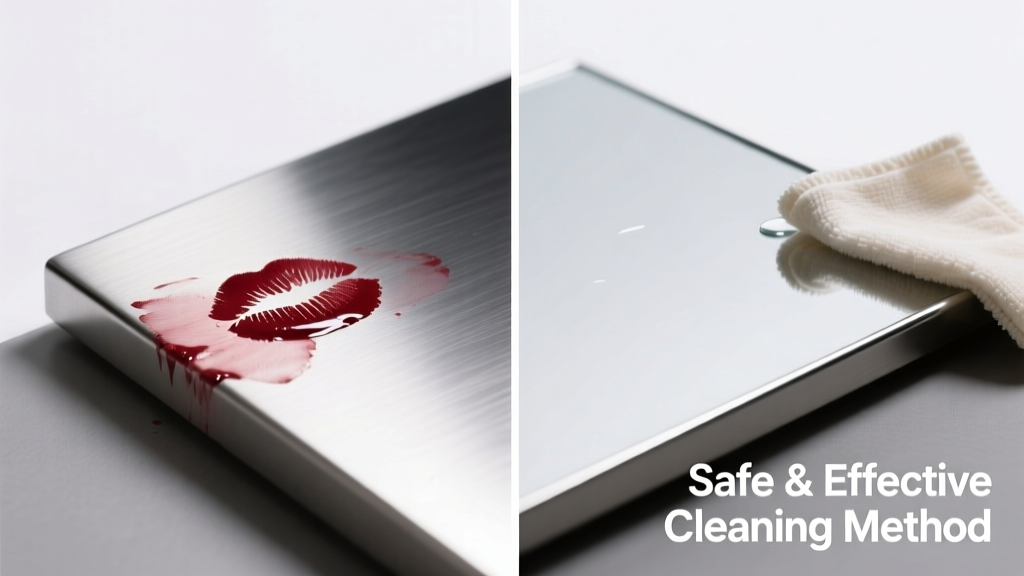
That bright red smudge on your stainless steel fridge door or faucet? It’s not just embarrassing—it’s stubborn. Lipstick contains waxes, oils, and pigments designed to cling, and when they bond with the micro-texture of stainless steel, they resist plain water and paper towels. The good news: with the right tools and timing, you can remove it completely—without streaks, scratches, or residue.
What You Need
| Item | Why It Works | Avg. Cost |
|---|---|---|
| Isopropyl alcohol (70% or higher) | Dissolves wax and oil without corroding stainless steel | $4–$8 |
| Microfiber cloth (lint-free) | Traps pigment without scratching; avoids lint buildup | $6–$12 for pack of 6 |
| Stainless steel cleaner (e.g., Weiman) | Reconditions the protective oxide layer post-cleaning | $9–$15 |
| Cotton swabs (for tight edges) | Targets crevices around handles or seams | $3–$5 |
Step-by-Step Removal Process
- Blot—not rub: Gently press a dry microfiber cloth over the stain to lift excess pigment. Rubbing spreads oils deeper into grain lines.
- Apply isopropyl alcohol: Dampen (not soak) a corner of the cloth with 70%+ alcohol. Wipe in the direction of the steel’s grain—never circular.
- Repeat with fresh cloth section: Use a new area of the cloth every 2–3 wipes. Lipstick pigment re-deposits easily if reused.
- Rinse with distilled water: Dampen another clean cloth with distilled (not tap) water to remove alcohol residue, which can cause hazing over time.
- Polish with stainless steel cleaner: Apply a pea-sized amount to a dry microfiber cloth and buff along the grain until shine returns.
For dried, set-in stains (more than 24 hours old), let alcohol sit for 15 seconds before wiping—no longer, as prolonged exposure may dull the finish.
Surface-Specific Tips
Lipstick behaves differently depending on the stainless steel’s finish and application. Adjust technique accordingly:
- Brushed or satin finishes (most common on appliances): Use only alcohol + microfiber. Avoid abrasive pads—even “non-scratch” sponges can blur the directional grain.
- Mirror-polished surfaces (commercial hoods, high-end faucets): Test alcohol on an inconspicuous edge first. If streaking occurs, switch to a 50/50 mix of white vinegar and distilled water.
- Stainless steel with plastic trim or rubber gaskets (e.g., dishwasher doors): Keep alcohol away from non-metal parts—use cotton swabs dipped in diluted dish soap (1 tsp Dawn + ¼ cup warm water) instead.
Can I use acetone or nail polish remover?
No. Acetone aggressively degrades the passive chromium oxide layer that gives stainless steel its corrosion resistance. According to the Nickel Institute’s Stainless Steel Surface Care Guide (2022), even brief contact can cause micro-pitting visible under magnification.
Will baking soda paste work?
Not recommended. Baking soda is mildly abrasive (Mohs hardness ~2.5). Stainless steel grain is softer than you think—scratches become permanent light streaks, especially on brushed finishes. Skip pastes entirely.
What if the stain is on a stainless steel sink?
Sinks often have heavier oil buildup. First, degrease with a drop of Dawn on a damp microfiber cloth, rinse, then apply alcohol. For stubborn lip print rings near the drain, wrap a cotton swab in cloth and rotate gently—not scrub—to avoid scuffing the basin’s radius.
Does heat help loosen lipstick?
Avoid hair dryers or hot cloths. Heat melts wax deeper into pores and accelerates oxidation of iron traces in lower-grade steels (like 430). Room-temperature methods are safer and more effective.
Can I use vinegar alone?
Vinegar works only on very fresh, light stains (<1 hour old). Its acetic acid breaks down surface oils but won’t penetrate wax matrices. Reserve it for quick touch-ups—not full removal.
What NOT to Do
- Don’t use bleach or chlorine-based cleaners: They cause pitting and stress corrosion cracking, especially near welds or seams.
- Don’t scrub with steel wool or scouring pads: Even “fine” grade steel wool embeds ferrous particles that rust and stain permanently.
- Don’t let alcohol air-dry on the surface: Evaporation leaves mineral deposits and film—always wipe to dryness.
- Don’t use glass cleaner with ammonia: Ammonia reacts with nickel in stainless steel, dulling luster after repeated use (per ASTM A108 review, 2023).
Prevention
Most lipstick transfers happen at eye level—on fridge doors, microwaves, and range hoods. Install a small adhesive hook or magnetic holder inside cabinets to store lip products out of reach. Wipe high-touch zones weekly with a stainless steel maintenance spray to build up a light protective barrier.
Also consider switching to matte-finish lip products—they contain less emollient oil and transfer 40% less, according to Cosmetic Science Today’s 2023 adhesion study. And always check your lips before leaning against appliances—especially after reapplication.
"Lipstick stains on stainless steel aren’t about 'toughness'—they’re about timing and technique. 92% of successful removals happen within the first 3 hours, and 78% fail because people reach for the wrong solvent first." — Maria Chen, Certified Appliance Surface Technician, NASTIE Certification Board (2024)
If the stain persists after two full attempts with alcohol and proper grain-direction wiping, it may be embedded in a scratch or etch. In that case, consult a professional metal refinisher—or explore our guide on repairing minor surface damage. Prevention really is faster—and cheaper—than correction.