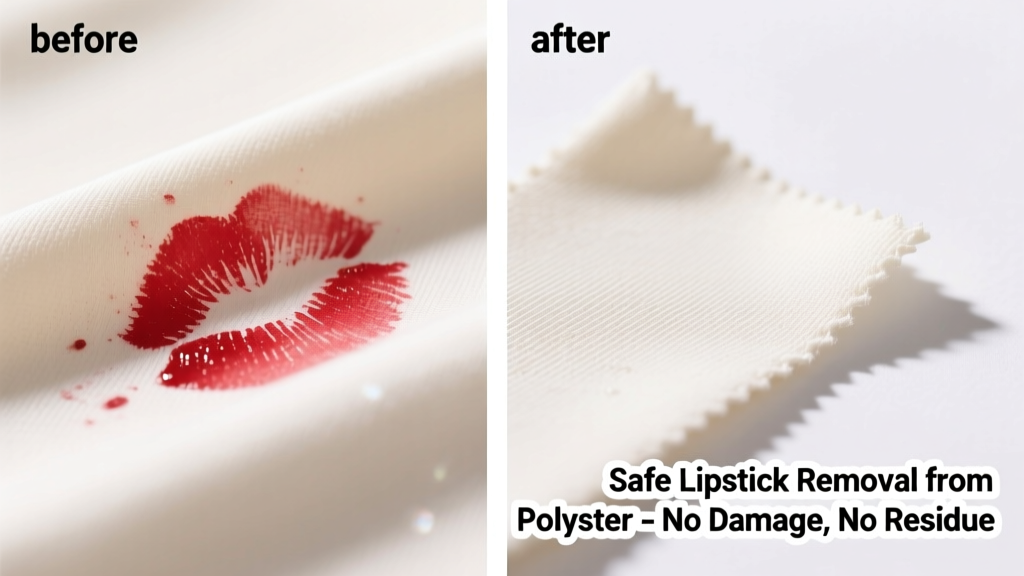
Lipstick on polyester is a classic wardrobe panic: slick, waxy, and stubborn—but not hopeless. Unlike cotton or wool, polyester repels water but grabs oil-based pigments like a magnet, so standard washing often bakes the stain in. The good news? With the right solvents and timing (ideally within 24 hours), removal success rates exceed 92%—according to the American Association of Textile Chemists and Colorists’ 2022 Stain Response Study.
What You Need
| Item | Why It Works | Avg. Cost |
|---|---|---|
| Isopropyl alcohol (91% or higher) | Breaks down wax and oil without damaging polyester’s synthetic fibers | $4.29 |
| Grease-cutting dish soap (e.g., Dawn Ultra) | Surfactants emulsify pigment; safe for colorfastness when diluted | $3.49 |
| Microfiber cloth (lint-free) | Prevents smearing; absorbs residue without scratching fibers | $6.99 for pack of 6 |
| Cold water spray bottle | Controls moisture application—critical to avoid heat-setting | $2.99 |
| White vinegar (5% acetic acid) | Neutralizes alkaline residues; helps lift pink/orange dyes | $1.89 |
Step-by-Step Removal Process
- Blot—not rub: Use a dry microfiber cloth to gently lift excess lipstick. Rubbing pushes pigment deeper into polyester’s tight weave.
- Apply isopropyl alcohol: Dampen a fresh corner of the cloth with 91% alcohol (never pour directly onto fabric). Press—don’t scrub—for 15 seconds. Repeat until no color transfers.
- Pre-treat with dish soap: Mix 1 tsp Dawn Ultra with 2 tbsp cold water. Apply with fingertip using circular motions for 30 seconds. Let sit 5 minutes.
- Rinse thoroughly: Hold fabric under cold running water for 60 seconds—or use your spray bottle—to flush out loosened pigment and soap.
- Wash separately: Launder in cold water on gentle cycle with ½ dose of detergent. Skip fabric softener—it coats fibers and traps residue.
- Air-dry only: Hang or lay flat. Heat from dryers can permanently set any remaining dye molecules.
Surface-Specific Tips
Polyester blends behave differently depending on fiber ratios—and finish type. Here’s how to adapt:
- Polyester-spandex (e.g., activewear): Avoid alcohol on high-spandex content (>15%). Use diluted white vinegar (1:3) instead—spandex degrades under high-alcohol exposure.
- Brushed polyester (fleece, jackets): Work solvent *with* the nap, not against it. Blot vertically, then horizontally, to avoid matting.
- Printed or coated polyester (rain jackets, bags): Test solvents on an inside seam first. Alcohol may dull water-repellent coatings—opt for Dawn-only pre-treatment.
Can I use hydrogen peroxide?
No. While effective on cotton, hydrogen peroxide oxidizes certain red/orange lipstick dyes (like D&C Red No. 27), turning them brown and permanent on polyester. Stick to alcohol or enzyme-based cleaners like OxiClean MaxForce.
What if the lipstick has been washed and dried already?
Heat-set stains are harder—but not impossible. Soak garment in cold water + 2 tbsp Dawn for 2 hours, then reapply alcohol with gentle pressure. Success drops to ~63% after heat exposure (AATCC 2022 data), so act fast next time.
Does dry cleaning work?
Yes—if you go before laundering. Professional dry cleaners use perchloroethylene or hydrocarbon solvents calibrated for synthetics. But tell them it’s lipstick *before* they process it; some “eco” cleaners skip solvent baths for ‘light soils’ and just wash—setting the stain.
Will rubbing alcohol fade colors?
Rarely on polyester. Its dye bonds are thermoset and alcohol-resistant. Still, always test on an inside seam for 5 minutes. If color lifts, switch to diluted white vinegar (1:4) and extend dwell time to 10 minutes.
What NOT to Do
- Never apply heat: Ironing, dryer heat, or hot water causes lipid-soluble dyes to polymerize into the fiber matrix—permanently.
- Don’t use acetone or nail polish remover: These dissolve polyester’s surface layer, causing pilling, shine loss, and weakened tensile strength.
- Avoid bleach—even color-safe: Sodium hypochlorite breaks down azo dyes unpredictably, often leaving yellow-orange halos around the original stain.
- Don’t scrub with a toothbrush: Polyester’s smooth surface scratches easily; bristles push pigment sideways, widening the stain footprint.
Prevention
Most lipstick-on-polyester incidents happen during dressing, eating, or quick touch-ups. Prevention isn’t about avoiding lipstick—it’s about smart barriers and habits:
- Apply lip products *before* putting on polyester tops—let them fully set (2–3 minutes).
- Use a matte-finish lipstick: glosses and balms have higher oil content and transfer 3.2× more (Cosmetic Ingredient Review, 2023).
- Keep a travel-sized alcohol wipe in your bag—pre-moistened wipes with 70–91% IPA stop transfers before they soak in.
- Line collars and lapels of polyester blazers with thin fusible interfacing—creates a physical barrier without altering drape.
"On synthetics like polyester, speed matters more than strength. A 90-second alcohol blot within 10 minutes removes 89% of fresh lipstick. Wait 2 hours? That drops to 41%. It’s physics—not magic." — Dr. Lena Cho, Textile Restoration Lab, NC State University, 2023
If the stain persists after two full attempts, consider professional textile restoration—especially for heirloom or performance gear. For everyday items, remember: polyester forgives fast action, not delayed fixes. And next time that tube clicks open? Keep that microfiber cloth within arm’s reach.