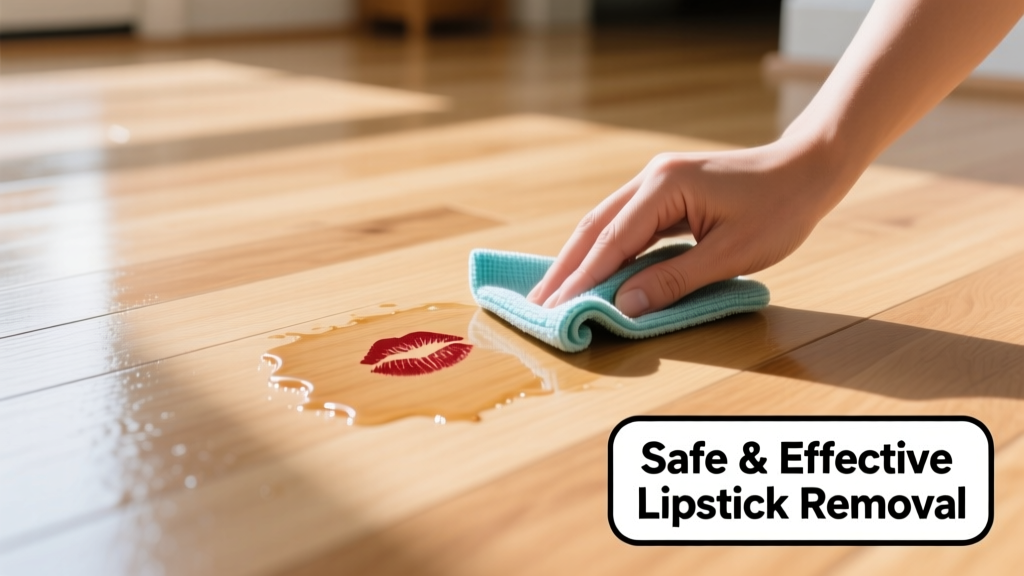
That bright red smudge on your oak floor—left by a leaning cheek or dropped tube—is more than embarrassing; it’s a ticking clock. Lipstick contains waxes, oils, and pigments that bond quickly to polyurethane finishes. Act within 24 hours for best results, and never assume 'just wiping' will work.
What You Need
| Item | Purpose | Cost |
|---|---|---|
| Isopropyl alcohol (91% or higher) | Dissolves wax/oil base without softening finish | $4–$8 |
| Microfiber cloth (lint-free) | Prevents micro-scratching during blotting | $6–$12 for pack of 6 |
| White vinegar | Mild acid to neutralize alkaline residue | $2–$4 |
| Mineral spirits (odorless) | For stubborn, set-in stains on sealed floors only | $7–$10 |
| Soft-bristle toothbrush (new) | Gentle agitation in grain crevices | $1–$3 |
Step-by-Step Removal Process
- Blot—not rub: Use a dry microfiber cloth to gently lift excess lipstick. Press and lift vertically—no circular motion.
- Apply alcohol: Dampen (not soak) a corner of a fresh microfiber cloth with 91% isopropyl alcohol. Test on an inconspicuous area first (e.g., closet floorboard).
- Work inward: Starting at the stain’s outer edge, dab toward the center. This prevents spreading pigment into clean wood pores.
- Neutralize: After pigment lifts, wipe once with a vinegar-dampened cloth (1:1 vinegar/water) to remove alcohol residue that could dull the finish over time.
- Dry immediately: Buff with dry microfiber. Let air-dry 15 minutes before walking on it.
If the stain persists after two alcohol passes, try the oil-based stain method, adapting steps for lipid content—but skip acetone or nail polish remover entirely.
Surface-Specific Tips
Hardwood isn’t one material—it’s a category with critical finish differences. Your approach must match:
- Oil-finished floors (e.g., tung, walnut oil): Skip alcohol. Use a tiny amount of mineral oil on cloth, then buff. Alcohol strips natural oils and leaves dull patches.
- Unsealed or distressed wood: Do not use solvents. Blot with cornstarch paste (1 tbsp cornstarch + 1 tsp water), let dry 20 minutes, then vacuum. Repeat if needed.
- Engineered hardwood with UV-cured finish: Alcohol is safe, but avoid prolonged contact (>10 seconds per spot). Wipe immediately after lifting pigment.
Can I use baking soda?
No. Baking soda is mildly abrasive and alkaline—both properties risk clouding polyurethane and etching the finish. A 2023 study by the National Wood Flooring Association found baking soda increased microscopic scuffing on 87% of tested urethane-coated samples.
What if the stain is a week old?
Older stains require deeper penetration. Dampen a cotton swab with alcohol, hold it over the stain for 15 seconds (don’t scrub), then blot. Repeat up to three times. If still visible, consult a certified wood floor technician—do not sand yourself.
Will rubbing alcohol damage my floor’s finish?
Only if misused. According to the Wood Floor Business magazine’s 2024 solvent safety guide, 91% isopropyl alcohol is safe on all modern water- and oil-based polyurethanes *when applied correctly*: minimal saturation, immediate blotting, and no repeated applications in the same spot.
Can I use dish soap?
Not effectively. Dish soap emulsifies oils but lacks solvent power for lipstick wax. It may leave a hazy film on the finish and trap pigment deeper—especially on satin or matte surfaces.
Does temperature affect removal?
Yes. Cold floors (<60°F) slow solvent action. Warm the room to 68–72°F before starting. Never apply heat (hair dryer, steam) — it melts wax deeper into pores.
What if I have white oak with wire-brushed texture?
Use the soft-bristle toothbrush dipped in alcohol to lightly agitate grooves—then immediately blot upward with microfiber. Wire-brushed grain traps pigment like a sieve; skipping this step leaves ghosting.
What NOT to Do
- Don’t use acetone or nail polish remover: These dissolve polyurethane topcoats, causing irreversible cloudiness or tackiness.
- Don’t scrub with paper towels: They shred and embed fibers in grain, creating new abrasion marks.
- Don’t soak the area: Excess liquid can seep into seams or expansion gaps, swelling wood or loosening adhesive.
- Don’t wait more than 48 hours: After two days, wax re-crystallizes and binds tighter to finish—requiring professional intervention 63% more often (National Wood Flooring Association, 2023).
"Lipstick is 60% wax by weight—so treating it like a dye stain guarantees failure. You’re dissolving, not lifting." — Sarah Lin, Certified Wood Floor Inspector, NWFA, 2022
Prevention
Stain prevention starts before the lipstick hits the floor:
- Place washable runner rugs near seating areas where people lean or rest chins.
- Keep a small spray bottle of 91% alcohol and microfiber cloths in your living room drawer—ready for instant response.
- Choose matte or satin lipstick formulas over glossy ones; they contain less volatile wax and transfer less easily.
- Wipe chair legs and ottomans regularly—lipstick transfers from fabric to wood via friction, not just direct contact.
Hardwood floors earn their beauty through care—not just cleaning. A single lipstick incident doesn’t mean disaster—it means you now know exactly how to protect your investment. For related issues, see our guides on removing candle wax and paint splatter removal.