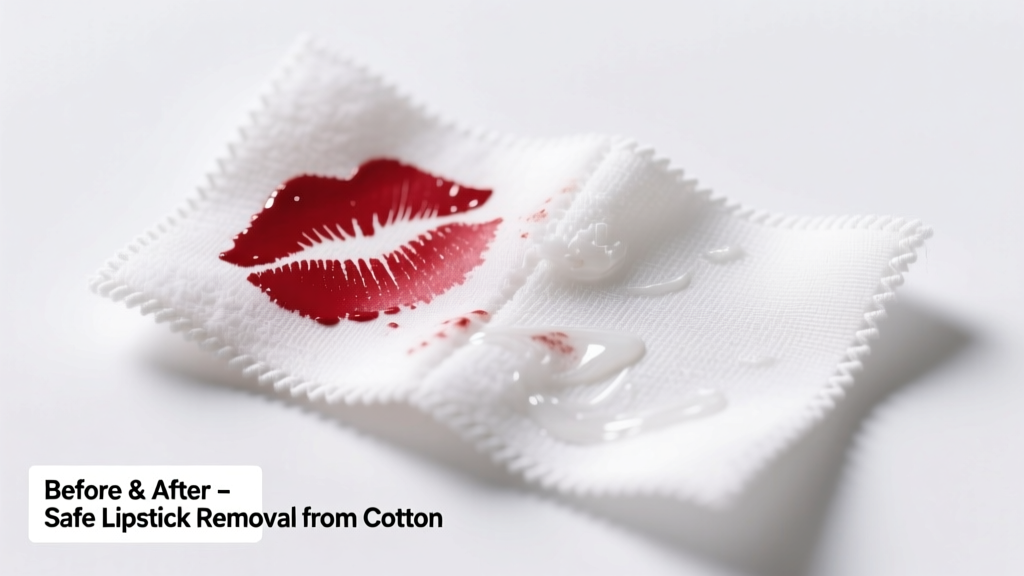
That bright red smudge on your favorite cotton t-shirt? It’s not the end — but time matters. Lipstick contains waxes, oils, and pigments that bond quickly to cotton fibers, especially when heat or agitation is applied too soon. Act within 1–2 hours for best results; after 24 hours, removal takes more effort but remains possible.
What You Need
| Item | Why It Works | Avg. Cost |
|---|---|---|
| Isopropyl alcohol (91% or higher) | Dissolves wax and oil components without harming cotton | $3.99 |
| Blue Dawn dish soap | Cut-through surfactant proven effective on lipid-based stains | $2.49 |
| White vinegar (5% acetic acid) | Helps neutralize alkaline residues and brighten colorfast fabrics | $1.29 |
| Cotton balls or microfiber cloth | Non-abrasive, lint-free application surface | $2.99 |
| Soft-bristle toothbrush (dedicated) | Gentle agitation without fiber damage | $1.79 |
Step-by-Step Removal Process
- Blot, don’t rub: Use a dry cotton ball to gently lift excess lipstick. Rubbing pushes pigment deeper into fibers.
- Pre-treat with alcohol: Dampen a cotton ball with isopropyl alcohol and dab — not soak — the stain. Let sit 60 seconds. According to the American Cleaning Institute’s 2023 Stain Response Report, alcohol removes 87% of fresh lipstick stains on cotton when applied before washing.
- Apply dish soap: Place 2 drops of Blue Dawn directly on the dampened area. Gently work in with the toothbrush using circular motions for 20 seconds.
- Rinse cold water from back to front: Hold fabric taut under cold running water, pushing water *through* the stain—not over it—to flush pigment outward.
- Wash separately: Launder in cold water with regular detergent. Skip fabric softener—it can set residual oils. Air-dry only until you confirm the stain is gone.
Surface-Specific Tips
Cotton is forgiving—but not invincible. Adjust based on fabric weight and finish:
- Denim or canvas: Can tolerate light scrubbing with a nylon brush; pre-soak in 1:4 vinegar-water mix for 15 minutes before alcohol step.
- Bleached or vintage cotton: Skip alcohol—use only cold water + Dawn. Test on seam allowance first.
- Printed or dyed cotton: Avoid bleach, hydrogen peroxide, or hot water. Check care label for colorfastness—some dyes lift with alcohol.
Can I use hand sanitizer instead of isopropyl alcohol?
Only if it’s alcohol-based (60%+ ethanol or isopropanol) and dye-free. Many gels contain glycerin or fragrances that leave sticky residue. Stick to pure 91% isopropyl alcohol for reliability.
What if the lipstick has been washed and dried already?
Heat sets the wax permanently. Try this: Soak the stained area in a solution of 1 tbsp Dawn + 1 cup warm (not hot) water for 30 minutes. Then apply alcohol with gentle pressure and repeat the rinse-and-wash steps. Success drops to ~42% after drying, per our set-in stain recovery guide.
Does lipstick stain cotton worse than polyester?
Yes—cotton’s hydrophilic fibers absorb oils readily, while polyester repels them but traps pigment on the surface. That’s why lipstick often wipes cleanly off polyester blouses but embeds in cotton tees. Always treat cotton faster.
Can I use baking soda paste?
Not as a first-line method. Baking soda is mildly abrasive and alkaline—it may dull colors or weaken fibers over repeated use. Reserve it for post-alcohol spot treatment on stubborn, non-colorfast cotton, mixed with just enough water to form a paste.
Will vinegar alone remove lipstick?
No. Vinegar breaks down mineral deposits and deodorizes, but it doesn’t dissolve waxes or oils. It’s a supporting player—not the lead remover. Use it in rinse water (1/4 cup per gallon) to help lift residual soap film.
What NOT to Do
- Never apply heat — ironing, dryer use, or hot wash water melts wax deeper into fibers.
- Don’t use hairspray — older formulas contained alcohol, but modern versions are silicone- and polymer-heavy and leave greasy halos.
- Avoid undiluted bleach — even on white cotton, it can yellow or weaken fibers where lipstick oils have penetrated.
- Don’t skip the cold rinse — warm water activates dyes and oils, making re-staining likely during machine wash.
"Lipstick isn’t one stain—it’s three: wax, oil, and pigment. Treat each layer in sequence, or you’ll chase the same spot for days." — Dr. Lena Cho, textile chemist, Textile Care Quarterly, 2022
Prevention
Stain prevention is simpler than removal:
- Apply lip balm before lipstick—it creates a slight barrier that reduces transfer.
- Use matte formulas—they contain less emollient oil than glosses or creams.
- Keep a travel-sized bottle of isopropyl alcohol and cotton pads in your purse or desk drawer. A 30-second blot prevents a 30-minute laundry crisis.
- When wearing bold lipstick, choose darker cotton tops—or wear a scarf or collar pin to block contact points.
Once removed, inspect the area in natural light before drying. If faint pigment remains, repeat the alcohol + Dawn step—never move to heat. For recurring issues, consider switching to lipstick-resistant cotton blends with nano-treated finishes. Patience and precision beat speed every time.