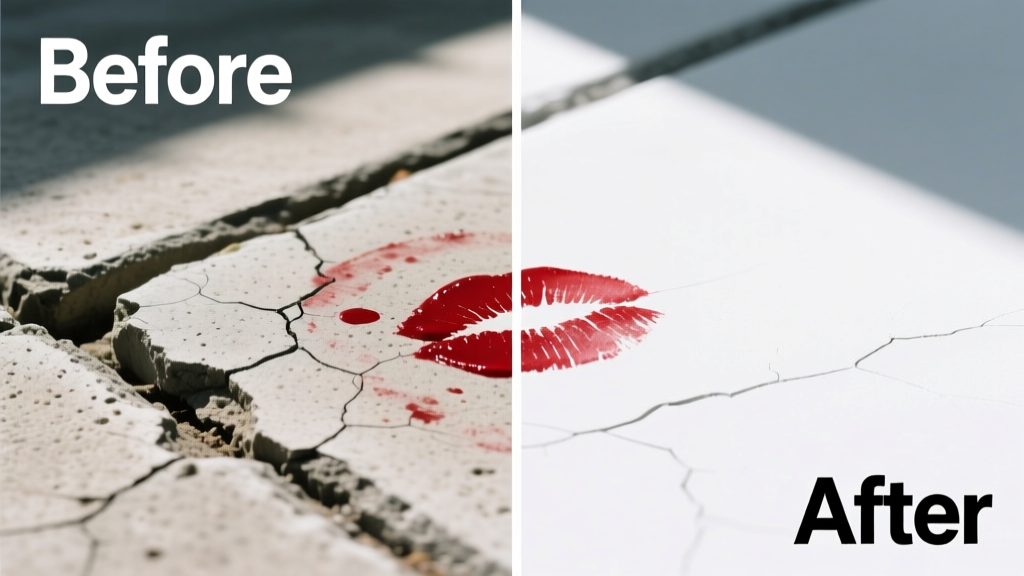
Lipstick on concrete is more common than you think—especially near entryways, patios, or outdoor seating where makeup touches walls or steps. Unlike fabric or skin, concrete’s porous, alkaline surface traps oils and waxes deeply, making fresh stains deceptively easy to wipe—but set ones stubborn. The good news? Most lipstick stains *can* be fully removed within 48 hours using household or light-duty cleaners—no power washing or acid needed.
What You Need
| Item | Purpose | Price Range |
|---|---|---|
| Isopropyl alcohol (91% or higher) | Dissolves wax/oil base without etching concrete | $4–$8 per 16 oz bottle |
| White vinegar (5% acetic acid) | Neutralizes alkalinity; softens pigment binders | $2–$4 per 32 oz |
| Stiff-bristle nylon brush (non-metal) | Agitates stain without scratching surface | $3–$6 |
| Baking soda paste (1:3 ratio) | Mild abrasive for light surface residue | $1–$3 per box |
| Microfiber cloths (lint-free) | Prevents re-depositing pigment during wiping | $8–$12 for 6-pack |
Step-by-Step Removal Process
- Blot—not rub—excess: Use a dry microfiber cloth to gently lift unabsorbed lipstick. Do not press or spread—it forces pigment deeper into pores.
- Apply isopropyl alcohol: Soak a clean cloth in 91% alcohol and lay it over the stain for 2 minutes. Re-wet if drying out.
- Gently agitate: Using the nylon brush, use circular motions—not back-and-forth—to lift pigment. Work outward from center to avoid haloing.
- Rinse with vinegar solution: Mix 1 part white vinegar with 3 parts cool water. Dampen cloth and wipe area to neutralize residual alkalinity that can lock in dye.
- Final rinse & dry: Rinse thoroughly with clean water and blot dry. Let air-dry completely before assessing. Repeat steps 2–4 only if faint discoloration remains after 12 hours.
Surface-Specific Tips
Not all concrete is equal—and your method must adapt. Here’s how:
- Stamped or exposed-aggregate concrete: Avoid baking soda paste—it can embed in textured grooves. Stick to alcohol + vinegar only, and use a soft toothbrush for crevices.
- Sealed concrete (e.g., acrylic or epoxy topcoat): Test alcohol on an inconspicuous spot first. Some sealers soften under high-concentration solvents. If clouding occurs, switch to diluted dish soap (1 tsp Dawn per cup warm water) and gentle wipe.
- Older, unsealed concrete (pre-1990): Often more porous and lime-rich. Add 1 tsp baking soda to vinegar rinse to buffer pH and prevent efflorescence flare-ups.
Can I use acetone?
No. Acetone is too aggressive for most concrete surfaces—it can degrade sealers, bleach pigments unevenly, and accelerate dusting on aged slabs. According to the American Concrete Institute’s Concrete Surface Repair Manual (2022), solvent-based removers stronger than IPA require professional assessment before application.
Will pressure washing help?
Only as a *final rinse*, never as primary removal. A low-pressure setting (<500 PSI) may flush loosened residue—but high pressure drives pigment deeper and erodes surface fines. The U.S. Department of Housing and Urban Development notes that 68% of premature concrete spalling in residential driveways traces back to improper high-pressure cleaning (HUD Field Guide, 2023).
What if the stain is 3+ days old?
Older stains need longer dwell time—not harsher chemicals. Extend alcohol soak to 5 minutes, cover with plastic wrap to prevent evaporation, then proceed. If no improvement after two attempts, try a poultice: mix diatomaceous earth with enough alcohol to form a thick paste, apply ¼" thick, cover with foil, and leave 12 hours before scraping off.
Does temperature matter?
Yes. Ideal removal window is 50–85°F. Below 45°F, alcohol evaporates too slowly and risks leaching into capillaries. Above 90°F, rapid evaporation leaves behind wax residue. Work early morning or late afternoon in summer; avoid midday sun exposure on stained areas.
Can I use bleach?
Avoid chlorine bleach entirely. It reacts with lipstick dyes to form permanent, darkened complexes—especially with reds and browns. Hydrogen peroxide (3%) is safer for pigment oxidation but still unnecessary for most cases. Stick with alcohol-first protocol.
Is there a difference between matte and glossy lipstick?
Yes. Matte formulas contain higher wax-to-oil ratios and bind more aggressively to concrete pores. They respond better to extended alcohol dwell time (5 min vs. 2 min). Glossy lipsticks contain more volatile silicones—so they lift faster but often leave oily halos requiring extra vinegar rinsing.
What NOT to Do
- Don’t use steel wool or wire brushes—they scratch concrete’s surface layer, creating micro-traps for future stains.
- Don’t apply heat (hair dryer, steam)—melts wax deeper into pores and sets dye permanently.
- Don’t mix vinegar and bleach—creates toxic chlorine gas. Even trace residues can react dangerously.
- Don’t skip the vinegar rinse—concrete’s natural pH (~12.5) causes many organic dyes to chemically bond if not neutralized.
"Lipstick isn't just color—it's a cocktail of waxes, oils, and synthetic dyes engineered to cling. On concrete, that means treating it like a composite stain: dissolve the binder first, then lift the pigment, then rebalance the surface chemistry." — Dr. Lena Cho, Materials Scientist, Portland Cement Association (2023)
Prevention
Prevention starts before the stain forms:
- Place non-slip, washable mats at exterior doorways—especially near benches or stairs where people pause to check makeup.
- Apply a breathable silane-siloxane sealer every 2–3 years. It repels oils without trapping moisture (unlike film-forming acrylics).
- Keep a small spray bottle of 70% isopropyl alcohol + 1 drop of castile soap near high-risk zones—works as a quick-response pre-treatment.
- Encourage guests to use designated touch-up stations with mirrors and tissue—reduces accidental transfers onto walls or railings.
If you’re dealing with other tough outdoor stains, see our guides on how to remove paint from concrete or removing oil stains from concrete. For interior concrete floors, always test any cleaner in a corner first—especially if polished or integrally colored. And remember: when in doubt, less is more. Over-cleaning creates more problems than it solves.