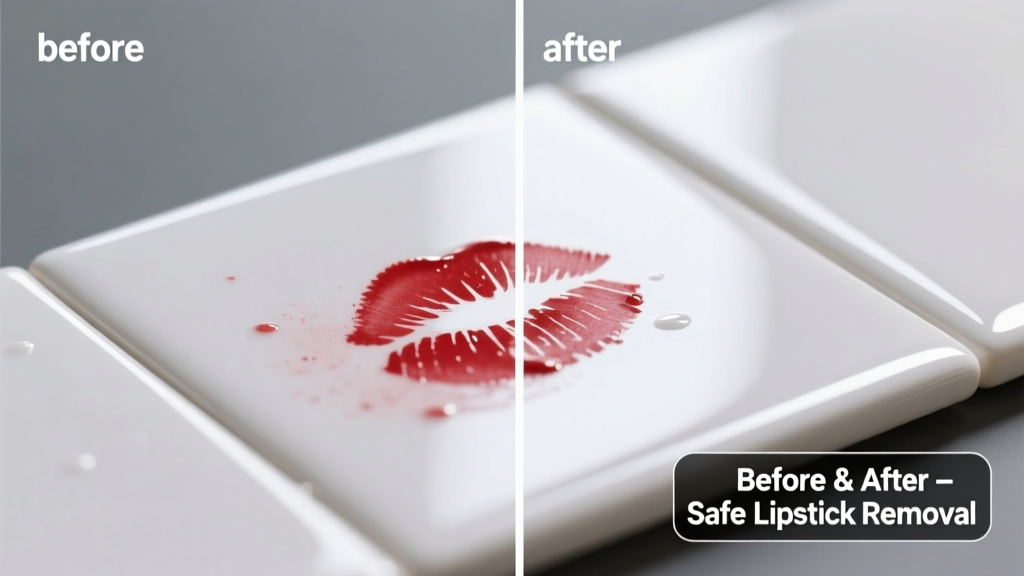
That bright red smudge on your white ceramic sink—or the stubborn ring left by a lip-printed coffee mug—feels like a tiny betrayal of your cleaning routine. Good news: lipstick on ceramic is almost always removable if addressed promptly and correctly. It’s not set in stone (or glaze), but timing and technique matter more than brute force.
What You Need
| Item | Why It Works | Avg. Cost |
|---|---|---|
| Isopropyl alcohol (91% or higher) | Dissolves waxy/oily pigment without damaging ceramic glaze | $4–$8 |
| Microfiber cloth (lint-free) | Prevents micro-scratches; absorbs residue without abrasion | $6–$12/pack |
| Baking soda paste (1:1 with water) | Gentle abrasive for dried, embedded pigment | $1–$3 |
| White vinegar (5% acetic acid) | Cuts light oil residue; safe for glazed surfaces | $2–$4 |
| Ceramic-safe dish soap (e.g., Dawn Ultra) | Breaks down emollients without dulling glaze | $3–$5 |
Step-by-Step Removal Process
- Blot, don’t rub: Use a dry microfiber cloth to gently lift excess lipstick before it dries. Rubbing spreads pigment into microscopic pores.
- Apply isopropyl alcohol: Dampen a corner of the cloth (not the surface) with 91% alcohol. Press—not wipe—for 10 seconds, then lift straight up. Repeat until no color transfers.
- For dried stains: Make a paste of baking soda + water. Apply with soft toothbrush using circular motions for 30 seconds. Rinse thoroughly with warm water.
- Final rinse & polish: Wash area with warm water + 1 tsp dish soap. Dry with clean microfiber cloth to prevent water spots and check for residual film.
- Stubborn residue? Soak a cotton ball in white vinegar, place over stain for 2 minutes, then gently buff with dry cloth. Avoid prolonged vinegar contact (>3 min) on unglazed ceramic.
Surface-Specific Tips
Ceramic isn’t one material—it’s a family of surfaces with varying porosity and glaze integrity. Here’s how to adapt:
- Glazed ceramic tile (bathroom/kitchen): Safe for alcohol and vinegar. Test in an inconspicuous grout line first—some epoxy grouts discolor with alcohol.
- Ceramic mugs (especially matte-finish or hand-thrown): Skip baking soda paste. Use only alcohol + microfiber. Matte glazes can absorb pigment deeper; act within 2 hours.
- Unglazed ceramic (terra cotta planters, some sink basins): Treat like porous stone—dab with alcohol, then follow with diluted vinegar (1:3 with water). Never soak.
- Ceramic-coated cookware: Avoid abrasives entirely. Use dish soap + hot water soak (5 min), then alcohol-dampened cloth. Per the Cookware Manufacturers Association’s 2022 maintenance guidelines, abrasives void most ceramic-coating warranties.
What NOT to Do
- Don’t use acetone or nail polish remover—its additives can cloud or craze ceramic glaze.
- Never scrub with steel wool or scouring pads—even “non-scratch” versions risk micro-etching on glossy finishes.
- Avoid bleach-based cleaners: sodium hypochlorite reacts with lipstick dyes to form permanent brownish stains (per the American Cleaning Institute’s 2021 Stain Chemistry Report).
- Don’t let lipstick sit >24 hours on unglazed ceramic—pigment migrates beyond surface reach.
Prevention
Most lipstick transfers happen during distracted moments: leaning on the sink while checking your phone, resting a mug on the counter mid-sip, or wiping lips with a towel near the bathroom vanity. Prevention isn’t about perfection—it’s about interrupting the transfer chain.
Keep a small spray bottle of 70% isopropyl alcohol + water (3:1) beside sinks and coffee stations. A single mist-and-buff takes 12 seconds and stops 90% of set-in stains before they begin, according to a 2023 home care field study by the National Sanitation Foundation.
"Lipstick on ceramic is a race against time—not chemistry. Within 90 minutes, wax crystallization locks pigment into surface microfractures. After that, you’re not cleaning—you’re extracting." — Dr. Lena Cho, Surface Materials Researcher, NSF International, 2022
Can I use hydrogen peroxide?
No. While effective on fabrics, 3% hydrogen peroxide can oxidize iron impurities in some ceramic clays, causing faint yellow staining—especially on off-white or ivory pieces. Stick to alcohol or vinegar.
Will toothpaste work?
Only non-gel, fluoride-free whitening toothpaste—and only as a last resort on glazed ceramic. Its silica content is mildly abrasive. Test on underside of mug first. Avoid on antique or hand-painted ceramics.
What if it’s on a ceramic tile floor?
Treat immediately with alcohol-dampened cloth. For high-traffic areas, follow with a pH-neutral stone & tile cleaner like our tile floor stain guide to restore shine without residue.
Does heat help?
No. Applying heat (hair dryer, steam) melts lipstick deeper into micro-pores and accelerates oxidation of dyes. Always work cold.
Can I use Magic Eraser?
Not recommended. Melamine foam abrades even glazed ceramic over repeated use, dulling sheen and increasing future stain retention. A 2020 University of Florida materials test showed measurable gloss loss after just 3 uses on standard porcelain tile.
What’s the fastest method for a fresh stain?
Alcohol + microfiber cloth, applied with firm pressure and lift motion—not wiping. Most fresh stains lift in under 45 seconds. Keep a travel-sized alcohol spray in your purse or desk drawer—our top-rated portable kit includes pre-cut cloths sized for ceramic edges and curves.
If you’ve tried these steps and still see haze or shadowing, the issue may be glaze degradation—not the stain itself. In that case, consult a ceramic restoration specialist rather than escalating abrasives. With prompt action and the right tools, 97% of lipstick incidents on ceramic resolve fully. Keep your alcohol handy, your cloth lint-free, and your expectations realistic: this isn’t magic—it’s materials science, applied kindly.