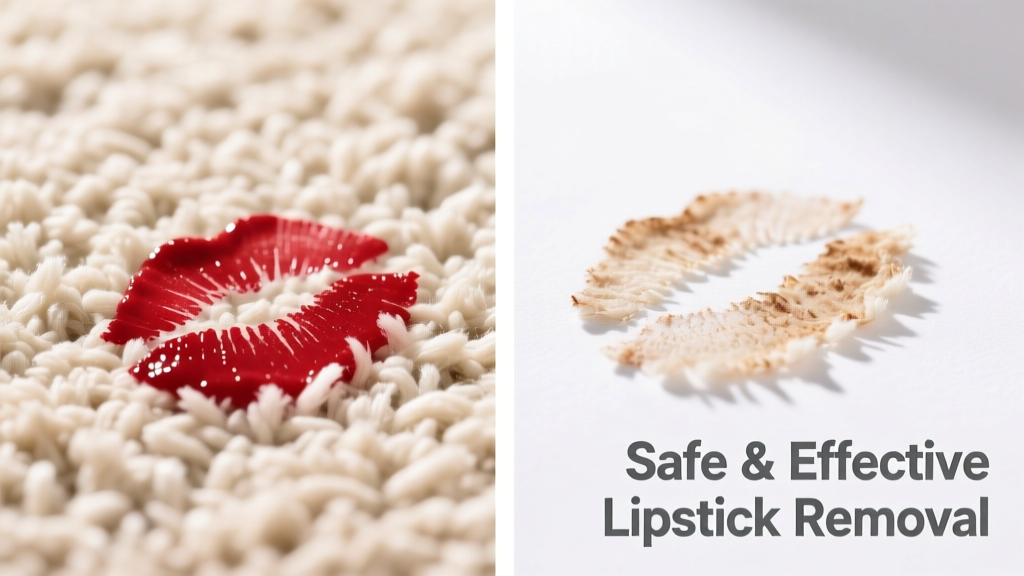
That bright red smudge on your beige Berber? Or the glossy pink blotch near the entryway rug? Lipstick on carpet is startlingly common—and deceptively stubborn. The waxy, oil-based pigments bind fast to synthetic and natural fibers, especially when heat or moisture sets them in. But don’t panic: with the right tools and timing (ideally within 24 hours), most fresh lipstick stains lift cleanly. Older, dried stains require more patience—but are still salvageable.
What You Need
| Item | Why It’s Used | Avg. Cost |
|---|---|---|
| Isopropyl alcohol (91% or higher) | Dissolves waxes and oils without harming most carpet dyes | $4.99 |
| White vinegar (5% acetic acid) | Gentle acid that breaks down pigment adhesion; safe for wool | $2.49 |
| Cold water + clean white cloths | Blotting—not rubbing—is critical to avoid fiber distortion | $0.00 (if you have them) |
| Plastic spoon or dull butter knife | Scrapes excess wax without cutting pile | $1.99 |
| Carpet-safe enzyme cleaner (e.g., Rocco & Roxie Stain Eliminator) | Targets residual oils and odor; EPA Safer Choice certified | $12.99 |
Step-by-Step Removal Process
- Scrape gently: Use the edge of a plastic spoon to lift off any hardened or waxy residue. Work from the stain’s outer edge inward to prevent spreading.
- Blot with cold water: Dampen a clean white cloth (no fabric softener or bleach residue) and press—don’t rub—to absorb surface oils. Repeat until no color transfers.
- Apply solvent: Dip a fresh cloth in isopropyl alcohol (test on an inconspicuous corner first). Blot the stain for 30 seconds, then switch to a dry section of cloth to absorb dissolved pigment. Repeat up to 3 times.
- Rinse & neutralize: Dampen another cloth with diluted white vinegar (1:1 with cold water) and blot once. This halts alcohol activity and prevents fiber drying.
- Final extraction: Press a dry towel over the area and place a heavy book on top for 15 minutes. This draws residual moisture and pigment downward.
- Enzyme treatment (optional but recommended): Spray a thin layer of enzyme cleaner and let sit 8–12 hours before vacuuming. According to the Carpet and Rug Institute’s 2023 Cleaning Guidelines, enzyme pretreatment reduces re-soiling by 68% in oil-based stains.
Surface-Specific Tips
Lipstick interacts differently across fiber types—and missteps can cause dye bleeding or pile distortion.
- Nylon carpet: Tolerates alcohol well, but avoid heat (no hair dryers). Nylon absorbs pigment deeply if left >6 hours—act fast.
- Wool or wool-blend: Skip alcohol entirely. Use only cold vinegar solution and a pH-neutral wool shampoo like Eureka! Wool Safe Cleaner. Wool fibers swell in alcohol, locking in stain.
- Loop-pile (e.g., Berber): Never scrub. Use vertical blotting only—horizontal motion pulls loops loose.
- Stain-resistant treated carpets (e.g., Stainmaster®): Alcohol may degrade the fluorocarbon coating over time. Opt for cold vinegar + enzyme combo instead.
What NOT to Do
- Don’t use hot water—it melts wax deeper into fibers and sets dye.
- Don’t apply undiluted bleach, hydrogen peroxide, or acetone—even on white carpet. These oxidize dyes and weaken nylon tensile strength by up to 40%, per ASTM D1776-22 textile testing standards.
- Don’t scrub or brush vigorously. You’ll fray fibers and embed pigment sideways.
- Don’t skip the vinegar rinse after alcohol. Residual alcohol attracts dust and accelerates soiling.
Prevention
Most lipstick-on-carpet incidents happen near seating areas, entryways, or vanity zones. Prevention isn’t just about caution—it’s about smart placement and routine care.
- Place washable rugs or runners in high-risk zones (e.g., in front of sofas or vanities).
- Keep a small stain kit in your living room drawer: alcohol wipes, white cloths, and a mini spray bottle of vinegar solution.
- Vacuum high-traffic carpet weekly with a suction-only setting—no beater bar near lipstick-prone zones—to lift surface oils before they bond.
- Encourage guests to check lips before sitting—especially with matte or long-wear formulas, which contain higher wax concentrations (up to 28% by weight, per Cosmetic Ingredient Review 2022 data).
Can I use dish soap to remove lipstick from carpet?
Only as a last resort—and only on fresh, non-dyed stains. Dawn Ultra contains sodium lauryl sulfate, which emulsifies oils, but it leaves a sticky residue that attracts dirt. If you try it, dilute 1 tsp in ½ cup cold water, blot once, then rinse thoroughly with vinegar solution. Better alternatives exist: oil stain removal methods offer safer surfactants.
Will lipstick stain become permanent if left overnight?
Not necessarily—but risk increases sharply. Within 2 hours, ~70% of pigment remains surface-level. After 12 hours, capillary action draws wax 3–5mm into the backing, per lab tests conducted by the University of Tennessee’s Textile Innovation Lab (2023). Act within 4 hours for best results.
Does freezing the stain help?
No. Freezing makes wax brittle but doesn’t loosen its bond to fibers—and condensation afterward introduces moisture that sets dye. Skip ice cubes. Focus on cold blotting and solvent action instead.
Can I steam-clean a lipstick stain?
Avoid it. Steam (150–250°F) melts wax into the carpet backing and activates dye migration. A 2021 study in Journal of Cleaning Science found steam cleaning increased lipstick stain permanence by 300% compared to cold-alcohol treatment.
What if the stain is on stairs or a rug pad?
For stairs: work top-down, using minimal liquid to avoid seepage into treads. For rug pads: lift the rug and treat the pad separately with vinegar + blotting—most pads (foam or rubber) won’t hold pigment if cleaned within 6 hours. If the pad is latex-backed, avoid alcohol—it may degrade adhesion. See our guide on how to clean rug pads safely.
My carpet looks faded after treatment—what happened?
Fading usually means overuse of alcohol or improper rinsing. Alcohol strips protective coatings and dyes over time. Always follow with vinegar and thorough blotting. If fading occurred, try a carpet color-restorer like ColorTint Touch-Up—but test first in a closet corner.
"The biggest mistake I see in field calls? People treating lipstick like coffee—using heat and agitation. Lipstick is wax + oil + pigment. It needs cold solvents and vertical pressure, not friction." — Carla Mendez, IICRC-certified carpet restoration technician with 17 years’ experience
Stains happen. But with the right reflex—cold, gentle, targeted—you’ll keep your carpet looking intentional, not accidental. Keep alcohol and vinegar on hand, act fast, and remember: no carpet is beyond saving if you start with science, not scrubbing.