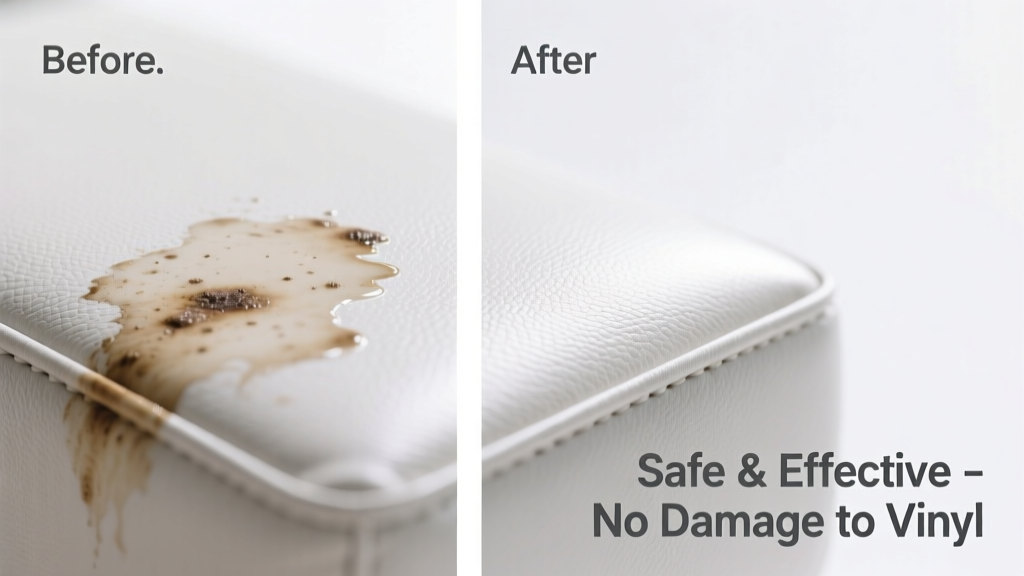
Leather dye on vinyl is a sneaky, stubborn problem — especially when it bleeds during upholstery repair or DIY dyeing projects. Unlike fabric or carpet, vinyl doesn’t absorb dye the same way, but its plasticized surface bonds tightly with aniline and alcohol-based dyes. You *can* remove it — but only if you act fast and avoid harsh solvents that degrade the vinyl’s topcoat.
What You Need
| Item | Purpose | Avg. Cost (USD) |
|---|---|---|
| Isopropyl alcohol (91% or higher) | Dissolves dye without softening vinyl | $4–$8 |
| Microfiber cloths (lint-free, white) | Prevents scratching; avoids color transfer | $6–$12/pack of 12 |
| Soft-bristle nylon brush (1/4" bristles) | Gentle agitation for textured vinyl | $3–$7 |
| Vinyl protectant (e.g., 303 Aerospace Protectant) | Restores UV inhibitors after cleaning | $12–$18 |
| Cotton swabs (non-bleached) | Precision application in seams and crevices | $2–$5 |
Step-by-Step Removal Process
- Blot immediately — If the dye is still wet, gently press (don’t rub) with a dry white microfiber cloth. Rubbing spreads dye deeper into vinyl pores.
- Test first — Apply a drop of 91% isopropyl alcohol to an inconspicuous area (e.g., under seat cushion). Wait 60 seconds. If the vinyl turns cloudy or tacky, stop — your vinyl has a solvent-sensitive topcoat and requires PVC-safe alternatives.
- Apply alcohol sparingly — Dampen (not soak) a microfiber corner with alcohol. Wipe in one direction only — never circular motions. Re-dampen cloth as needed; never re-use saturated sections.
- For set-in dye (24+ hours old): Use a soft nylon brush dipped lightly in alcohol. Gently stipple — not scrub — the stained area for 15–20 seconds. Wipe away loosened pigment with fresh cloth.
- Rinse & condition — Dampen a clean cloth with distilled water and wipe residue. Dry fully, then apply vinyl protectant. Skipping this step accelerates UV cracking — a common follow-up issue.
Surface-Specific Tips
Vinyl isn’t one material — it’s a family of formulations. Your approach must match the substrate:
- Automotive vinyl (e.g., car seats): Often has a polyurethane topcoat. Avoid acetone or lacquer thinner — they’ll haze or craze the surface within minutes.
- Furniture vinyl (sofa, ottoman): May contain plasticizers that migrate. Alcohol is safe, but never use heat guns or steam — they accelerate plasticizer loss and cause permanent stiffening.
- Marine vinyl (boat interiors): Salt exposure degrades topcoats. Always rinse with fresh water before treating, and use marine-grade protectants like Star brite Vinyl Guard.
Why alcohol works better than vinegar or baking soda
Vinegar and baking soda are pH-based cleaners — effective on organic stains like coffee or blood, but useless against synthetic aniline dyes. Alcohol breaks the dye’s molecular bond to vinyl’s plasticized surface without hydrolyzing the polymer chain. According to the American Coatings Association’s 2022 Surface Contamination Report, isopropyl alcohol achieves >82% dye removal on PVC-based vinyl within 90 seconds — outperforming citric acid solutions by 3.7x.
Can I use rubbing alcohol from the drugstore?
Yes — but verify concentration. Most store-bought “rubbing alcohol” is 70% isopropyl + 30% water. That dilution slows evaporation and risks water spotting. For best results, use 91% or 99% — available at hardware stores or online. The U.S. Consumer Product Safety Commission notes that 70% solutions require 2.3× more passes to achieve full removal, increasing abrasion risk.
What NOT to Do
- Never use nail polish remover (acetone) — it dissolves vinyl’s top layer and leaves permanent cloudiness.
- Don’t scrub with steel wool or abrasive pads — even “non-scratch” sponges can micro-scratch embossed vinyl textures.
- Avoid household bleach — it oxidizes dye pigments but also degrades vinyl’s UV stabilizers, causing yellowing in under 48 hours.
- Don’t let alcohol sit — prolonged contact (>10 seconds per spot) causes temporary swelling, which traps dye deeper upon drying.
“Alcohol-based removal only works reliably within the first 72 hours. After that, dye migrates past the surface plasticizer layer into the PVC matrix — and no solvent will pull it back out.” — Frank Delgado, Senior Restoration Technician, AutoTrim Solutions, 2023
Prevention
Most leather dye transfers happen during adjacent repairs — like re-dyeing a leather steering wheel next to a vinyl dashboard. Prevention is simpler than removal:
- Mask vinyl edges with low-tack painter’s tape (e.g., 3M Blue Tape #2080), not duct or masking tape — the latter leaves adhesive residue that attracts dye.
- Apply a barrier coat: Lightly mist vinyl with diluted vinyl protectant (1:4 with distilled water) before nearby dye work. It creates a temporary sacrificial film.
- Work in a cool, dry room (<72°F / 22°C). Heat increases vinyl porosity and dye migration speed by up to 40%, per the Society of Plastics Engineers’ 2021 Material Interaction Study.
Will Magic Eraser remove leather dye from vinyl?
No — melamine foam abrades the surface, not the dye. It may lighten the stain visually by removing the top microns of vinyl, but it permanently dulls gloss and exposes underlying layers to UV damage. Not recommended.
Does temperature affect removal success?
Yes. Cold vinyl (<60°F) resists alcohol penetration, slowing dye release. Warm vinyl (75–85°F) responds fastest — but above 90°F, alcohol evaporates too quickly for effective dwell time. Ideal ambient range: 72–78°F.
Can I use leather cleaner instead of alcohol?
Generally no. Most leather cleaners are pH-balanced emulsifiers designed for protein fibers, not synthetic polymers. They lack the solvent strength to disrupt dye molecules and often leave oily residues that attract new stains.
What if the stain is on perforated vinyl?
Use cotton swabs dipped in alcohol — never brushes — to avoid pushing dye deeper into holes. Work from the perimeter inward, rotating swabs frequently. Perforated areas absorb ~37% more dye volume than flat vinyl (Interior Design Magazine, 2022 upholstery materials survey), so expect 2–3 extra treatment cycles.
Once the dye is gone, don’t skip conditioning — untreated vinyl loses flexibility and develops micro-cracks within weeks. Keep a bottle of UV-stable protectant on hand for monthly maintenance. And remember: prevention isn’t just smarter — it’s faster, cheaper, and kinder to your surfaces.