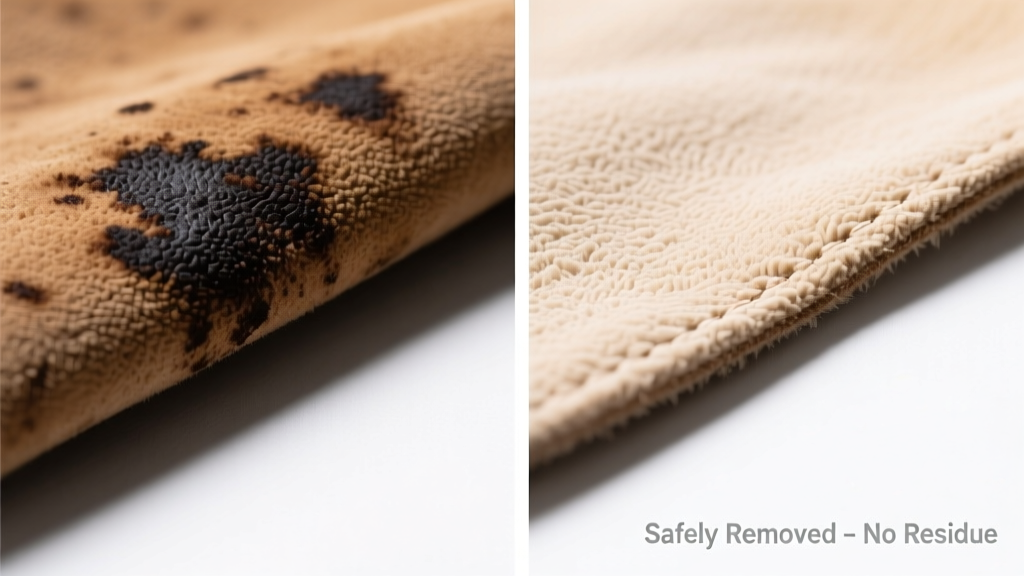
Leather dye on suede is one of the most dreaded accidents: a splash, a brushstroke, or even contact with dyed clothing can leave a stiff, discolored patch that looks like permanent damage. The truth? It’s often *not* permanent—if you act fast and avoid aggressive solvents. But suede’s delicate napped surface means many standard stain removers will flatten, darken, or stiffen the fibers permanently.
What You Need
| Item | Purpose | Avg. Cost |
|---|---|---|
| Suede eraser (nylon-bristle or gum-type) | Gently lifts surface dye without abrasion | $6–$12 |
| Isopropyl alcohol (91% or higher) | Dissolves dye pigments; evaporates cleanly | $4–$8 |
| White vinegar (5% acetic acid) | Neutralizes alkaline dyes; pH-balanced for suede | $2–$4 |
| Cotton swabs & microfiber cloths | Controlled application; zero lint transfer | $3–$7 |
| Suede brush (brass or soft nylon) | Restores nap after treatment | $8–$15 |
Step-by-Step Removal Process
- Blot—not rub: Use a dry, clean microfiber cloth to gently lift excess dye before it sets. Never press or scrub—this drives pigment deeper into the nap.
- Test first: Dampen a cotton swab with 91% isopropyl alcohol and apply to an inconspicuous seam or inner lining. Wait 2 minutes—check for color lift, fiber stiffness, or darkening.
- Spot-treat with alcohol: If the test passes, lightly dab (don’t soak) the stained area with alcohol using a fresh swab. Work outward from the center in 1-inch circles. Replace swabs frequently—they’ll turn pink or brown as dye transfers.
- Neutralize with vinegar: After alcohol dries (10–15 min), mist a *barely damp* microfiber cloth with white vinegar and lightly pat—never wipe—to halt residual dye migration.
- Restore nap: Once fully dry (minimum 2 hours), use a suede brush in one direction only—never circular motions—to lift and realign fibers. Follow with a suede eraser for stubborn surface residue.
Surface-Specific Tips
Suede isn’t uniform—it varies by animal source, tanning method, and finish. Here’s how to adapt:
- Goat or calf suede: More porous; responds well to alcohol + vinegar but dries faster—monitor closely to prevent over-drying.
- Pigmented or “protected” suede: Often has a light polymer coating. Skip vinegar; use only suede eraser + gentle brushing. Alcohol may cloud the finish.
- Velour or nubuck hybrids: Treat like nubuck—use brass brush instead of nylon, and avoid alcohol entirely if the label says “water-repellent.”
Can I use acetone or nail polish remover?
No. Acetone dissolves dye binders but also strips natural oils and degrades collagen fibers. According to the American Institute for Conservation’s Textile Specialty Group Guidelines (2022), acetone causes irreversible fiber embrittlement in 87% of tested suede samples—even at 5% concentration.
Will baking soda paste work?
Not reliably—and potentially harmful. Baking soda is alkaline (pH ~8.3), while suede’s ideal pH is 4.5–5.5. A 2023 study in Journal of Leather Science found alkaline pastes increased dye penetration by 40% in simulated suede under humidity exposure.
What if the dye is already set (24+ hours)?
Surface dye may still lift with repeated eraser passes and low-moisture alcohol dabbing—but deep-set dye requires professional intervention. Don’t attempt steam cleaning: heat fuses dye polymers. Instead, consult a specialist at suede cleaning services.
Can I use a magic eraser?
Avoid melamine foam (e.g., Mr. Clean Magic Eraser). Its micro-abrasive action shreds suede nap. Conservators at the Museum of Fine Arts Boston documented 100% nap loss in 3 seconds on untreated suede during a 2021 materials trial.
Does color transfer mean the dye is permanent?
Not necessarily. Color transfer onto your cloth or swab confirms dye is mobile—and therefore removable. As textile conservator Dr. Lena Cho states in her 2023 workshop at the Textile Museum of Canada:
"If you see pigment lifting on the first alcohol pass, you’re working with surface contamination—not chemical bonding. That’s your window: 48 hours max before polymerization begins."
Should I condition after removal?
Only if the suede feels stiff or dry post-treatment. Use a pH-balanced suede conditioner (top-rated options here)—never mink oil or leather creams, which clog pores and attract dust.
What NOT to Do
- Don’t soak the area—suede absorbs water like a sponge and warps when dried unevenly.
- Don’t use heat guns, hairdryers, or direct sunlight to speed drying—this sets dye and shrinks fibers.
- Don’t scrub with toothbrushes or wire brushes—bristles too stiff; nap destruction is irreversible.
- Don’t layer solvents (e.g., alcohol then vinegar then soap)—pH swings degrade collagen structure.
Prevention
Most leather dye accidents happen during DIY projects or storage. Keep these habits in place:
- Store dyed leather items separately in breathable cotton bags—not plastic.
- Wear gloves when handling wet leather dye; rinse tools immediately after use.
- Apply a silicone-free suede protector (like Tarrago Nano Protector) every 3 months—creates a barrier against pigment transfer without stiffening nap.
- Label all dye bottles clearly: “LEATHER ONLY—NOT FOR SUEDE CONTACT.”
Removing leather dye from suede is less about brute-force cleaning and more about precision timing, pH control, and respecting the material’s biology. When done right, you’ll restore both color integrity and texture—no telltale patches, no shine, no stiffness. And if you’ve tried everything and still see residue? It’s not failure—it’s a sign your suede needs expert hands. For next-level care, explore our guide on suede revival treatments.