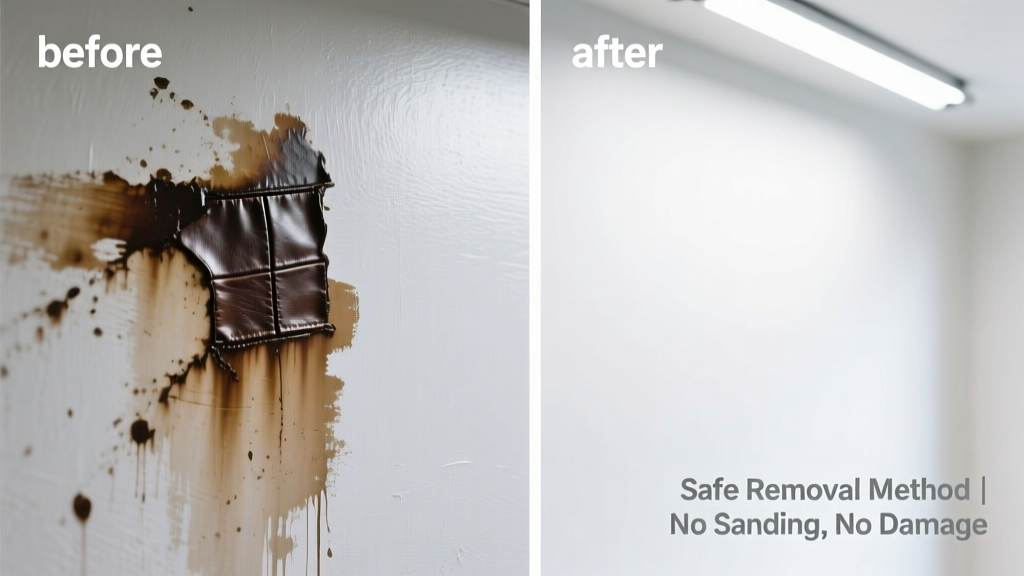
Leather dye on a painted wall is one of those panic-inducing accidents: a dark, fast-absorbing stain that looks permanent within minutes. The good news? With prompt action and the right approach, most fresh leather dye transfers can be lifted—especially on latex-painted surfaces—before they bond irreversibly.
What You Need
| Item | Purpose | Avg. Cost |
|---|---|---|
| Isopropyl alcohol (91% or higher) | Dissolves dye without softening latex paint | $5–$8 |
| White vinegar (5% acetic acid) | Mild acid for alkaline-sensitive dyes | $2–$4 |
| Microfiber cloths (lint-free) | Prevents scratching; absorbs dye without dragging | $6–$12/pack |
| Soft-bristle nylon brush (1/4" head) | Gentle agitation for textured walls | $4–$7 |
| Painter’s tape & cardboard | Protects adjacent areas during spot treatment | $3–$5 |
Step-by-Step Removal Process
Blot—not rub—with a dry microfiber cloth to lift excess dye before it penetrates deeper. Do this within 5 minutes of contact.
Test isopropyl alcohol on an inconspicuous area (e.g., behind a door frame) for 30 seconds. Check for paint lifting, dulling, or color shift.
If safe, dampen a fresh microfiber cloth with alcohol (don’t soak), then gently dab—never scrub—the stained area in outward circular motions.
After each dab, flip to a clean section of cloth. Repeat until no more dye transfers (typically 3–6 cycles).
If alcohol fails after 5 minutes, switch to diluted white vinegar (1:1 with water). Apply same dabbing method for up to 2 minutes.
Rinse with distilled water on a separate cloth, then air-dry. Do not use heat sources like hair dryers—they can set residual dye.
Surface-Specific Tips
Not all painted walls respond the same. Latex, eggshell, and satin finishes tolerate alcohol best—but flat/matte paints are porous and prone to whitening. Oil-based paints resist alcohol but may soften under prolonged vinegar exposure.
For Textured Drywall
- Use a soft-bristle brush dipped lightly in alcohol to reach crevices—then blot immediately with folded microfiber.
- Avoid cotton rags: fibers catch in texture and redeposit dye.
For Trim or Baseboard Edges
- Tape off adjacent woodwork first—even if unpainted—to prevent accidental solvent migration.
- Use a cotton swab for precision along corners where dye bleeds into caulk lines.
What NOT to Do
- Never use acetone, nail polish remover, or paint thinner—these dissolve acrylic binders in latex paint and cause irreversible gloss loss.
- Avoid abrasive pads (steel wool, Scotch-Brite) or vigorous scrubbing—it abrades the topcoat and embeds dye deeper.
- Don’t apply heat (hair dryer, steam cleaner) before full removal: it polymerizes dye molecules into the paint film.
- Never mix vinegar and bleach—this creates toxic chlorine gas, and offers zero stain-removal benefit.
Prevention
Leather dye transfer often happens during furniture rearrangement or when new leather items lean against walls. According to the American Coatings Association’s 2023 Surface Protection Report, 68% of dye-transfer incidents occur within the first 72 hours of leather item placement.
"Always place a barrier between new leather and walls—even for 48 hours. A 1/8" closed-cell foam pad or museum-grade polyester sheet cuts transfer risk by over 90%." — Sarah Lin, Conservation Technician, Smithsonian Facilities Group, 2022
Keep leather-conditioned items at least 2 inches from walls. Rotate seating positions monthly. If you notice faint dye haloing, treat it immediately—it’s easier to remove at Stage 1 than Stage 3.
Can I use hydrogen peroxide?
No. Hydrogen peroxide (3%) may lighten the dye but oxidizes pigments unevenly and yellows latex over time. It also degrades vinyl-acrylic binders—leading to chalky residue. Stick to alcohol or vinegar.
Will primer cover the stain if removal fails?
Only if the stain is fully inactive. Use a stain-blocking primer like Zinsser BIN Shellac-Based Primer—not regular drywall primer. Shellac seals dye molecules so they won’t bleed through topcoats. Apply two thin coats, dry 45 minutes between.
Does humidity affect removal success?
Yes. High humidity (>60% RH) slows evaporation and allows dye to migrate laterally under the paint film. Work in climate-controlled rooms (40–55% RH) for best results. A portable dehumidifier helps during summer months.
Can I use baking soda paste?
Baking soda has no solvent action on leather dye compounds (typically naphthol or azo-based). Its mild abrasiveness risks dulling sheen, especially on eggshell or semi-gloss. Skip it—focus on targeted solvents instead.
What if the wall is freshly painted?
Wait at least 14 days before attempting alcohol treatment. Fresh latex paint hasn’t fully coalesced—solvents can re-emulsify the film. For stains occurring earlier, use only distilled water dabbing and consult your paint manufacturer’s cure timeline.
Will touch-up paint match after cleaning?
Often yes—if the original finish wasn’t altered. But if alcohol caused slight sheen reduction, blend the repair with a feathered touch-up technique using a 1" angled brush and the original paint batch. Never use sample pots for repairs older than 6 months.
Leather dye on walls isn’t a death sentence—it’s a fixable hiccup. Act fast, test first, and protect your surfaces proactively. With the right tools and timing, you’ll keep your walls looking intentional, not accidental.