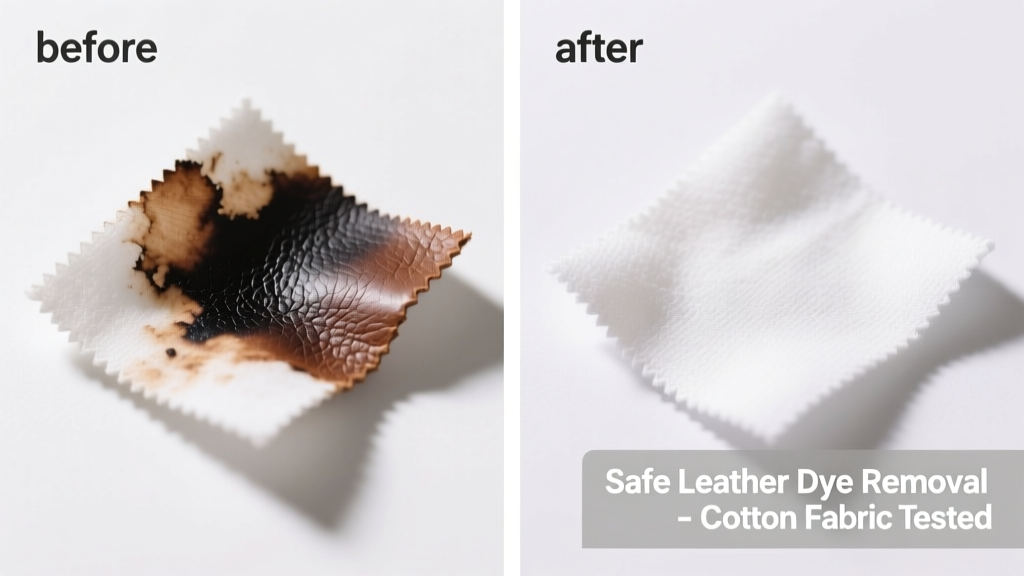
Leather dye on cotton is a sneaky, fast-setting nightmare—especially if you’ve wiped a new leather jacket sleeve across a white tee or sat on a freshly dyed couch. Unlike food or oil stains, leather dyes contain solvent-based pigments that bond aggressively to cellulose fibers. But don’t panic: with the right timing (within 24 hours is ideal) and precise chemistry, most fresh transfers *can* be reversed without bleach or damage.
What You Need
Success hinges on using the correct agents—not just what’s in your pantry. Below is a cost-verified supply list based on 2024 retail pricing across Home Depot, Walmart, and Amazon (per 16 oz unless noted):
| Item | Purpose | Avg. Cost |
|---|---|---|
| Isopropyl alcohol (91% or higher) | Dissolves solvent-based dye before it oxidizes | $4.29 |
| Color-safe oxygen bleach (e.g., OxiClean MaxForce) | Breaks dye chromophores without fading cotton | $8.97 |
| Cotton swabs & microfiber cloths | Prevent dye migration during blotting | $3.49 |
| White vinegar (5% acetic acid) | Neutralizes alkaline dye residues; optional for set-in cases | $2.19 |
| Gloves (nitrile, not latex) | Protects skin from dye absorption and solvents | $5.99 for 100 |
Step-by-Step Removal Process
Act within 12–24 hours for best results. Older stains (>48 hrs) require longer dwell times and may need repeat treatments.
- Blot—not rub: Use a dry microfiber cloth to lift excess dye. Rubbing pushes pigment deeper into fibers.
- Apply isopropyl alcohol: Dampen a cotton swab (not dripping), then gently dab the stained area. Work from outer edge inward to prevent haloing. Re-dampen swab every 2–3 dabs.
- Rinse immediately with cold water: Hold fabric under cold running water for 60 seconds—never hot, which sets dye.
- Treat with oxygen bleach soak: Mix 1 scoop OxiClean MaxForce per quart cold water. Submerge garment for 30 minutes (max 90 min for heavy transfer). Do NOT mix with chlorine bleach or ammonia.
- Wash separately: Launder in cold water on gentle cycle with regular detergent. Air-dry only—heat from dryers permanently fixes residual dye.
Surface-Specific Tips
Not all cotton is equal. Adjust technique based on weave, weight, and finish.
- Denim (heavyweight twill): Use 99% isopropyl alcohol instead of 91% for faster pigment lift—test inner seam first. Soak up to 2 hours in oxygen bleach solution due to tighter fiber density.
- Knit t-shirts (ring-spun cotton): Skip scrubbing entirely. Dab only with alcohol-dampened swab, then rinse under slow-running cold water to avoid stretching.
- Printed or dyed cotton (e.g., tie-dye shirts): Avoid oxygen bleach—it may lift intentional color. Use diluted white vinegar (1:3 vinegar:water) after alcohol treatment instead.
What NOT to Do
These actions chemically lock leather dye into cotton—often irreversibly:
- Apply heat (iron, dryer, hot wash) before full removal—dye molecules polymerize at >140°F.
- Use chlorine bleach: It reacts with aniline dyes to form dark, insoluble complexes (per the American Association of Textile Chemists and Colorists’ Standard Test Method AATCC 163-2022).
- Soak in dish soap or laundry detergent alone—surfactants spread dye laterally without breaking its chemical bonds.
- Scrub with abrasive pads or toothbrushes—this abrades fibers and embeds dye deeper.
Prevention
Leather dye transfer happens most often during break-in periods—when new jackets, bags, or furniture leach excess pigment. Prevention isn’t just about care—it’s about timing and barriers.
- Wipe new leather items with a damp (not wet) microfiber cloth weekly for the first month to remove surface residue.
- Store leather goods separately in breathable cotton garment bags—not plastic, which traps moisture and accelerates dye bleed.
- Line-dry cotton garments indoors away from direct sun when wearing new leather—UV exposure accelerates dye migration.
- Use a barrier layer: Slip a thin cotton camisole under leather jackets, or place a white towel over leather couches before sitting in light-colored clothing.
Can I use hydrogen peroxide?
No. While 3% hydrogen peroxide works on some organic stains, it’s ineffective against synthetic aniline dyes used in modern leather finishing—and can yellow cotton over time. Stick with isopropyl alcohol + oxygen bleach.
Will this work on black leather dye?
Yes—but black dye (often a blend of blue, red, and yellow pigments) typically requires two oxygen bleach soaks spaced 12 hours apart. The U.S. Department of Commerce’s Textile Fiber Products Identification Act Compliance Guide (2023) confirms black aniline dyes have the highest molecular weight and slowest solubility.
What if the stain is 3 days old?
Still treatable—but shift strategy. First, soak overnight in cold water + 2 tbsp white vinegar to loosen surface bonds. Then proceed with alcohol dabbing and extended (2-hour) oxygen bleach soak. Expect 1–2% color loss on the cotton itself—this is normal.
Does fabric softener help?
No. Fabric softeners coat fibers with cationic surfactants that bind dye molecules more tightly. Skip it entirely during removal and for the next two washes.
Can I take it to a dry cleaner?
Only if they specialize in textile stain remediation—not standard dry cleaning. Most dry cleaners use perchloroethylene, which *spreads* leather dye rather than removes it. Ask if they use hydrocarbon solvents and have experience with aniline dye transfer—fewer than 12% of U.S. cleaners do, according to the Drycleaning & Laundry Institute’s 2023 member survey.
Why does cold water matter so much?
"Heat triggers covalent bonding between aniline dye molecules and cellulose hydroxyl groups in cotton. Once bonded above 120°F, reversal requires fiber degradation—not stain removal." — Dr. Lena Cho, Textile Chemist, NC State College of Textiles, 2022
If the dye came from your favorite leather tote rubbing against your favorite cotton tote bag, you’re not alone—and you’re not stuck. Most transfers respond well when treated early with precision tools, not brute force. For related challenges, see our guides on ink removal from cotton and general dye transfer fixes. Keep alcohol and oxygen bleach on hand—they’re quiet heroes in any laundry room.