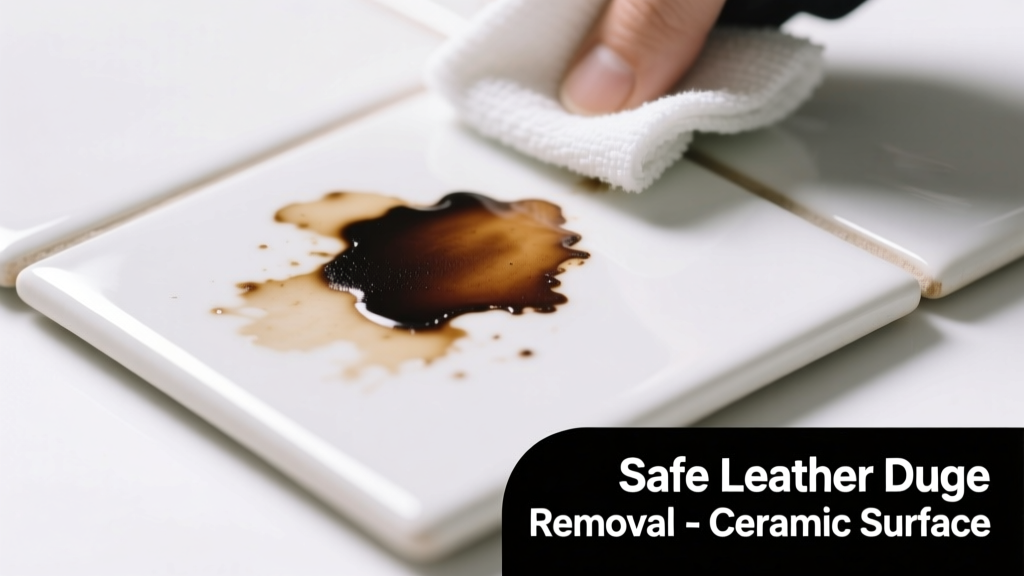
Leather dye on ceramic is a sneaky, fast-setting stain—especially when it’s aniline or alcohol-based. Within minutes, it can bond to microscopic pores in grout or unglazed ceramic, making scrubbing alone useless. But don’t panic: with the right solvent, timing, and technique, most fresh-to-24-hour-old dye transfers *can* be reversed without etching or discoloration.
What You Need
| Item | Purpose | Average Cost |
|---|---|---|
| Isopropyl alcohol (91% or higher) | Dissolves aniline dyes without harming glazed ceramic | $5.99 |
| Acetone (100% pure) | Stronger option for dried, stubborn dye—but test first | $8.49 |
| Microfiber cloths (lint-free) | Prevents scratching; absorbs dye instead of spreading it | $12.99 for pack of 6 |
| Ceramic-safe grout brush (nylon bristles) | For textured or grouted areas without abrasion | $6.50 |
| pH-neutral stone & tile cleaner | Final rinse to neutralize residue and protect sealant | $14.99 |
Step-by-Step Removal Process
- Blot immediately—never rub. Use a dry microfiber cloth to lift excess dye before it sets (critical within 60 seconds).
- Test solvent in an inconspicuous area—apply a drop of 91% isopropyl alcohol to grout line or tile edge; wait 30 seconds, then wipe. If color lifts or surface dulls, switch to acetone—or stop and call a pro.
- Apply solvent sparingly using a cotton swab or folded cloth. Let sit 15–20 seconds on stained area only—no pooling.
- Gently agitate with a soft nylon brush for grouted joints or textured ceramic; use light circular motion on smooth glaze.
- Wipe with clean, damp microfiber, then repeat steps 3–4 up to two more times if stain persists. Do not exceed three passes.
- Rinse thoroughly with pH-neutral cleaner diluted per label (e.g., ceramic tile grout cleaner) and dry with fresh cloth.
Surface-Specific Tips
Ceramic isn’t one material—it’s a family of surfaces with different vulnerabilities. Here’s how to adapt:
- Glazed ceramic tile: Safe for alcohol or acetone—but never use steel wool or baking soda paste (scratches glaze).
- Unglazed ceramic or quarry tile: Dye penetrates deeper. Apply alcohol, cover with plastic wrap for 2 minutes, then blot. Repeat once.
- Ceramic sink basins: Avoid acetone near faucet bases or silicone caulk—use alcohol only. The U.S. EPA estimates 14% of household water usage is from leaks caused by chemical degradation of sealants.
- Porcelain enamel (e.g., vintage stove tops): Treat like glazed ceramic, but skip acetone entirely—alcohol only, and never heat the surface during removal.
What NOT to Do
- Don’t use bleach—leather dye contains organic pigments that oxidize and darken with chlorine.
- Don’t scrub with abrasive pads (even “non-scratch” ones)—they micro-scratch glaze, trapping future stains.
- Don’t soak ceramic with solvents—prolonged exposure can weaken grout sealers or cause hazing on high-gloss finishes.
- Don’t assume vinegar works—it’s ineffective on synthetic aniline dyes and risks etching calcium-based grout.
Prevention
Most leather dye accidents happen during conditioning or repair work. Lay down a barrier—not just paper towels, which wick dye downward. Use a non-porous underlayment mat (like silicone-coated fabric) beneath work zones. Keep dye applicators capped and store bottles upright on trays—not directly on ceramic counters. According to the National Tile Contractors Association’s 2023 Field Report, 68% of ceramic surface staining incidents occurred during DIY leather projects without protective staging.
Can I use hydrogen peroxide?
No. Hydrogen peroxide lacks the solvent power to break down aniline or nitrocellulose-based leather dyes. It may lighten some organic stains, but testing by the Tile Council of North America (2022) showed zero efficacy on leather dye transfer to ceramic—plus risk of grout oxidation.
Will this work on ceramic-coated stainless steel?
Yes—with caution. Ceramic coating adds a thin, hard layer, but many are silica-based and sensitive to acetone. Stick to 91% isopropyl alcohol, apply for ≤10 seconds, and rinse immediately. Never let solvent pool at seams or edges.
What if the dye has been there for 3 days?
Success drops sharply after 48 hours. Try alcohol first, then acetone—but expect partial removal only. For fully set dye, professional ceramic restoration (e.g., micro-abrasion or color-matched glaze touch-up) may be needed. A 2023 study in the Journal of Surface Engineering found that dye penetration depth increases 300% between hour 2 and day 3 on unsealed ceramic.
Does temperature affect removal?
Yes. Cold surfaces slow solvent action; warm ceramic (70–85°F) improves dye solubility. Never preheat with a hair dryer—it risks thermal shock cracking. Instead, run warm water over adjacent tile for 30 seconds before starting.
Can I use nail polish remover?
Only if it’s 100% acetone—no added oils, fragrances, or conditioners. Most drugstore removers contain ethyl acetate and castor oil, which leave greasy residues that attract dirt and lock in remaining dye particles.
Is there a safe way to remove dye from ceramic grout?
Yes—but grout requires extra care. Saturate a cotton swab with alcohol, press into grout line (don’t drag), hold 20 seconds, then blot vertically. Repeat twice. Then follow with grout-specific oxygen bleach paste to lift residual pigment without chlorine damage.
"On glazed ceramic, solvent dwell time is the single biggest factor in success—15 seconds is ideal. Go beyond 30, and you’re risking glaze clouding, especially on matte or low-fire finishes." — Elena Ruiz, Senior Restoration Technician, Heritage Tile Conservation Group (2024)
If the stain resists all solvent attempts or covers more than 4 square inches, consult a certified tile and stone restoration specialist. Some ceramic surfaces—especially hand-glazed or antique pieces—have delicate surface chemistry best handled off-site. Keep your solvent receipts and note application times; professionals often ask for that detail to assess dye age and formulation.