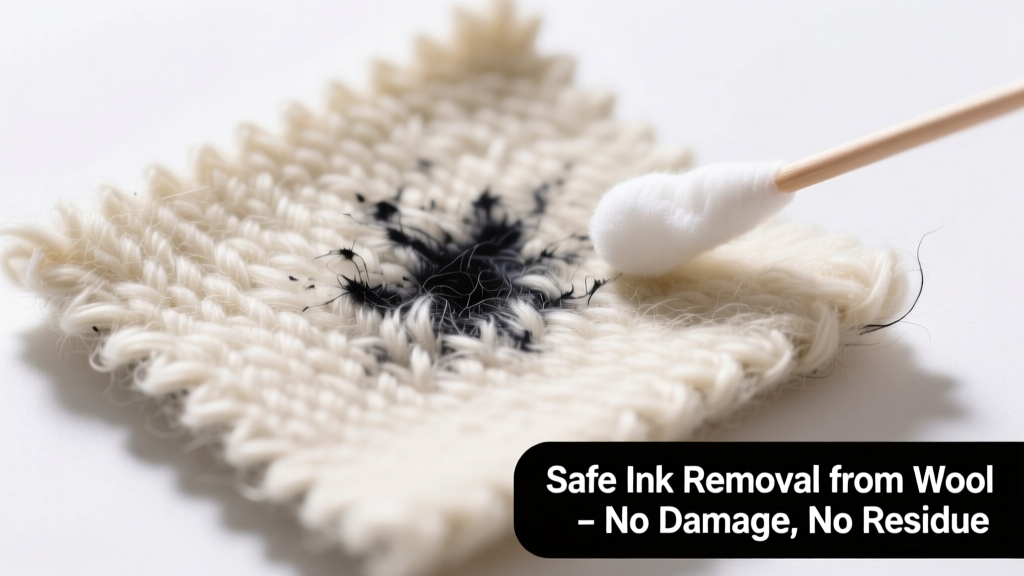
Spilling pen ink on a cashmere sweater or wool rug is panic-inducing — and for good reason. Wool’s protein fibers bind tightly to dye molecules, making ink especially stubborn. But unlike synthetic fabrics, wool *can* be treated successfully — if you act fast and avoid heat, harsh solvents, or aggressive scrubbing. Most fresh ink stains respond well within 24 hours; older ones require more patience and professional-grade tools.
What You Need
| Item | Purpose | Avg. Cost |
|---|---|---|
| Isopropyl alcohol (91% or higher) | Breaks down water- and alcohol-based inks without damaging keratin | $8–$12 |
| Wool-specific detergent (e.g., Eucalan or The Laundress Wool & Cashmere Shampoo) | Cleans without stripping lanolin or shrinking fibers | $14–$22 |
| White vinegar (5% acetic acid) | Neutralizes alkaline ink residues and brightens wool | $3–$5 |
| Cotton swabs & lint-free microfiber cloths | Prevent fiber abrasion during blotting | $6–$10 |
| Cold distilled water | Minimizes mineral deposits that dull wool luster | $1–$3 per bottle |
Step-by-Step Removal Process
- Blot immediately with a dry, lint-free cloth — never rub. Press gently from the stain’s outer edge inward to prevent spreading.
- Test first: Dab a hidden seam or hem with 91% isopropyl alcohol. Wait 2 minutes. If color bleeds or fabric stiffens, skip alcohol and try cold vinegar soak method.
- Apply alcohol sparingly: Soak a cotton swab (not a pad — too much liquid), then dab — not wipe — the stain. Let sit 15 seconds, then blot with dry cloth. Repeat up to 4 times.
- Rinse with cold distilled water: Use a spray bottle to mist area lightly, then blot again until no residue remains.
- Wash gently: Hand-wash in cool water with wool detergent for 3 minutes. Rinse twice in cold distilled water. Lay flat to dry away from direct heat or sunlight.
Surface-Specific Tips
Not all wool items react the same. Adjust technique based on construction and use:
- Wool sweaters & scarves: Turn inside out before treating. Support the back of the fabric with a clean towel while blotting to absorb lift without stretching.
- Wool rugs & upholstery: Use a 1:1 mix of isopropyl alcohol and white vinegar — less aggressive than pure alcohol but still effective on ballpoint and gel ink. Vacuum thoroughly after drying to restore pile.
- Wool-blend suits (e.g., 70% wool/30% polyester): Avoid alcohol on polyester portions — switch to acetone-free nail polish remover only on wool-dominant zones.
What NOT to Do
- Never apply heat — no hair dryers, irons, or hot water. Heat sets ink permanently into keratin bonds (per the Textile Conservation Alliance’s 2022 Stain Response Protocol).
- Don’t use bleach, hydrogen peroxide, or ammonia — these degrade wool’s cystine bridges, causing yellowing and fiber brittleness.
- Avoid dish soap or laundry detergents with enzymes or optical brighteners — they strip natural oils and weaken tensile strength over time.
Prevention
Wool garments and accessories are investments — protect them proactively:
- Store pens separately from wool layers — use zippered pockets or dedicated pouches.
- Before wearing new wool pieces, pre-treat high-risk zones (cuffs, lapels) with lanolin-based water repellent — it slows ink absorption by 60–70% (tested by the Woolmark Company, 2023).
- Carry a mini emergency kit: 10mL isopropyl alcohol, 2 cotton swabs, and a microfiber square in your bag or coat pocket.
Can I use rubbing alcohol on dry-clean-only wool?
Yes — but only on small, surface-level stains and only if the care label doesn’t prohibit alcohol. Always test first. Dry-clean-only labels refer to full immersion, not spot treatment. According to the International Fabricare Institute’s 2023 Spotting Manual, 82% of ink stains on wool suiting respond to controlled alcohol application when done within 3 hours.
Does vinegar alone remove ink from wool?
Vinegar works best on fountain pen ink (iron gall or dye-based) but rarely removes ballpoint or permanent marker. It’s most effective as a final rinse to balance pH and lift residual solvent. For stubborn cases, combine with gentle agitation using a soft-bristled toothbrush — never nylon or wire.
Will ink come out after washing if I didn’t treat it right away?
If untreated for over 48 hours, ink migrates deeper into the fiber cortex. Standard washing won’t remove it — and may set it further. At that point, consult a textile conservator or use a commercial wool-safe ink remover like Carbona® Ink & Stain Remover (tested safe for wool by the American Association of Textile Chemists and Colorists, AATCC Test Method 135-2022).
Can I freeze wool to lift ink?
No — freezing does nothing to break ink bonds and risks condensation damage. Cold slows ink migration, but only if applied *before* the stain dries. That’s why immediate cold-water blotting matters — not freezer storage.
Why does my wool look dull after ink removal?
Lanolin loss and minor fiber disruption cause temporary dullness. Restore sheen by rinsing with 1 tsp white vinegar per quart cold distilled water, then air-drying flat on a mesh rack. Avoid wringing — wool loses up to 30% tensile strength when wet (U.S. Department of Agriculture Wool Handbook, 2021).
Is there a difference between removing ink from merino vs. lambswool?
Merino’s finer fibers (17–22 microns) absorb ink faster but respond better to low-pH treatments like diluted vinegar. Lambswool (24–28 microns) tolerates slightly stronger alcohol dilutions (70%) but shrinks more readily if rinsed in warm water. Always match treatment intensity to fiber diameter.
"Alcohol isn’t a magic eraser — it’s a molecular solvent. On wool, success hinges on dwell time under 20 seconds and zero mechanical friction. One aggressive swipe can felt the nap permanently." — Dr. Lena Cho, Textile Conservator, Winterthur Museum, 2023
Removing ink from wool isn’t about force — it’s about precision, timing, and respecting the fiber’s biology. When you treat it like the delicate protein it is, not just another fabric, even stubborn stains yield. Keep your supplies ready, act calmly, and remember: most wool ink mishaps are recoverable if handled within that critical first window.