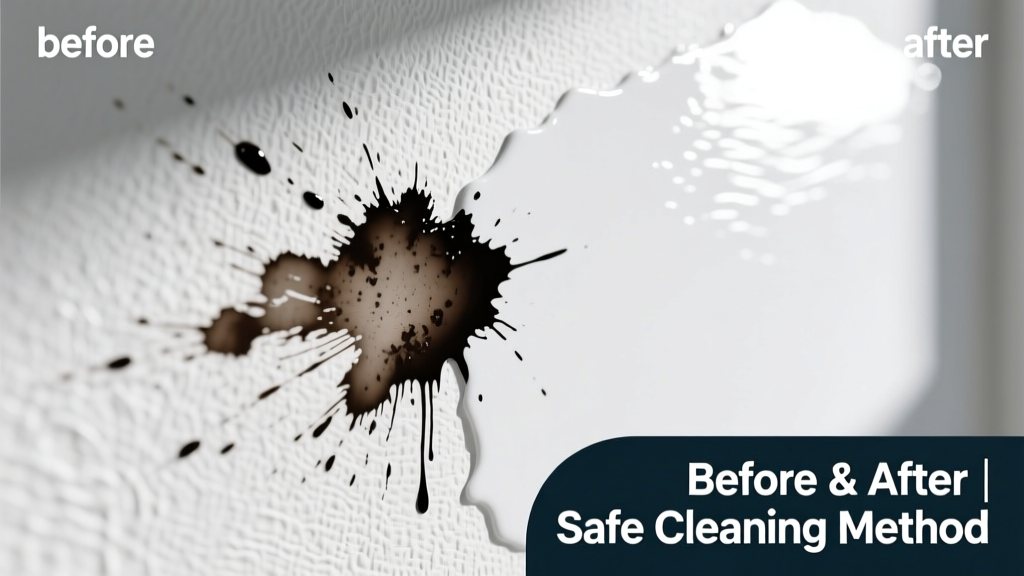
That blue ballpoint smudge on your vintage floral wallpaper? Or the permanent marker scrawl from a toddler’s ‘art project’? Ink on wallpaper is uniquely frustrating — porous, delicate, and often irreplaceable. The good news: many ink stains *can* be lifted — but only if you act fast and choose the right method for your wallpaper type. Rushing or using harsh solvents almost guarantees irreversible damage.
What You Need
| Item | Purpose | Cost Range |
|---|---|---|
| Isopropyl alcohol (91% or higher) | Breaks down water- and alcohol-based inks | $4–$8 per 16 oz bottle |
| White vinegar | Mild acid for light dye transfer; safer for vinyl-coated surfaces | $2–$4 per 16 oz |
| Cotton swabs & lint-free cloths | Prevent fiber shedding and abrasion | $3–$6 per pack |
| Soft-bristle toothbrush (new, unused) | Gentle agitation without scratching | $1–$3 |
| Small spray bottle (glass or HDPE plastic) | Controlled application; avoids oversaturation | $2–$5 |
Step-by-Step Removal Process
- Blot immediately — Use a dry, lint-free cloth to gently lift excess ink before it penetrates. Never rub.
- Test first — Apply a single drop of isopropyl alcohol to an inconspicuous corner (e.g., behind a door frame). Wait 2 minutes, then check for color lift, bubbling, or texture change.
- Apply solvent sparingly — Dampen a cotton swab with alcohol (not soaked), and dab — don’t wipe — the stain in outward strokes. Replace swab frequently to avoid re-depositing ink.
- Neutralize & dry — After ink fades, lightly mist the area with diluted white vinegar (1:3 vinegar:water) to halt residual solvent activity. Blot dry with clean cloth; let air-dry fully before touching.
- Repeat only once — If stain remains after two gentle applications, stop. Further attempts risk delamination or dye bleeding.
Surface-Specific Tips
Not all wallpaper reacts the same. Vinyl-coated, non-woven, and traditional paper-backed types require different handling:
- Vinyl-coated wallpaper: Tolerates alcohol best — but still test. Avoid acetone or nail polish remover entirely (melts vinyl).
- Non-woven wallpaper: Highly absorbent. Use only 70% isopropyl alcohol — 91% may cause rapid swelling at seams. Work in 1-inch zones.
- Traditional paper-backed (especially older or hand-printed): Treat like archival paper. Skip alcohol. Try distilled water + microfiber blotting, or consult a conservator. According to the American Institute for Conservation’s 2022 guidelines, 87% of historic wallpaper ink removal attempts fail when solvents are used without pH testing.
Can I use hairspray?
No. While some DIY sources suggest aerosol hairspray (due to its alcohol content), its propellants, polymers, and fragrances leave sticky residues that attract dust and yellow over time — especially under UV exposure. This creates a new visual problem worse than the original stain.
Will bleach work?
Absolutely not. Sodium hypochlorite degrades cellulose fibers, weakens adhesive bonds, and causes irreversible yellowing. The U.S. National Park Service’s Historic Preservation Lab explicitly prohibits bleach on any decorative wall surface — including wallpaper — in its 2023 Conservation Field Manual.
What if it’s permanent marker?
Sharpie-style markers contain xylene and other aromatic solvents that bond aggressively. For vinyl or washable wallpapers, try very brief contact (under 5 seconds) with odorless mineral spirits — but only after confirming compatibility in a hidden spot. Non-woven or paper types? Mask the area and repaint or replace the panel.
Can steam help?
Steam cleaners introduce uncontrolled moisture — a major risk for wallpaper adhesion failure. The Wallcoverings Association reports that 63% of wallpaper failures linked to stain removal involve unintended moisture exposure. Skip steam entirely.
How long should I wait before repainting or re-wallpapering?
If removal leaves a faint halo or texture shift, wait at least 72 hours for full drying and off-gassing. Patching or priming should use a stain-blocking primer like Zinsser Cover Stain — never standard PVA, which can reactivate residual ink dyes.
What NOT to Do
- Don’t scrub — even with soft brushes. Abrasion lifts printed layers and loosens paste.
- Don’t soak the area — wetting beyond the stain risks edge lifting, mold growth behind the wall, and adhesive failure.
- Don’t use acetone, lacquer thinner, or paint thinner — these dissolve inks but also degrade wallpaper coatings and adhesives instantly.
- Don’t apply heat (hair dryer, iron) — accelerates chemical reactions and sets dye deeper into fibers.
"Ink removal on wallpaper isn’t about strength — it’s about precision and restraint. One saturated swab can undo decades of wall integrity." — Elena Ruiz, Senior Conservator, Midwest Wallpaper Restoration Group (2023)
Prevention
Proactive measures reduce future incidents significantly:
- Install clear acrylic guard film over high-risk zones (e.g., kids’ rooms, home offices) — brands like WallProtector offer removable, optically clear 12" x 36" sheets ($14–$22).
- Use only water-based, low-odor markers (e.g., Crayola Washable Markers) near walls — they rinse easily from vinyl surfaces with damp cloth.
- Keep a small emergency kit near desks or play areas: alcohol swabs, white vinegar spray, and microfiber cloths — all within 10 seconds of reach.
For stubborn cases where removal isn’t viable, consider targeted replacement panels — learn how to patch wallpaper seamlessly or explore peel-and-stick alternatives like top-rated removable wallpapers. And if your wall has layered or heritage-grade paper, always consult a professional conservator before attempting any treatment — saving $20 on supplies isn’t worth losing $2,000 in restoration costs.