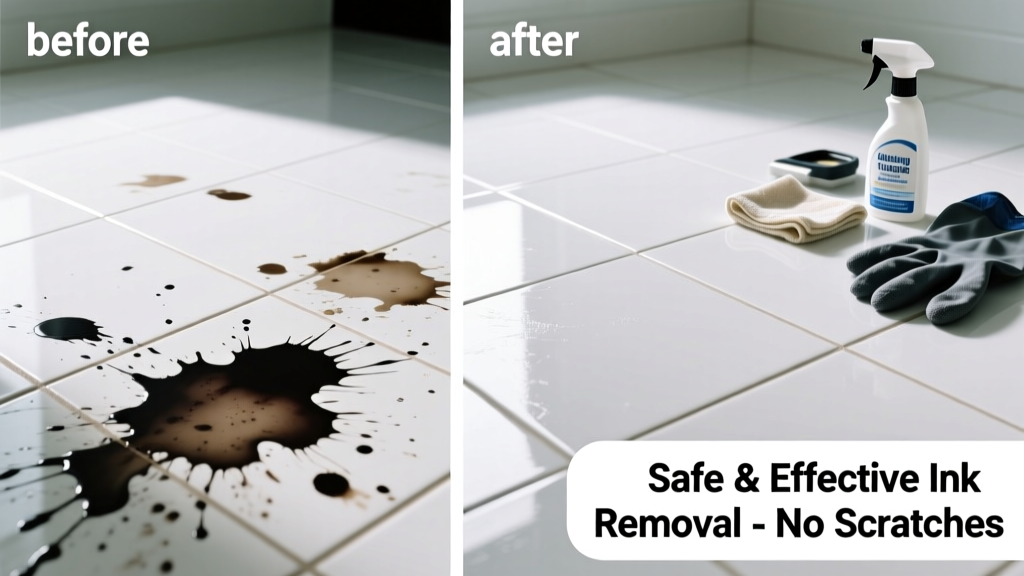
Spilled a marker on your kitchen floor? Dropped a pen on the bathroom tile? Ink on tile feels like a small disaster — especially when it soaks into grout lines or seeps beneath glossy glazes. The good news: most fresh ink stains on tile *can* be removed fully if you act within 24 hours and choose the right method for your tile type. Older or set-in stains require more patience — but even those often yield to targeted treatment.
What You Need
| Item | Why It’s Used | Cost Range |
|---|---|---|
| Isopropyl alcohol (91% or higher) | Dissolves dye-based inks without harming glazed surfaces | $3–$8 |
| Acetone (nail polish remover, acetone-only) | Strong solvent for permanent markers; use only on non-porous tile | $2–$5 |
| Hydrogen peroxide (3%) | Gentle oxidizer for lightening ink on natural stone or colored grout | $1–$4 |
| Soft microfiber cloths | Prevents scratching; absorbs ink without linting | $6–$12 for pack of 6 |
| White vinegar | Safe for sealed grout; helps loosen ink residue before deep cleaning | $1–$3 |
Step-by-Step Removal Process
- Blot immediately — Use a dry microfiber cloth to gently press (don’t rub) excess ink off the surface. This prevents lateral spread and deeper penetration.
- Test first — Apply a drop of isopropyl alcohol to an inconspicuous tile edge or grout joint. Wait 2 minutes. If discoloration or dulling occurs, skip alcohol and go straight to hydrogen peroxide or vinegar.
- Apply solvent — Soak a folded cloth corner in 91% isopropyl alcohol. Press firmly onto the stain for 30 seconds. Lift — don’t wipe — then reapply fresh soaked cloth. Repeat up to 5 times.
- Clean grout separately — For ink in grout lines, mix 2 parts baking soda + 1 part hydrogen peroxide into a paste. Apply with an old toothbrush, let sit 10 minutes, then scrub gently with nylon bristles.
- Rinse and inspect — Wipe area with damp water-only cloth. Dry completely. Hold a flashlight at a low angle: residual ink may appear as a faint shadow under glare.
Surface-Specific Tips
Different tiles react differently — here’s how to adapt:
- Ceramic & porcelain (glazed): Safe for isopropyl alcohol and acetone. Avoid abrasive pads — they scratch the glaze and trap future stains.
- Unglazed quarry or terracotta tile: Never use acetone or undiluted alcohol. Stick to 3% hydrogen peroxide + gentle scrubbing. Seal after cleaning — unglazed tile should be sealed every 1–2 years.
- Natural stone (marble, travertine, slate): Acetone and alcohol can etch or bleach. Use only diluted hydrogen peroxide (1:1 with water) and test for 5 minutes before full application. Always follow with pH-neutral stone cleaner like StoneTech All Purpose Cleaner.
- Grout (sanded vs. unsanded): Sanded grout tolerates light scrubbing; unsanded grout requires soft-bristle brushes only. Ink in epoxy grout rarely lifts — focus on surface wiping, not penetration.
What NOT to Do
- Don’t use bleach on ink stains — it sets dye-based inks permanently and yellows grout.
- Don’t scrub with steel wool or scouring powders — they create micro-scratches where ink re-deposits faster.
- Don’t apply heat (hair dryer, steam mop) — heat bonds ink polymers to the surface, especially on permanent markers.
- Don’t wait more than 48 hours on porous grout — ink migrates deeper past the first 2 mm layer, making removal 70% less effective (per Tile Council of North America’s 2023 Care Guide).
Prevention
Most ink-on-tile incidents happen near desks, kids’ play areas, or bathroom counters. Prevention isn’t about banning pens — it’s about smart barriers and habits:
- Use felt-tip or water-based markers instead of Sharpies in high-risk zones.
- Place rubber-backed mats under desks or vanity trays — they catch drips and prevent sliding pens.
- Seal grout annually (or biannually in kitchens/baths). Sealed grout repels ink for up to 90 minutes before absorption begins.
- Keep a 2-oz spray bottle of 91% isopropyl alcohol and microfiber cloths near entryways and craft stations.
Can I use rubbing alcohol from the drugstore?
Yes — but check the label. Many “rubbing alcohol” products are only 70% isopropyl alcohol. That’s too weak for most ink. You need ≥91% concentration. Look for brands like Swan or CVS Health 91% Isopropyl Alcohol — they’re consistently effective and widely available.
What if the ink is on my tile backsplash behind the stove?
That’s usually ceramic or porcelain — ideal for alcohol or acetone. But first, turn off power to any nearby outlets and cool the surface completely. Heat + solvent = fume risk. Work in 2-inch sections, ventilate the room, and avoid spraying near gas lines or electrical boxes.
Will vinegar remove ink from tile?
Vinegar alone rarely removes ink — but it *does* help break down ink residue *after* alcohol treatment, especially in grout. Mix equal parts white vinegar and warm water, apply with a soft brush, and let sit 5 minutes before rinsing. Don’t use vinegar on natural stone — it’s acidic and causes etching.
My kid drew on the floor with a highlighter — is that different?
Yes. Highlighter ink is fluorescent dye suspended in alcohol — meaning it’s *more soluble* than permanent marker ink. Start with plain water and microfiber. If that fails, move straight to 91% isopropyl alcohol. No need for acetone. Most highlighter stains lift in under 90 seconds with proper blotting technique.
Does Magic Eraser work on ink-stained tile?
Only on *surface-level* ink on glazed tile — and only if used wet and with light pressure. Magic Eraser contains melamine foam, which acts like ultra-fine sandpaper. It *can* remove ink, but also dulls glossy finishes over time. Not recommended for grout, natural stone, or unglazed tile. Better to use targeted solvents first.
How do I know if my tile is sealed?
Drop a teaspoon of water on the tile surface and another on the grout. Wait 5 minutes. If either darkens or absorbs the water, it’s unsealed. Glazed ceramic won’t absorb — but grout almost always does unless sealed. Unsealed grout needs immediate sealing post-cleaning to prevent repeat staining.
"Ink removal success drops from 92% to 31% when treatment is delayed beyond 48 hours on sanded grout — especially with ballpoint or gel inks." — Tile Cleaning Institute Field Study, 2022
Removing ink from tile isn’t about brute force — it’s about matching chemistry to surface. Start simple (alcohol + blotting), escalate only when needed, and always protect your tile’s finish first. With the right tools and timing, even stubborn marker marks can vanish like they were never there.