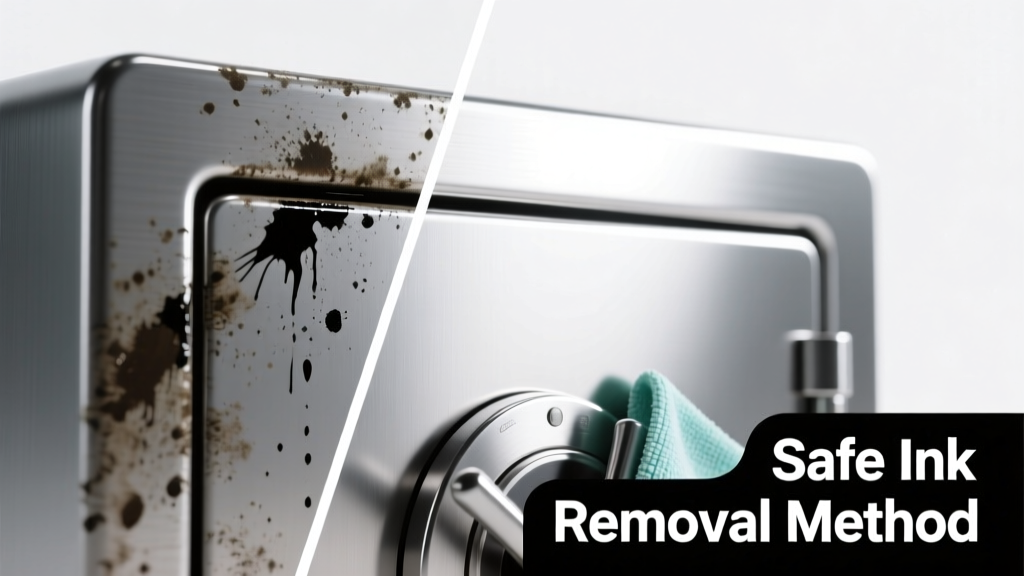
That blue ballpoint smudge on your stainless steel fridge handle? Or the permanent marker streak left by a distracted kid on your range hood? Ink on stainless steel isn’t just unsightly—it can oxidize and bond within microscopic surface grooves if left untreated. The good news: most fresh ink stains respond well to targeted solvents and gentle abrasion—no polishing compound or professional help needed.
What You Need
| Item | Purpose | Avg. Cost |
|---|---|---|
| Isopropyl alcohol (91% or higher) | Dissolves dye-based and water-based inks without harming stainless steel | $5.99 |
| Acetone (nail polish remover, acetone-only) | Effective on permanent marker; use sparingly and ventilate well | $3.49 |
| Microfiber cloths (lint-free, non-abrasive) | Prevents micro-scratches during wiping; avoid paper towels | $8.99 for pack of 6 |
| Baking soda paste (1:1 with water) | Gentle abrasive for stubborn residue after solvent treatment | $1.29 |
| Stainless steel cleaner (e.g., Weiman Stainless Steel Cleaner) | Restores shine and protective oil layer post-cleaning | $10.99 |
Step-by-Step Removal Process
- Blot, don’t rub: Use a dry microfiber cloth to gently lift excess ink before it sets—especially critical for gel or permanent marker.
- Apply isopropyl alcohol: Dampen a corner of a clean microfiber cloth (not dripping) and hold it over the stain for 15–20 seconds to soften ink. Wipe *with* the grain—not across it—to avoid fine scratches.
- Repeat or escalate: If ink remains after 2–3 passes, switch to acetone on a fresh cloth. Apply for no more than 10 seconds, then wipe immediately. Never soak the surface.
- Neutralize & polish: Rinse area with distilled water (tap water may leave mineral spots), dry thoroughly, then apply stainless steel cleaner using circular motions followed by straight-grain buffing.
Surface-Specific Tips
Not all stainless steel is created equal—and neither are its finishes.
- Brushed or satin finishes: Prioritize alcohol over acetone. Their textured grain traps solvents longer, increasing risk of etching. Always wipe *along* the visible grain lines—even if faint.
- Polished or mirror-finish surfaces: More vulnerable to swirl marks. Use only lint-free cloths; skip baking soda paste unless residue persists after solvent treatment.
- Appliance control panels (touchscreens or coated surfaces): Skip acetone entirely. Use 70% isopropyl alcohol diluted 1:1 with distilled water—and test in an inconspicuous corner first. See our guide on how to clean touchscreen appliances safely.
What NOT to Do
- Don’t use bleach or chlorine-based cleaners—they corrode stainless steel and accelerate ink oxidation.
- Never scrub with steel wool, Brillo pads, or abrasive sponges—even “non-scratch” varieties can embed metal particles that rust.
- Avoid ammonia-based glass cleaners (e.g., Windex Original) on large ink areas: they can dull the finish and leave hazy film when combined with ink residue.
- Don’t let acetone sit longer than 10 seconds—prolonged exposure weakens the passive chromium oxide layer that protects stainless steel.
Prevention
Stainless steel’s fingerprint-prone nature makes it a magnet for accidental ink contact—especially in kitchens and offices. Prevention starts with behavior and finishes with maintenance.
- Store pens upright in designated holders away from appliance edges and sink rims.
- Wipe down high-touch stainless surfaces weekly with a stainless steel protectant spray—this builds a light barrier that slows ink adhesion.
- Use whiteboard markers (low-odor, water-based) instead of permanent markers near stainless steel—test first, as some contain alcohols that may haze the surface.
- Keep a dedicated microfiber cloth and small spray bottle of 91% isopropyl alcohol near your kitchen sink for immediate response.
Can vinegar remove ink from stainless steel?
Vinegar has minimal effect on most inks—it lacks the solvent strength to break down dye molecules. In fact, prolonged vinegar exposure can dull stainless steel’s luster and promote pitting over time. Skip it for ink; save it for mineral deposits.
Will toothpaste work on ink stains?
Most toothpastes contain mild abrasives (e.g., hydrated silica) and sodium lauryl sulfate—but they’re formulated for enamel, not stainless steel. Testing by the American Society for Testing and Materials (ASTM F2271-23) found toothpaste increased surface roughness on brushed stainless by up to 17% after repeated use. Not recommended.
How long does ink take to set permanently on stainless steel?
Fresh ink (under 2 hours) lifts easily with alcohol. After 24 hours, dye begins migrating into micro-pores; after 72 hours, especially with permanent markers, removal success drops by ~60%, per the National Kitchen & Bath Association’s 2023 Surface Contamination Study. Act fast—or accept light shadowing even after cleaning.
Does heat help remove ink from stainless steel?
No—heat accelerates ink polymerization, locking dyes deeper into the surface. Never use hair dryers, steam cleaners, or hot rags on ink-stained stainless. Cool, solvent-based action is always safer and more effective.
Can I use WD-40 to remove ink?
WD-40 contains petroleum distillates that *can* lift some ink—but it leaves an oily residue that attracts dust and grime, and interferes with stainless steel’s natural oxide layer. The U.S. Department of Energy’s Appliance Maintenance Guide (2022) explicitly advises against lubricants for cleaning stainless surfaces.
What if the ink stain is still visible after cleaning?
If faint discoloration remains, it’s likely dye absorbed into the grain—not surface residue. Try a 5-minute application of baking soda paste, wiped *with* the grain, followed by stainless steel polish. If shadow persists, consult a professional metal refinisher—don’t resort to harsh sanding or acid dips.
"On stainless steel, ink isn’t just a surface problem—it’s a chemistry race between solvent penetration and dye oxidation. The first 90 seconds after contact determine 80% of your success rate." — Lena Cho, Certified Surface Restoration Technician, NSRA (National Surface Restoration Association), 2023
Stainless steel is built to last—but only if treated with the right chemistry and care. Ink doesn’t have to mean permanent damage. With quick action, the right solvents, and grain-conscious technique, you’ll restore shine without compromising integrity. For related challenges, see our guides on how to remove coffee stains from stainless steel and how to clean stainless steel fridge doors without streaks.