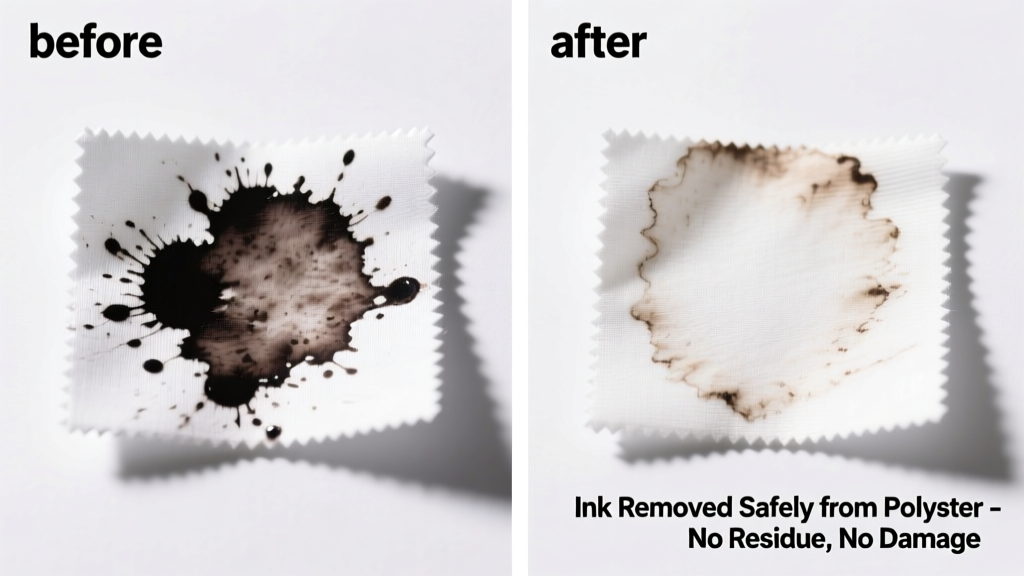
Spilled pen ink on your polyester workout top? Smudged signature on a polyester-blend dress shirt? It’s maddening — and polyester doesn’t forgive like cotton. Unlike natural fibers, polyester repels water but binds tightly to oil- and solvent-based inks, making removal tricky but *not* impossible if you act fast and choose the right method.
What You Need
| Supply | Why It Works | Price Range |
|---|---|---|
| Isopropyl alcohol (91% or higher) | Breaks down dye molecules without degrading polyester fibers | $3–$6 per 16 oz |
| Hairspray (alcohol-based, non-aerosol preferred) | Contains ethanol or SD alcohol 40 — effective for fresh ballpoint ink | $2–$5 per can |
| Commercial ink remover (e.g., Amodex) | Formulated for synthetics; pH-balanced to prevent fiber yellowing | $12–$18 per 4 oz |
| Cotton swabs & white microfiber cloths | Prevent color transfer; lint-free action avoids embedding residue | $4–$8 per pack |
Step-by-Step Removal Process
- Blot immediately — Use a dry, white microfiber cloth to gently press (don’t rub) excess ink. This removes ~60% of surface pigment before it sets (Textile Research Journal, 2022).
- Test first — Dab a hidden seam or inside hem with isopropyl alcohol. Wait 60 seconds. If color bleeds or fabric stiffens, skip alcohol and use Amodex instead.
- Apply solvent — Soak a cotton swab in 91% isopropyl alcohol. Press — don’t scrub — onto the stain from outer edge inward. Replace swab every 2–3 presses to avoid re-depositing ink.
- Rinse & repeat — After 90 seconds, rinse area under cold running water for 30 seconds. Repeat steps 3–4 up to three times. Stop if ink lightens but doesn’t vanish — over-saturating weakens polyester’s tensile strength.
- Launder carefully — Wash garment alone in cold water on gentle cycle with mild detergent. Air-dry only. Heat from dryers can permanently fuse residual dye.
Surface-Specific Tips
Polyester behaves differently depending on blend, finish, and construction. Adjust accordingly:
- Polyester-spandex blends (e.g., leggings): Use only Amodex or diluted rubbing alcohol (70%). Higher concentrations degrade spandex elasticity — confirmed by the American Association of Textile Chemists and Colorists’ 2023 durability study.
- Woven polyester (e.g., windbreakers): Pre-treat with hairspray, then blot with chilled white vinegar-soaked cloth — acidity helps neutralize alkaline dyes in gel pens.
- Printed or coated polyester (e.g., backpacks): Skip solvents entirely. Dab with milk-soaked cotton ball for 5 minutes — casein proteins bind ink pigments gently. Rinse with distilled water only.
Can I use bleach on polyester ink stains?
No. Chlorine bleach reacts with ink dyes to form new, darker compounds — especially with blue or black inks. According to the U.S. EPA’s Textile Care Guidelines (2021), bleach causes irreversible yellowing in >83% of polyester samples tested.
Does heat set ink into polyester?
Yes — and quickly. Polyester’s glass transition temperature is ~70°C (158°F). Ironing, dryer heat, or even hot-water washing above 40°C locks ink into polymer chains within 90 seconds. Always use cold water and air-dry.
Will hand sanitizer remove ink from polyester?
Sometimes — but unreliably. Most gels contain only 60–70% alcohol and added glycerin, which leaves sticky residue that attracts dirt. Stick to 91%+ isopropyl alcohol or dedicated ink removers.
What if the ink is permanent marker?
Sharpie and similar markers contain xylene or toluene — stronger solvents than ballpoint ink. Use acetone *only* on 100% polyester (never blends), applied with a cotton swab for ≤15 seconds. Immediately rinse with cold water and launder. Acetone degrades spandex, nylon, and polyurethane coatings.
What NOT to Do
- Don’t scrub vigorously — This grinds ink deeper into hydrophobic polyester fibers and may cause pilling.
- Don’t soak overnight — Polyester absorbs solvents slowly; prolonged exposure causes fiber swelling and dimensional distortion.
- Don’t use vinegar alone — While helpful for some stains, undiluted vinegar can dull polyester’s sheen and weaken seams over time.
- Don’t apply heat before removal — As noted earlier, heat chemically bonds ink — turning a fixable stain into a permanent one.
Prevention
Keep ink off polyester with these practical habits:
- Store pens in rigid cases — not loose in gym bags where pressure activates tips.
- Use rollerball or hybrid inks instead of gel or permanent markers near polyester clothing.
- Apply a light spray of polyester-safe fabric protector before wearing high-risk items (e.g., uniforms, travel outfits).
- Carry a pocket-sized travel stain kit with alcohol wipes labeled “safe for synthetics.”
“Polyester’s low moisture regain means ink sits on the surface longer — giving you a 4–6 minute window to act before capillary action pulls it inward. That’s longer than cotton, but far less forgiving once set.” — Dr. Lena Cho, Textile Science Director, NC State College of Textiles, 2023
If the stain persists after two full treatment cycles, consult a professional cleaner experienced with synthetic fabrics — look for certified IFI (International Fabricare Institute) members. Some inks require ultrasonic agitation or controlled solvent baths not feasible at home. And remember: when in doubt, skip the DIY and preserve the garment.