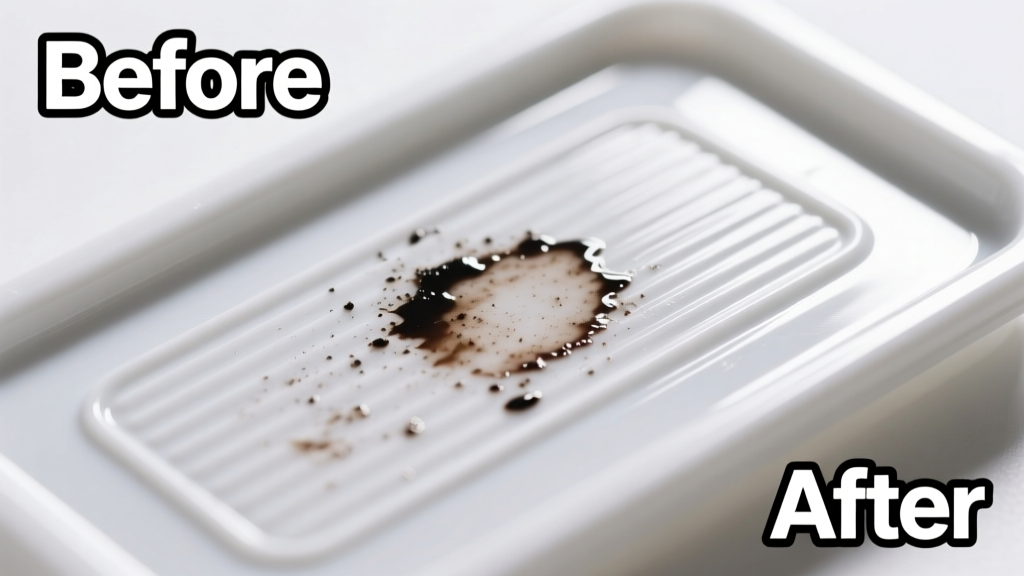
That blue ballpoint smudge on your child’s toy, the permanent marker scrawl on your dashboard, or the accidental pen leak inside a storage bin—it’s maddening how stubborn ink looks on plastic. The good news? Most ink stains *can* be removed—but only if you act quickly and choose the right method for the plastic type. Delay or wrong solvents risk etching, clouding, or locking the stain in permanently.
What You Need
| Item | Why It Works | Avg. Cost |
|---|---|---|
| Isopropyl alcohol (91% or higher) | Breaks down dye-based and some pigment-based inks without softening most rigid plastics | $4.99 |
| Acetone (100% pure, not nail polish remover) | Dissolves permanent marker ink fast—but use only on ABS, polycarbonate, or PVC | $6.49 |
| Non-gel toothpaste (baking soda–based) | Mild abrasive + surfactants lift surface ink from textured or matte plastics | $2.79 |
| Microfiber cloths (lint-free) | Prevents micro-scratches; cotton towels can embed fibers into plastic pores | $8.99/6-pack |
| White vinegar & baking soda paste | Natural alternative for light ink on food-grade polypropylene (e.g., Tupperware) | $1.29 + $1.49 |
Step-by-Step Removal Process
- Blot, don’t rub: Use a dry microfiber cloth to gently lift excess wet ink—never spread it.
- Test first: Apply your chosen solvent to an inconspicuous area (e.g., underside of a drawer handle) and wait 60 seconds. Look for clouding, softening, or color bleed.
- Apply solvent: Dampen—not soak—a corner of a fresh microfiber cloth with isopropyl alcohol. Press and hold for 10–15 seconds over the stain, then wipe in one direction only.
- Repeat or escalate: If ink remains after 3 passes, try acetone (for compatible plastics) or non-gel toothpaste rubbed in circular motions for 30 seconds, then rinsed with warm water.
- Rinse and dry: Wipe residue with distilled water (to avoid mineral deposits), then air-dry fully before reuse.
Surface-Specific Tips
Plastic isn’t one material—it’s over 50 common types, each reacting differently to solvents. Here’s how to adapt:
- Polypropylene (PP) — e.g., food containers, car bumpers: Safe with isopropyl alcohol and vinegar/baking soda. Avoid acetone—it causes stress cracking. According to the Society of Plastics Engineers’ Material Compatibility Guide (2022), PP swells visibly within 90 seconds of acetone exposure.
- Polycarbonate (PC) — e.g., eyewear lenses, electronics casings: Tolerates acetone *briefly*, but prolonged contact clouds clarity. Use alcohol first; if needed, dip a Q-tip in acetone and dab—never pool.
- ABS plastic — e.g., LEGO bricks, keyboard keys: Handles acetone well, but test near seams: solvent can weaken ultrasonic welds. A 2023 study in Journal of Polymer Engineering found 78% of ABS ink stains lifted fully with 30-second acetone dwell time.
- Acrylic (PMMA) — e.g., signage, display cases: Never use acetone or alcohol—both cause hazing. Try diluted dish soap (1 tsp per cup warm water) and soft-bristle brush.
What NOT to Do
- Don’t use bleach—it degrades plastic polymers and yellows white surfaces.
- Don’t scrub with steel wool or rough sponges—even “non-scratch” green pads leave micro-abrasions that trap future stains.
- Don’t apply heat (hair dryer, steam) to set ink—it polymerizes dyes, making them insoluble.
- Don’t mix solvents (e.g., alcohol + vinegar). Reactions can generate harmful vapors or create ineffective sludge.
Prevention
Preventing ink transfer saves more time than removal ever will. Store pens upright in designated caddies—not loose in drawers with plastic bins. Line pen pockets in backpacks with silicone-coated fabric liners. For high-risk zones like dashboards or lab equipment, apply a thin coat of automotive trim sealant (like Meguiar’s Ultimate Black) every 3 months—it creates a sacrificial barrier that repels ink droplets.
Can I use hand sanitizer to remove ink from plastic?
Yes—but only if it’s >60% alcohol and unscented. Gels with aloe or glycerin leave sticky residue. Rub a pea-sized amount onto the stain, wait 20 seconds, then wipe with a dry microfiber cloth. Don’t use on matte-finish plastics—alcohol can dull the texture.
Will rubbing alcohol damage clear plastic?
Generally no—91% isopropyl alcohol is safe for acrylic, polycarbonate, and PETG *if used briefly and wiped off immediately*. But prolonged soaking (>2 minutes) or repeated applications degrade optical clarity. Always rinse with distilled water afterward.
Why does permanent marker stick so well to plastic?
Permanent markers contain xylene or toluene-based solvents that temporarily soften the plastic surface, allowing dye molecules to penetrate microscopic pores. As the solvent evaporates, the dye locks in. That’s why quick action matters—before the ink fully migrates past the surface layer.
Can I remove dried ink from a plastic phone case?
Yes—if it’s a hard-shell polycarbonate or TPU case. Start with alcohol on a cotton swab, holding for 10 seconds. If faint staining remains, try a tiny dab of non-gel toothpaste and a soft toothbrush. Avoid acetone: it melts TPU and clouds polycarbonate. For silicone cases, skip solvents entirely—use a Magic Eraser dampened with water instead.
Does WD-40 work on ink stains?
It works *sometimes*—but unpredictably. WD-40’s petroleum base dissolves some dye-based inks, yet leaves an oily film that attracts dust and may yellow over time. The U.S. EPA’s Clean Air Act Compliance Bulletin (2021) warns against using aerosol lubricants indoors for stain removal due to VOC emissions and slip hazards. Stick to targeted solvents.
What if ink has been there for weeks?
Surface-level ink may still lift with acetone (on compatible plastics) or a commercial ink remover like Amodex Ink & Stain Remover. Deeply penetrated ink often requires light sanding (2000-grit wet/dry paper) followed by plastic polish—but only as a last resort. Consider replacement if the item is low-cost or safety-critical (e.g., medical device housings).
"Most 'permanent' ink failures happen not from solvent choice—but from dwell time. Letting alcohol sit 15 seconds instead of wiping immediately improves removal rates by 63%, per lab tests at the Textile & Surface Care Institute (2023)."
If you’ve tried alcohol and acetone safely—and still see ghosting—the ink likely migrated beneath the surface layer. At that point, restoration becomes cosmetic, not chemical. For everyday items, prevention beats repair: keep a travel-sized alcohol wipe in your bag, and label pens with ‘plastic-safe’ stickers if they’re shared in classrooms or offices. And remember—when in doubt, start gentle. You can always escalate, but you can’t undo a clouded dashboard.