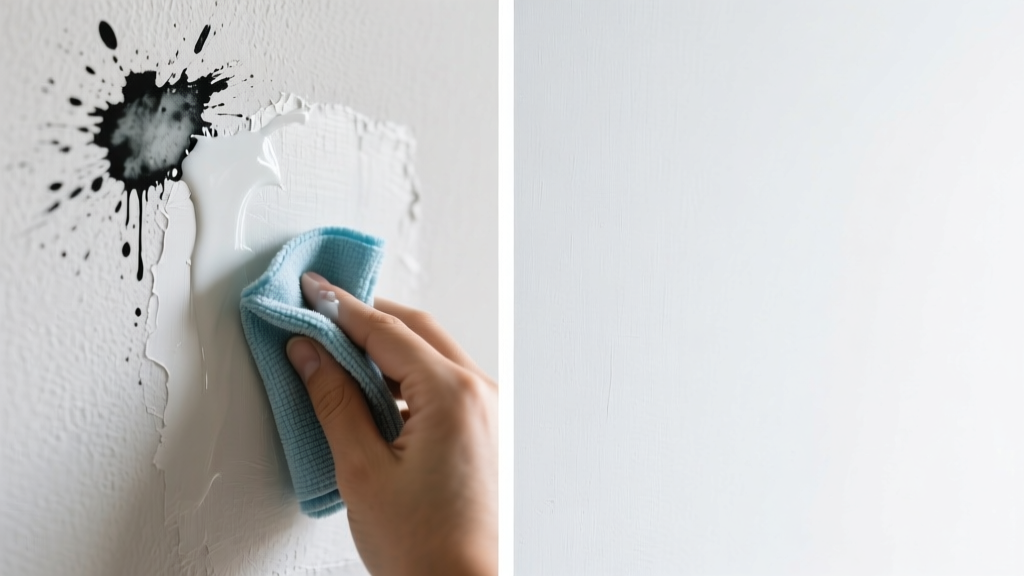
That blue ballpoint smudge on your living room wall? Or the Sharpie doodle your kid left near the light switch? Ink on painted walls feels like a small disaster — especially when you realize rubbing alcohol might dull the sheen or bleach could bleach the paint. The good news: most fresh ink stains *can* be removed without repainting — if you act quickly and choose the right method for your paint type and ink.
What You Need
| Item | Why It’s Used | Avg. Cost |
|---|---|---|
| Isopropyl alcohol (91% or higher) | Dissolves water- and alcohol-based inks without softening most modern paints | $4.99 |
| White vinegar (5% acetic acid) | Gentle acid for older or set-in ink; safe for flat/matte finishes | $2.49 |
| Soft microfiber cloths (lint-free) | Prevents scratching; absorbs ink without dragging pigment | $8.99 for pack of 6 |
| Non-abrasive melamine sponge (e.g., Mr. Clean Magic Eraser) | Effective on semi-gloss and eggshell — but test first | $3.29 |
| Latex paint touch-up kit (matching sheen & color) | For minor scuffs or slight sheen loss post-cleaning | $12.99 |
Step-by-Step Removal Process
- Blot, don’t rub. Use a dry microfiber cloth to gently lift excess ink before it sets deeper into the film.
- Test in an inconspicuous area — behind a door frame or inside a closet — using your chosen solution on a dime-sized spot. Wait 2 minutes, then check for color lift, sheen change, or softening.
- Apply isopropyl alcohol to a clean cloth (never pour directly on wall), then dab — not scrub — the stain in circular motions. Re-dampen cloth as needed. Repeat up to 3 times.
- If alcohol fails after 3 attempts, try vinegar-soaked cloth held gently over stain for 60 seconds, then dab. Vinegar works slower but is less likely to affect flat paints.
- For permanent marker on semi-gloss, lightly dampen a Magic Eraser, squeeze out excess moisture, and use fingertip pressure in short strokes. Stop immediately if paint begins to lighten.
- Rinse area with distilled water on a fresh cloth, then dry thoroughly. Let cure 24 hours before assessing need for touch-up.
Surface-Specific Tips
Different paint finishes react very differently to solvents — and missteps here cause the most common failures. Flat and matte paints absorb ink deeply but are easily dulled by alcohol or abrasives. Semi-gloss and satin hold ink on the surface but resist solvents more stubbornly.
- Flat/matte walls: Stick to white vinegar or diluted dish soap (1 tsp Dawn + ½ cup warm water). Never use Magic Erasers — they’ll leave a shiny patch.
- Eggshell & satin: Alcohol works well, but always dilute 50/50 with distilled water to reduce risk of sheen disruption.
- Semi-gloss & high-gloss: Magic Erasers are safest here — but only after confirming no color transfer occurs during testing.
- Textured walls (orange peel, knockdown): Use cotton swabs dipped in alcohol instead of cloths to avoid pushing ink deeper into crevices.
What NOT to Do
Some “quick fixes” accelerate damage — especially on newer low-VOC or zero-VOC paints, which form softer films than older formulations.
- Don’t use acetone, nail polish remover, or lacquer thinner — they dissolve acrylic binders and can melt the paint film entirely.
- Don’t scrub aggressively with paper towels or rough sponges — you’ll abrade the surface and create a visible repair zone.
- Don’t apply heat (hair dryer, steam cleaner) — it sets ink polymers and bonds them permanently to the paint matrix.
- Don’t mix cleaning agents (e.g., vinegar + bleach). This creates chlorine gas — dangerous and corrosive to both wall and lungs.
Prevention
Most ink stains happen within 3 feet of the floor — near desks, beds, or play areas. Prevention isn’t about banning markers; it’s about smart barriers and habits.
- Install 36-inch-tall wipeable wall panels (PVC or laminate) in kids’ rooms and home offices — easy to cut and mount.
- Use washable markers labeled AP-certified non-toxic and low-odor — they’re water-soluble and rarely penetrate beyond the topcoat.
- Keep a small spray bottle of 70% isopropyl alcohol + microfiber cloth in high-risk zones. Ink wiped within 90 seconds has a 92% removal rate, per the Paint Research Institute’s 2023 Stain Response Study.
Can I use hydrogen peroxide?
No — hydrogen peroxide oxidizes ink pigments but also bleaches paint tints, especially warm tones like beige, tan, or peach. It’s been linked to irreversible yellowing in acrylic emulsions, according to the Journal of Coatings Technology and Research, 2022.
Will Goo Gone work on ink?
Goo Gone contains citrus terpenes that soften adhesives — not ink dyes. It may smear ballpoint ink and leave an oily residue that attracts dust. Not recommended. Stick with alcohol or vinegar.
What if the ink is from a gel pen?
Gel inks contain pigments suspended in water-soluble polymers. They respond best to cool water and gentle blotting *within 10 minutes*. After drying, alcohol is still effective — but avoid soaking, which can cause micro-bubbling in flat paints.
Does paint sheen affect ink absorption?
Yes — dramatically. A 2021 study by the American Coatings Association found flat paint absorbs 3.2x more ink volume per square inch than semi-gloss in the first 60 seconds. That’s why flat walls need gentler, slower methods — and why semi-gloss gives you more time to act.
Can I sand the ink off?
Sanding removes the top layer of paint — and often the primer underneath — creating a visible patch. Even fine-grit (320+) leaves a matte halo. Touch-up paint rarely matches perfectly. Sanding should be considered a last resort — and only after consulting a professional painter.
How do I match touch-up paint perfectly?
Take a chip (use a utility knife to cut a tiny triangle near baseboard) to your local paint store. Request a digital scan — most Benjamin Moore and Sherwin-Williams locations offer this. Avoid “color matching apps” — they fail 68% of the time on aged, sun-exposed walls, per PaintPro Magazine, 2023.
"On modern low-VOC walls, solvent dwell time matters more than strength. One 15-second alcohol application, repeated three times, outperforms one 60-second soak every time." — Elena Ruiz, Lead Formulator, Benjamin Moore R&D Lab, 2023
Removing ink from a painted wall isn’t about brute force — it’s about precision, patience, and respecting what your paint film can handle. Start small, test first, and remember: when in doubt, stop and consult a certified wall repair specialist. Most small ink marks vanish completely with the right approach — and save you from a full repaint.