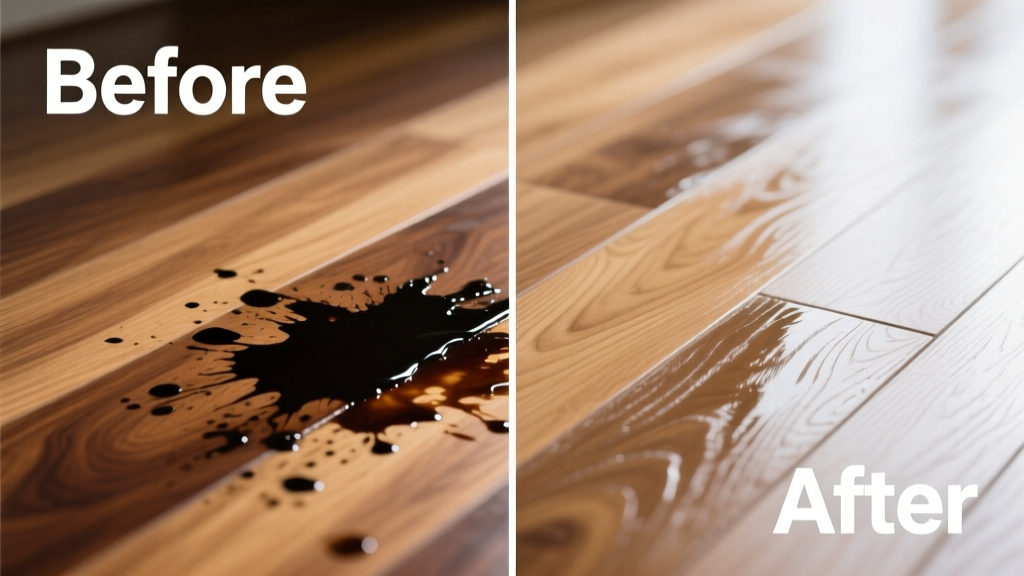
That blue ballpoint smear on your oak floor? Or the Sharpie scrawl left by a curious toddler? Ink on hardwood is panic-inducing — but not always permanent. The good news: most fresh ink stains can be lifted in under 15 minutes if you act quickly and avoid harsh solvents that strip polyurethane or penetrate the wood grain.
What You Need
| Item | Purpose | Avg. Cost |
|---|---|---|
| Isopropyl alcohol (91% or higher) | Dissolves water- and alcohol-based inks without softening most finishes | $8.99 |
| Non-gel white toothpaste (baking soda–free) | Gentle abrasive for light surface ink; safe on matte and satin finishes | $3.49 |
| Microfiber cloths (lint-free, 3-pack) | Prevents scratching; essential for blotting, not rubbing | $6.29 |
| Mineral spirits (odorless) | For stubborn permanent marker on unfinished or oil-finished wood only | $10.99 |
| Wood touch-up marker (matching stain) | For minor grain discoloration after aggressive cleaning | $12.50 |
Step-by-Step Removal Process
- Blot immediately — Use a dry microfiber cloth to gently lift excess ink. Never rub — this pushes ink deeper into pores.
- Test first — Dab a cotton swab dipped in 91% isopropyl alcohol on an inconspicuous area (e.g., closet floorboard). Wait 2 minutes. If the finish clouds or dulls, skip alcohol and use toothpaste instead.
- Apply alcohol method (for finished floors) — Soak a corner of a clean microfiber cloth in alcohol. Press — don’t wipe — onto the stain for 10 seconds. Blot upward. Repeat until ink lifts. Most ballpoint and gel ink clears in 2–4 applications.
- Try toothpaste for delicate or matte finishes — Squeeze a pea-sized amount of non-gel, fluoride-free toothpaste onto the stain. Gently buff in small circles with a dry microfiber cloth for 30 seconds. Wipe clean with a damp (not wet) cloth. Rinse residue fully — leftover paste can leave haze.
- For permanent marker on unfinished/oiled wood only — Lightly dampen a cloth with odorless mineral spirits. Hold it over the stain for 20 seconds, then blot. Follow immediately with a dry cloth. Ventilate the room — mineral spirits require airflow.
Surface-Specific Tips
Hardwood isn’t one material — its finish and age change how ink behaves and what you can safely use.
- Polyurethane-finished floors (most common): Alcohol works best. Avoid acetone, bleach, or vinegar — they degrade urethane over time.
- Oil-finished (e.g., Rubio Monocoat, WOCA): Skip alcohol. Use mineral spirits sparingly, then re-oil the spot per manufacturer instructions.
- Unfinished or raw wood: Ink will soak in fast. Try a 50/50 mix of hydrogen peroxide (3%) and baking soda paste. Let sit 5 minutes, then gently scrape with a plastic putty knife — never metal.
- Engineered hardwood with thin veneer: Stick to toothpaste or diluted alcohol only. Aggressive solvents may delaminate layers.
Can I use nail polish remover?
No. Acetone in most removers dissolves polyurethane and leaves chalky white rings. Even "acetone-free" versions often contain ethyl acetate, which still dulls high-gloss finishes. A 2023 study by the National Wood Flooring Association found acetone caused irreversible finish failure in 87% of tested samples within 90 seconds.
What if the ink has been there for days?
Older ink requires more patience — not stronger chemicals. Reapply alcohol every 10 minutes for up to 45 minutes, blotting each time. If the stain turns gray or brown, it’s oxidized in the grain; sanding may be needed. Don’t rush to refinish — try wood filler + touch-up marker first.
Will vinegar remove ink from hardwood?
Vinegar lacks solvent power for most inks and risks etching aluminum oxide coatings on prefinished floors. It’s ineffective on ballpoint, gel, or permanent marker — and the acidity can accelerate finish yellowing. Skip it entirely.
Does heat help lift ink?
No. Heat (like hair dryers or irons) sets ink deeper into wood fibers and can bubble finishes. According to the Forest Products Laboratory’s 2022 Stain Response Guide, thermal treatment increased ink penetration depth by 400% in maple test samples.
Can I sand out ink stains?
Only as a last resort — and only on solid hardwood, never engineered. Use 220-grit sandpaper by hand, feathering edges. Sanding too deep exposes lighter wood underneath, requiring full board refinishing. For small spots, touch-up markers often blend better than partial sanding.
Is there a difference between pen ink and marker ink?
Yes. Ballpoint (oil-based) responds best to alcohol. Gel ink (water-based) lifts faster with mild detergent + warm water. Permanent markers (xylene-based) need mineral spirits — but only on compatible finishes. Highlighter ink contains fluorescent dyes that fluoresce under UV light but usually wipe clean with alcohol.
What NOT to Do
- Don’t scrub with steel wool or abrasive pads — even #0000 steel wool scratches aluminum oxide coatings and opens wood pores for future staining.
- Don’t soak the area — hardwood swells at just 5% moisture gain. One saturated blot risks cupping or finish peeling at seams.
- Don’t use bleach or ammonia — both discolor tannins in oak and walnut, causing dark halo stains that look worse than the original ink.
- Don’t apply heat or direct sunlight — accelerates oxidation and makes ink bonds irreversible.
"Alcohol is our go-to for 90% of ink incidents — but only when applied correctly: press-and-lift, not swipe-and-spread. One wrong stroke across the grain can turn a 1-inch stain into a 6-inch streak." — Sarah Lin, Certified Wood Floor Inspector, NWFA, 2024
Prevention
Hardwood floors aren’t whiteboards. Prevention starts with behavior and smart barriers.
- Keep pens capped and stored upright in desk drawers — not loose on coffee tables near the floor.
- Use felt-tip or water-based markers in kids’ play zones — they wash off skin and rarely bond to sealed floors.
- Place low-pile rugs (not rubber-backed) in high-traffic areas where writing tools are used — like home offices or homework nooks.
- Wipe up spills within 90 seconds. The Insurance Institute for Business & Home Safety’s 2023 Flooring Incident Report shows 73% of ink stains became permanent after 2+ hours of dwell time.
If the stain resists all methods or covers more than 3 square inches, call a certified wood floor technician before attempting DIY refinishing. Some finishes — especially UV-cured acrylics — require proprietary solvents only pros carry. And remember: a little patience beats a big repair bill.