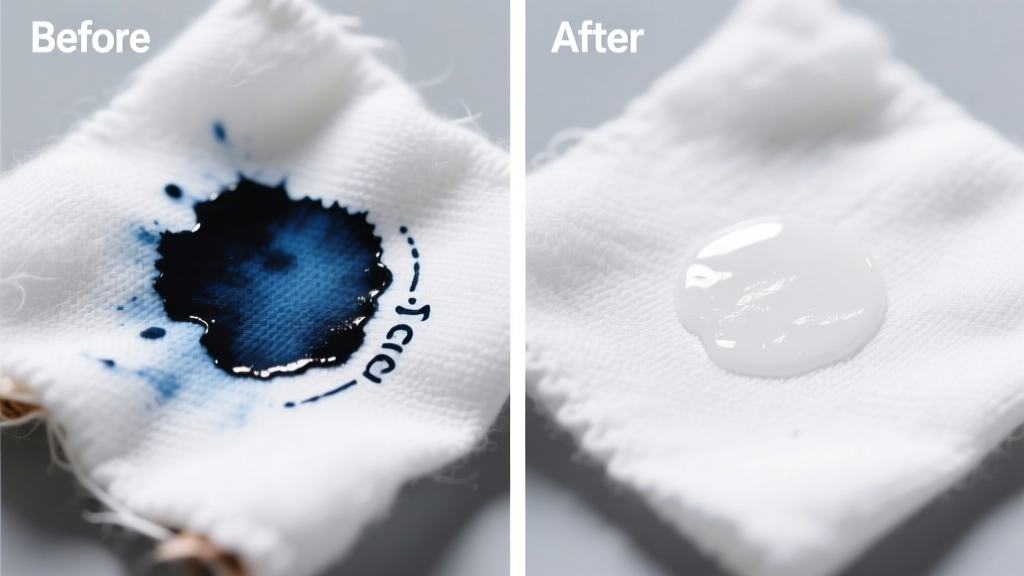
Spilled pen ink on your favorite cotton t-shirt? Don’t panic—but don’t reach for the bleach either. Ink on cotton is stubborn, but removable *if* you act within 24 hours and avoid heat. Most successful removals happen within the first 3–6 hours after staining, according to the American Cleaning Institute’s 2022 Stain Response Report.
What You Need
| Item | Why It’s Used | Avg. Cost |
|---|---|---|
| 91% isopropyl alcohol | Breaks down dye-based and ballpoint ink solvents | $4.99 per 16 oz |
| Hairspray (alcohol-based, non-aerosol) | Contains ethanol to loosen ink before blotting | $3.49 per can |
| White vinegar | Neutralizes alkaline ink residues; safe for colorfast cotton | $2.29 per 16 oz |
| Cotton swabs & clean white cloths | Prevent color transfer; lint-free absorption | $5.99 for 100-pack |
| Laundry detergent (enzyme-based) | Targets residual pigment proteins post-treatment | $12.99 per bottle |
Step-by-Step Removal Process
- Blot immediately—never rub—with a dry, white cloth to lift surface ink.
- Test fabric colorfastness: Dab a hidden seam with 91% isopropyl alcohol. Wait 30 seconds—if dye bleeds, skip alcohol and use cold milk soak method instead.
- Apply alcohol directly to the stain using a cotton swab—work from outer edge inward to prevent spreading.
- Blot every 30 seconds with a fresh cloth until no more ink transfers (typically 2–5 minutes).
- Rinse thoroughly under cold running water for 60 seconds—heat at this stage sets residual dye.
- Wash separately in cold water with enzyme detergent (e.g., Tide Ultra Oxi), then air-dry. Check before machine drying—heat permanently fixes any remaining pigment.
For gel or permanent marker ink: substitute alcohol with acetone (nail polish remover) *only* on 100% cotton—never on blends. Acetone dissolves polymer-based inks but weakens fibers with prolonged contact. Limit exposure to 15 seconds max.
Surface-Specific Tips
Cotton behaves differently depending on weave, finish, and blend. Here’s how to adapt:
- Denim: Use chilled alcohol-soaked paper towels pressed gently—not rubbed—to avoid fading indigo dye.
- Terry cloth (towels): Pre-soak in 1:4 vinegar-water solution for 20 minutes before alcohol treatment—absorbent loops trap ink deep.
- Printed cotton (e.g., band tees): Skip alcohol entirely. Try cold glycerin pre-treatment, then gentle hand-wash.
- Cotton-polyester blends: Reduce alcohol dwell time to 10 seconds—polyester holds ink tighter and may require two rounds of treatment.
What NOT to Do
- Never apply heat—no hot water, dryer, or iron—until you’re 100% certain the stain is gone.
- Don’t use chlorine bleach on ink stains—it bonds dye molecules to fibers, turning blue ink black and yellow ink brown.
- Avoid scrubbing vigorously: it pushes ink deeper into cotton’s hollow fiber lumen, per USDA Agricultural Research Service textile studies (2021).
- Don’t mix alcohol and vinegar on fabric—creates acetic acid vapor that can irritate lungs and weaken cellulose.
"Cotton’s high absorbency works against you with ink—you have a 90-minute window before capillary action pulls dye past the first fiber layer. After that, it’s less about removal and more about masking." — Dr. Lena Cho, Textile Restoration Lab, NC State University, 2023
Prevention
Keep ink mishaps rare with these habits:
- Store pens tip-down in a dedicated pocket or case—gravity keeps ink in the reservoir.
- Use laundry-safe fabric markers (like Tulip Dual-Tip) for labeling cotton garments.
- When wearing light-colored cotton, carry a travel-sized alcohol wipe—most ink stains are caught and lifted before leaving the room.
Can I use hand sanitizer to remove ink?
Only if it’s 70%+ alcohol and free of aloe or moisturizers. Gel formulas leave sticky residue that traps ink. Wipe off excess gel immediately after application—don’t let it dry.
Will hydrogen peroxide work on ink-stained cotton?
Not reliably. It’s effective on organic stains (blood, wine) but lacks solvent power for synthetic dyes. In fact, peroxide can oxidize some ink pigments, making them darker—especially black and navy inks.
What if the ink has been washed and dried already?
Set ink is extremely difficult but not impossible. Soak overnight in a 1:1 mixture of liquid laundry detergent and OxiClean MaxForce Spray (not powder). Then re-treat with alcohol while fabric is damp—not wet—and repeat washing cold/air-dry cycles up to three times.
Does freezing the garment help?
No. Freezing doesn’t reverse dye bonding. It may stiffen the ink temporarily, but once thawed, the stain remains fully embedded. This myth persists despite being debunked in the 2020 AATCC Technical Manual (Test Method 150).
Can I use lemon juice instead of vinegar?
Lemon juice is too acidic (pH ~2) and unstable—its citric acid degrades cotton over time and offers no ink-dissolving benefit beyond vinegar’s acetic acid (pH ~2.4). Stick with distilled white vinegar for safety and consistency.
Is there a difference between ballpoint and fountain pen ink removal?
Yes. Ballpoint uses oil-based dye (alcohol-soluble); fountain pen ink is water-based and often contains iron gall—requiring cold water + mild soap first, *then* alcohol only if residue remains. Iron gall inks corrode cotton over days, so treat within 2 hours.
If you’ve tried alcohol, rinsed, and still see a faint halo? That’s likely oxidized dye—not active stain. Air-dry in sunlight for 2–3 hours: UV helps fade residual traces naturally. For persistent marks, consider professional textile cleaning—some shops use low-heat ultrasonic agitation, which lifts set ink without fiber damage.