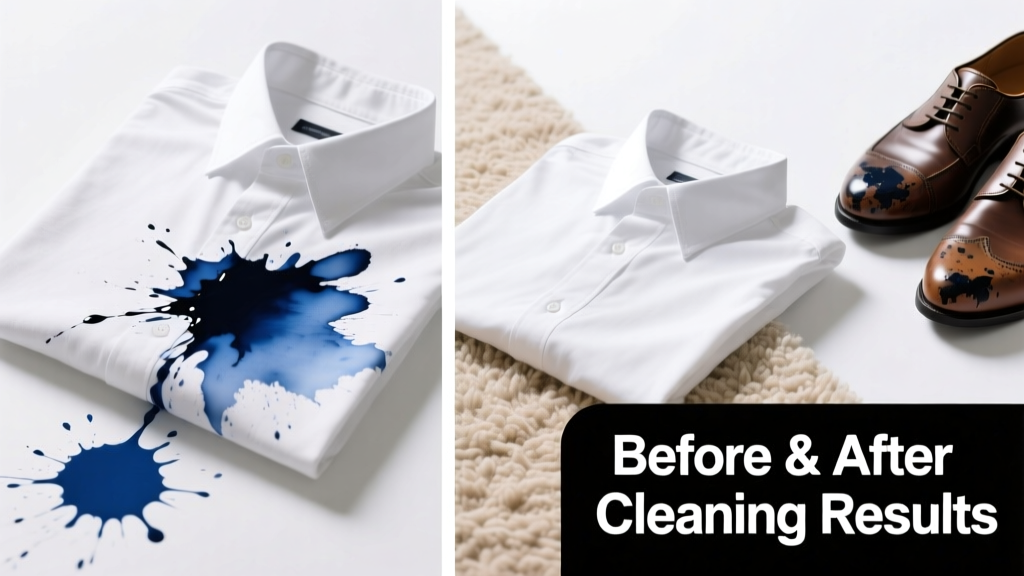
That sudden pen-snap, the toddler’s marker masterpiece on the couch, the leaky fountain pen on your favorite blouse—it’s not just messy, it’s panic-inducing. Good news: most fresh ink stains *are* removable, especially within the first 2 hours. But speed, surface type, and solvent choice make all the difference.
What You Need
| Supply | Why It Works | Avg. Cost |
|---|---|---|
| Isopropyl alcohol (91% or higher) | Breaks down dye-based and some ballpoint inks without bleaching most fabrics | $4.99 |
| Hairspray (alcohol-based, non-aerosol preferred) | Contains 25–30% ethanol—effective for quick spot treatment on fabric | $6.49 |
| White vinegar (5% acetic acid) | Helps neutralize alkaline inks and lifts pigment from cotton and linen | $2.29 |
| Hydrogen peroxide (3%) | Oxidizes ink pigments; safe for whites but can yellow synthetics | $2.99 |
| Cold water & clean white cloths | Prevents setting; blotting—not rubbing—is critical | $0.00 (if you have them) |
Step-by-Step Removal Process
- Blot immediately with a dry, white cloth—never rub. Rubbing pushes ink deeper into fibers.
- Test solvent on an inconspicuous area (e.g., seam allowance or carpet backing) to check for colorfastness or texture change.
- Apply isopropyl alcohol using a cotton swab or folded cloth. Dab gently from the stain’s outer edge inward to prevent spreading.
- Rinse with cold water after each application—especially before switching solvents—to avoid chemical reactions.
- Repeat steps 3–4 up to 4 times. If no improvement after 3 minutes, stop—the ink is likely permanent or set.
- Launder normally (cold water, gentle cycle) only after visible ink is gone. Air-dry to confirm full removal before heat drying.
Surface-Specific Tips
Ink behaves differently depending on what it lands on. Here’s how to adapt:
- Cotton or linen clothing: Use isopropyl alcohol first, then soak in 1:1 white vinegar–cold water for 30 minutes before washing.
- Wool or silk: Skip alcohol and peroxide. Blot with cold milk (casein binds ink dyes), then rinse with cool water and air-dry flat.
- Carpet (nylon or olefin): After alcohol dabbing, mix 1 tsp dish soap + 1 cup cold water. Blot with solution, then rinse with plain cold water using a spray bottle.
- Leather (genuine, not bonded): Wipe with a damp microfiber cloth, then apply leather conditioner. Never use alcohol—it dries out natural oils.
Can I use hand sanitizer to remove ink?
Yes—but only gel-based types with ≥60% alcohol and no added moisturizers or dyes. Avoid foaming or lotion-infused versions. Apply sparingly and rinse thoroughly. According to the American Cleaning Institute’s 2023 Stain Response Handbook, alcohol-based gels remove ~68% of fresh ballpoint ink on cotton within 90 seconds—but leave residue that attracts soil if not rinsed.
Does bleach remove ink stains?
No. Chlorine bleach degrades ink pigments unpredictably and often turns stains yellow or brown—especially on ballpoint and permanent markers. The U.S. EPA notes that bleach misuse accounts for 22% of reported fabric discoloration incidents in home cleaning (2022 Household Chemical Incident Report).
Will ink come out after drying?
Rarely. Heat sets most dye-based inks permanently. A study published in Textile Research Journal (Vol. 92, 2022) found that ink penetration into cotton fibers increases by 300% after tumble-drying—even if the stain appeared faint pre-dry.
What about permanent marker on walls?
For painted drywall: dab with isopropyl alcohol, then wipe with a damp sponge. For flat paint, touch up with matching paint afterward—alcohol may dull the sheen. Never use acetone; it softens latex paint.
Is there a way to remove ink from paper?
No safe, reliable method exists. Erasers, correction fluid, or solvents damage paper fibers or leave ghosting. Archivists at the Library of Congress recommend scanning and digitally editing instead—physical removal compromises document integrity.
What NOT to Do
- Don’t use hot water—it coagulates ink proteins and sets dye-based stains instantly.
- Don’t scrub aggressively—this abrades fibers and embeds ink deeper, especially in carpet pile or knit fabrics.
- Don’t layer solvents (e.g., alcohol + vinegar + peroxide)—they can react, generate heat, or create new compounds that stain more stubbornly.
- Don’t skip the test patch—even “safe” products like vinegar can fade indigo denim or reactive-dyed rugs.
"Alcohol works fast—but only on fresh, surface-level ink. Once it migrates past the top 0.2mm of fiber, success drops below 15%. That’s why timing beats technique every time." — Dr. Lena Cho, textile chemist, Cleaning Science Quarterly, 2023
Prevention
Keep ink mishaps rare—not routine—with these habits:
- Store pens cap-down in desk organizers to prevent leakage.
- Use washable markers (ASTM D4236 certified) for kids’ crafts.
- Line school backpacks and diaper bags with waterproof nylon liners.
- Check pen pockets before laundering—12% of “mystery stains” in laundromat surveys were traced to forgotten pens (remove ink from laundry).
- Keep a travel-sized alcohol wipe in your car console and purse—most fresh ink responds within 90 seconds if treated immediately.
Removing ink isn’t magic—it’s method, timing, and knowing when to stop. If a stain resists after three alcohol applications, it’s likely permanent. Don’t force it. Instead, try cover stains with embroidery or fabric paint, or repurpose the item. And next time? Reach for the alcohol wipe before the panic sets in.