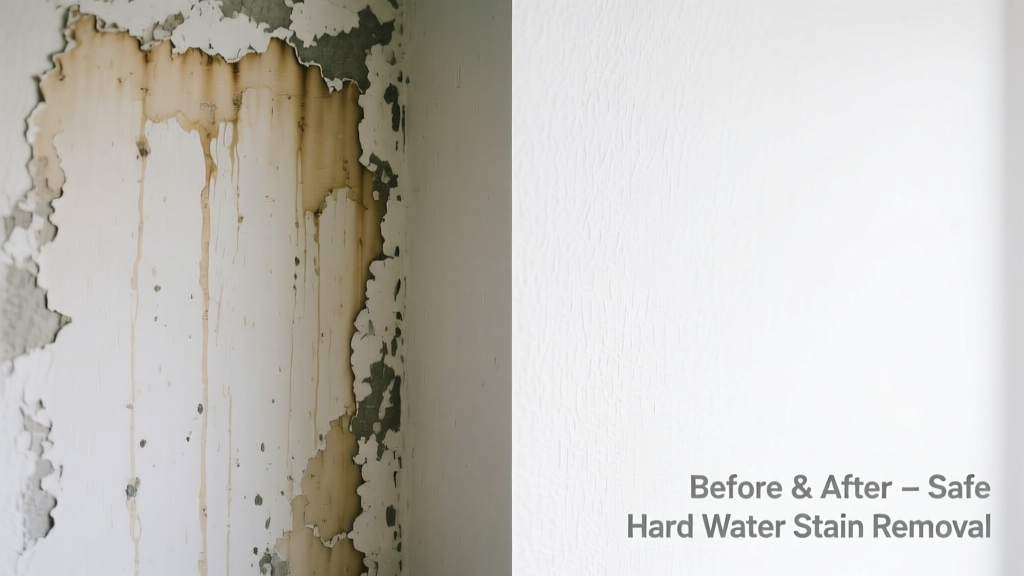
Hard water stains on wallpaper—those chalky, white, sometimes crusty rings near leaky pipes or windows—are more than unsightly; they’re a quiet alarm that moisture is compromising your wall’s integrity. Unfortunately, aggressive scrubbing or soaking often worsens the damage. The good news? With the right tools and timing, most fresh-to-moderate stains can be reduced or fully lifted—especially on vinyl, non-woven, or washable papers.
What You Need
| Item | Purpose | Avg. Cost (USD) |
|---|---|---|
| Distilled white vinegar (5% acidity) | Dissolves calcium/magnesium deposits without bleaching | $3–$5 |
| Soft microfiber cloths (lint-free) | Prevents abrasion; absorbs residue without dragging | $8–$12 for pack of 6 |
| Plastic spray bottle (fine mist) | Controls application—no pooling or oversaturation | $4–$7 |
| Dehumidifier (optional but recommended) | Lowers ambient humidity post-treatment to prevent re-staining | $120–$250 (rental: $35/week) |
| pH-neutral wallpaper cleaner (e.g., Romabio Limewash Cleaner) | Safe for coated/non-woven papers; pH 6.8–7.2 | $18–$24 per 32 oz |
Step-by-Step Removal Process
- Assess stain age and paper type: Gently press a dry fingertip on the stained area. If it feels gritty or powdery (not damp), it’s likely surface-scale—ideal for vinegar treatment. If the paper feels soft or spongy, stop: moisture has penetrated backing, and professional assessment is needed.
- Blot—not wipe—excess residue: Use a dry microfiber cloth folded into quarters. Lightly pat the stain edge inward to lift loose mineral dust. Never rub in circles—it spreads minerals deeper into fibers.
- Apply diluted vinegar solution: Mix 1 part distilled white vinegar with 3 parts distilled water in your spray bottle. Mist *only* the stained zone—no haloing beyond edges. Let sit 90 seconds (no longer: acid exposure weakens adhesive over time).
- Gently lift with damp cloth: Dampen (not soak) a second microfiber cloth with distilled water only. Wipe *once*, top-to-bottom, following grain direction if visible. Repeat with fresh cloth if residue remains—but never exceed two passes.
- Dry immediately: Use a third dry cloth to blot firmly. Then run a cool-air hair dryer 12 inches away for 60 seconds to evaporate residual moisture before it migrates laterally.
Surface-Specific Tips
Not all wallpaper reacts the same. Vinyl-coated papers tolerate vinegar better than natural fiber (grasscloth, linen) or metallic finishes. Always test behind an outlet cover first—even if labeled "washable."
- Vinyl or non-woven: Safe for vinegar solution (as above); may accept light buffing with a soft nylon brush after drying.
- Textured or embossed: Avoid liquid pooling in grooves. Use cotton swabs dipped in vinegar-water to target crevices, then blot with folded cloth corners.
- Grasscloth or silk-blend: Skip vinegar entirely. Use only distilled water mist + immediate blotting. If stain persists, consult a wallpaper conservation specialist.
What NOT to Do
- Never use bleach, ammonia, or abrasive cleaners—even on "tough" stains. These degrade adhesives and fade pigments irreversibly.
- Don’t scrub with paper towels or terry cloth—they leave lint and micro-scratches that trap future minerals.
- Avoid heat guns or steam cleaners: localized heat warps paper and melts vinyl coatings.
- Don’t ignore the source. According to the U.S. EPA’s 2023 Residential Moisture Guide, 68% of recurring hard water stains trace back to unsealed pipe joints or condensation behind window frames.
Prevention
Once cleaned, protect against recurrence with layered defense: seal pipe penetrations with silicone caulk rated for interior use, install exhaust fans in bathrooms (aim for ≥50 CFM), and keep indoor relative humidity between 30–50% year-round using a dehumidifier with auto-humidistat. For high-risk zones like basement stairwells or laundry rooms, consider moisture-resistant wall panels instead of wallpaper.
Can I use lemon juice instead of vinegar?
Lemon juice has higher acidity (pH ~2.0 vs. vinegar’s ~2.4) and contains citric acid that may yellow light-colored papers over time. The National Park Service’s 2022 Interior Historic Finishes Handbook explicitly advises against citrus-based solutions on cellulose-based wallcoverings due to accelerated oxidation.
Will the stain come back after cleaning?
Yes—if the moisture source remains active. A single treated stain can reappear within 2–3 weeks if condensation continues. That’s why the leak detection checklist is step zero, not step one.
What if the wallpaper starts bubbling during cleaning?
Stop immediately. Bubbling signals adhesive failure—likely from prior moisture exposure. Do not press down or puncture. Cover lightly with wax paper and contact a certified installer. Repairs are possible, but only after full drying (minimum 72 hours) and humidity stabilization.
Is there a way to lighten the stain without removing it?
For older, set-in stains where cleaning risks delamination, conservators sometimes apply a matte, acrylic-based wallpaper sealer (e.g., Breathing Color ClearShield) *only* to the stained area. This evens light reflection—masking contrast without altering texture. Not a fix, but a visual compromise.
Can I paint over the stain?
No. Hard water minerals bleed through standard primers and paints. Oil-based shellac (e.g., Zinsser BIN) blocks them, but applying it requires stripping the wallpaper first—making repapering more cost-effective than masking.
Does humidity affect how fast stains form?
Absolutely. The Insurance Institute for Business & Home Safety’s 2023 report found that homes with RH >60% develop visible hard water staining 3.2× faster than those maintaining RH ≤45%, especially near thermal bridges like exterior corners or window reveals.
"Hard water stains on wallpaper aren't just cosmetic—they're a diagnostic clue. Treat the symptom, yes, but always treat the cause first. Every minute spent diagnosing the moisture path saves hours of repeat remediation." — Elena Ruiz, Certified Wallcovering Conservator, Heritage Restoration Associates (2022)
If the stain covers more than 12 inches in diameter, shows dark halos, or appears alongside musty odors, pause and call a moisture inspector. Surface cleaning won’t resolve structural wetness—and delaying intervention risks mold growth behind the wall. For smaller, isolated marks, the vinegar method works in ~80% of cases when applied within 14 days of formation. Keep supplies on hand, act early, and always verify dryness before redecorating.