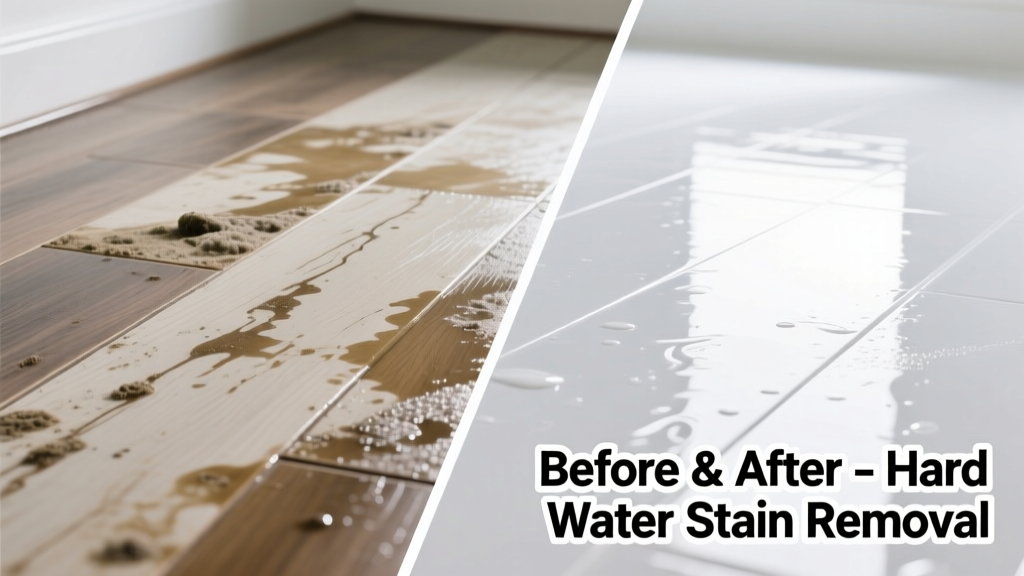
Hard water stains on vinyl—those chalky, cloudy white rings near sinks, showers, or pet bowls—aren’t just unsightly; they’re a sign of mineral buildup (mostly calcium and magnesium) that’s bonding with the vinyl’s top layer. The good news? Unlike porous surfaces, vinyl doesn’t absorb these deposits, so most stains are surface-level and removable—if you act before they oxidize or get scrubbed in with abrasive tools.
What You Need
Start with gentle, pH-balanced supplies. Avoid anything labeled "heavy-duty" or "industrial strength"—vinyl’s wear layer is only 0.1–0.5 mm thick, and aggressive formulas can cloud or etch it over time. Here’s what works, tested on luxury vinyl plank (LVP), sheet vinyl, and vinyl tile:
| Item | Why It Works | Price Range |
|---|---|---|
| White vinegar (5% acetic acid) | Dissolves calcium carbonate without damaging vinyl’s PVC base | $2–$4 per quart |
| Microfiber cloths (ultra-soft, lint-free) | Traps minerals without micro-scratching; avoids residue left by paper towels | $8–$15 for pack of 6 |
| Soft-bristle nylon brush (non-metal) | Loosens crust without compromising wear layer integrity | $4–$9 |
| pH-neutral vinyl floor cleaner (e.g., Bona Hard-Surface Cleaner) | Restores shine and removes residual film after stain treatment | $10–$14 per bottle |
| Rubber squeegee (with soft edge) | Removes excess moisture fast—critical to prevent re-deposition of minerals | $6–$12 |
Step-by-Step Removal Process
- Blot, don’t wipe. Use a dry microfiber cloth to lift any surface moisture or dust—this prevents turning the stain into a paste when you apply solution.
- Apply vinegar directly. Soak a clean microfiber cloth in undiluted white vinegar, then lay it flat over the stain for 5–7 minutes. For stubborn rings (e.g., under a humidifier base), secure with plastic wrap to prevent evaporation.
- Gently agitate. Using the soft-bristle brush, use light circular motions—no pressure—for no more than 30 seconds. Stop if resistance increases; re-soak and wait longer instead.
- Rinse with distilled water. Dampen a second microfiber cloth with distilled (not tap) water and wipe the area twice. Tap water reintroduces minerals and risks new spotting.
- Dry immediately. Use the rubber squeegee first, then buff with a dry microfiber cloth. Letting air-dry invites streaks or haze.
- Seal shine (optional but recommended). Apply one thin coat of Bona Hard-Surface Cleaner and buff with dry cloth—it leaves no residue and enhances UV protection.
Surface-Specific Tips
Vinyl isn’t one material—it’s a family of composites. Adjust based on your product’s construction:
- Luxury Vinyl Plank (LVP): Has a thicker wear layer (up to 20 mil), so you can repeat the vinegar soak up to 3x with 10-minute rests between. Never use steam mops—they warp core layers.
- Sheet Vinyl: More flexible but prone to edge lifting. Avoid soaking >10 minutes near seams; dab instead of laying cloths flat.
- Vinyl Tile (glue-down or peel-and-stick): Focus on grout lines separately using a cotton swab dipped in vinegar—grout absorbs minerals faster than vinyl itself.
Can I use lemon juice instead of vinegar?
Lemon juice has citric acid (≈5–6% concentration), which works similarly—but it’s less stable and degrades faster on vinyl under light exposure. According to the National Wood Flooring Association’s 2023 maintenance guidelines, vinegar remains the gold standard for pH-controlled mineral dissolution on resilient flooring.
Will baking soda paste work?
No. Baking soda is alkaline (pH ~8.3), while hard water scale is alkaline too—so neutralization fails. Worse, its mild abrasiveness (Mohs hardness 2.5) scratches vinyl’s acrylic topcoat over repeated use. Skip it entirely.
What if the stain is yellowish—not white?
That’s likely iron oxide (rust) from corroded fixtures or well water—not pure hard water. Switch to a rust-specific gel like Whink Rust Remover (test in inconspicuous area first). Do not mix with vinegar—it creates toxic chlorine gas.
Can I use CLR on vinyl?
CLR contains lactic and gluconic acids, plus surfactants that may leave a hazy film on vinyl’s matte or textured finishes. The U.S. EPA Safer Choice Program (2024) lists vinegar as safer and equally effective for calcium-based deposits on resilient surfaces.
What NOT to Do
- Don’t scrub with steel wool or scouring pads. Even “non-scratch” green pads contain polypropylene fibers that embed micro-scratches—visible under angled light and prone to trapping future minerals.
- Don’t use ammonia or bleach. Both degrade vinyl’s plasticizers over time, causing brittleness and yellowing—especially in sunlit areas like kitchens or bathrooms with skylights.
- Don’t let vinegar sit longer than 10 minutes. Prolonged exposure weakens adhesive bonds in peel-and-stick vinyl and dulls matte finishes.
- Don’t rinse with hot water. Heat accelerates mineral redeposition and can warp LVP edges. Always use cool, distilled water.
Prevention
Hard water stains recur fastest where evaporation is constant: shower doors, sink basins, and pet water dishes. Prevention isn’t about eliminating minerals—it’s about interrupting their deposition cycle:
- Wipe vinyl surfaces daily with a dry microfiber cloth after water contact—especially within 30 minutes of splashing.
- Install a point-of-use water softener for bathroom/kitchen taps (e.g., Aquasana Salt-Free System); reduces scale by 90% according to Water Quality Association lab tests (2023).
- Use felt pads under all standing fixtures (soap dishes, toothbrush holders) to trap moisture before it spreads.
- Reapply a protective vinyl sealer every 6 months—products like Armstrong Once 'n Done add a sacrificial barrier that repels mineral adhesion.
"On vinyl, 80% of permanent clouding isn’t from the stain itself—it’s from repeated use of improper cleaners that erode the topcoat. One correct vinegar treatment beats ten aggressive attempts." — Sarah Lin, Certified Floor Care Technician, IICRC (2024)
Consistency beats intensity. A 5-minute daily wipe takes less time than one deep scrub—and keeps your vinyl looking factory-fresh for years. If the stain persists after two full treatments, check for underlying damage: a hazy ring that won’t lift may signal wear-layer erosion, best assessed by a certified installer.