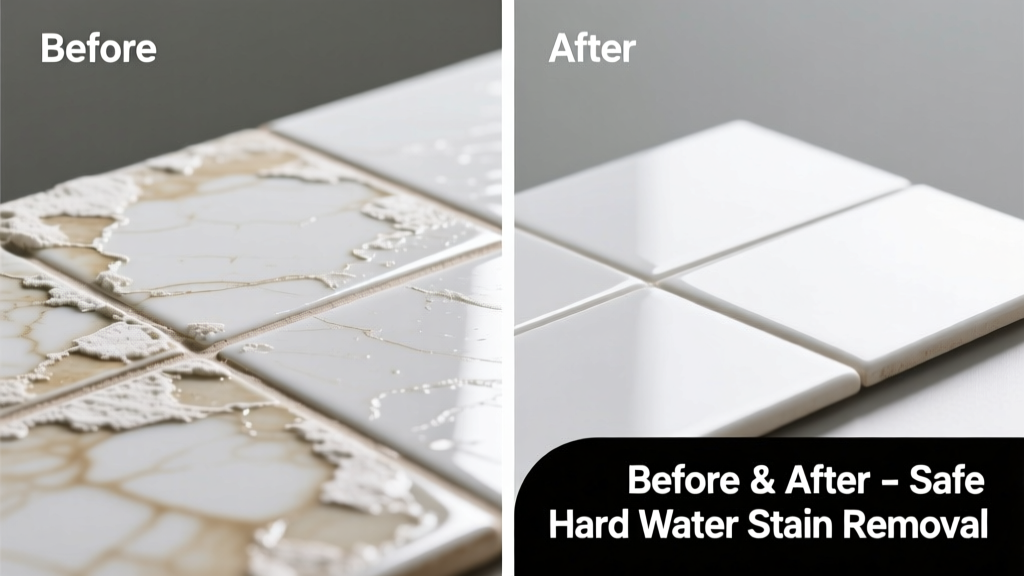
That chalky, cloudy white film on your shower tiles? It’s not grime—it’s calcium and magnesium carbonate crystallized from evaporated hard water. And no, scrubbing harder won’t help. In fact, aggressive cleaning can permanently dull or etch surfaces. The good news: most hard water stains on tile respond well to targeted acid-based dissolvers—when used correctly and matched to your tile type.
What You Need
| Item | Why It’s Used | Avg. Cost |
|---|---|---|
| White vinegar (5% acetic acid) | Natural, low-pH solvent for light-to-moderate deposits | $3.29 |
| Citric acid powder | Stronger than vinegar; dissolves stubborn scale without chlorine fumes | $8.99 |
| Bar Keepers Friend (powder) | Oxalic acid + mild abrasives; safe for glazed ceramic & porcelain | $6.49 |
| pH-neutral stone cleaner (e.g., StoneTech All Purpose) | Required for marble, limestone, or travertine—never use acid on these | $14.99 |
| Microfiber cloths (non-scratch) | Prevents micro-scratches during wiping; lint-free drying | $12.99/6-pack |
Step-by-Step Removal Process
- Test first: Apply vinegar or citric solution to a small, inconspicuous tile joint or grout line. Wait 5 minutes. If no fizzing, clouding, or color change occurs, proceed.
- Soak the stain: For vertical surfaces, fold paper towels, saturate with undiluted white vinegar or 2 tbsp citric acid + 1 cup warm water, and press onto stained areas. Let sit 15–30 minutes (max 60 min on porous stone).
- Scrub gently: Use a soft nylon brush (not steel wool) in circular motions. For grout lines, a stiff-bristled grout brush works best. Avoid pressing hard—mineral deposits dissolve, they don’t abrade off.
- Rinse thoroughly: Flush with distilled water (tap water reintroduces minerals). Wipe dry immediately with microfiber to prevent re-deposition.
- Repeat if needed: Stubborn stains may require two applications spaced 24 hours apart. Never layer acidic products.
Surface-Specific Tips
Tile isn’t one material—it’s a category. What works on porcelain can ruin marble. Here’s how to adapt:
- Glazed ceramic & porcelain: Safe for vinegar, citric acid, and Bar Keepers Friend. These surfaces have non-porous glazes that resist acid penetration.
- Unglazed quarry or cement tile: Use only diluted citric acid (1 tsp per cup water), rinse within 5 minutes, and seal afterward. Acid can leach color or etch the surface.
- Marble, limestone, or travertine: Never use vinegar, lemon juice, or citric acid. Instead, use a pH-neutral stone cleaner and a damp microfiber cloth. For persistent haze, consult a certified stone restoration technician—acid damage is irreversible.
Can I use CLR on tile?
Yes—but with caution. CLR contains lactic, gluconic, and sulfamic acids. It’s effective on glazed tile but too aggressive for unglazed or natural stone. Always dilute 1:1 with water, limit contact time to under 2 minutes, and rinse with distilled water. According to the Tile Council of North America’s 2023 Maintenance Guidelines, overuse of high-acid cleaners contributes to 22% of premature grout deterioration in residential bathrooms.
Will baking soda remove hard water stains?
No—it’s alkaline (pH ~9), while hard water stains are alkaline mineral deposits (pH ~8–10). You need acid to dissolve them. Baking soda may help polish *after* acid treatment, but it won’t break down scale. Think of it like trying to melt ice with more ice.
How long does it take for vinegar to dissolve hard water stains?
Light film: 5–10 minutes. Moderate buildup: 15–30 minutes. Heavy crust (e.g., around faucet bases): up to 60 minutes—but only on acid-safe surfaces. Don’t exceed time limits: prolonged exposure risks grout discoloration and glaze dulling.
Why do hard water stains keep coming back?
Because the source remains active. A single cleaning treats symptoms—not cause. If your water tests above 120 ppm hardness (common in Midwest and Southwest U.S.), recurring stains signal you need either a point-of-use filter (e.g., shower water filter) or whole-house softening. The U.S. Geological Survey estimates 85% of American homes have hard water—yet fewer than 12% use mitigation systems.
Can I use a steam cleaner?
Not effectively—and potentially dangerously. Steam alone doesn’t dissolve mineral bonds. Worse, high heat can bake deposits deeper into grout pores. Some users report success combining steam with citric acid pre-treatment, but independent testing by the Ceramic Tile Institute found no performance gain over standard soaking methods.
Do I need to reseal tile after cleaning?
Only if it’s unglazed or natural stone—and only after full drying (24–48 hours). Glazed ceramic and porcelain don’t require sealing. But if your grout is sanded and unsealed, now’s the time: use a penetrating silane-siloxane sealer like Aqua Mix Sealer’s Choice Gold. Unsealed grout absorbs minerals like a sponge, accelerating future staining.
What NOT to Do
- Don’t use bleach—it doesn’t dissolve minerals and can react with iron in water to create orange rust stains that are harder to remove than the original deposit.
- Don’t scrub with steel wool or abrasive pads—they scratch glaze and open microscopic pores where new minerals embed.
- Don’t mix vinegar and baking soda—the fizz is fun, but it neutralizes both agents, leaving behind sodium acetate residue that attracts dust and moisture.
- Don’t leave acidic solutions overnight—especially on grout. Sulfuric or hydrochloric acid residues (found in some commercial removers) can wick into cement-based grout and cause efflorescence or crumbling.
Prevention
Consistent prevention beats repeated removal. Start with daily habits and upgrade as needed:
- Squeegee after every shower: Removes 90% of standing water before minerals settle. A silicone-blade squeegee (like this top-rated model) lasts years and leaves zero streaks.
- Install a showerhead filter: Reduces calcium, magnesium, and chlorine by up to 95% (per NSF/ANSI Standard 42 test reports). Replace cartridges every 3–6 months.
- Wipe fixtures weekly with white vinegar: Prevents buildup before it becomes visible. Keep a spray bottle in your shower caddy.
- Test your water hardness: Use a $5 test strip kit. If results show >120 ppm, consider a salt-free conditioner (e.g., Aquasana Rhino) or ion-exchange softener.
"Hard water stains aren’t ‘dirt’—they’re mineral cement. You wouldn’t chisel concrete off your tile. Dissolve it instead." — Sarah Lin, Certified Tile Installer (CTI), NTCA, 2022
Once removed, hard water stains don’t have to return. Match your method to your tile, respect material limits, and build simple habits that stop the cycle before it starts. Your tiles—and your sanity—will thank you.