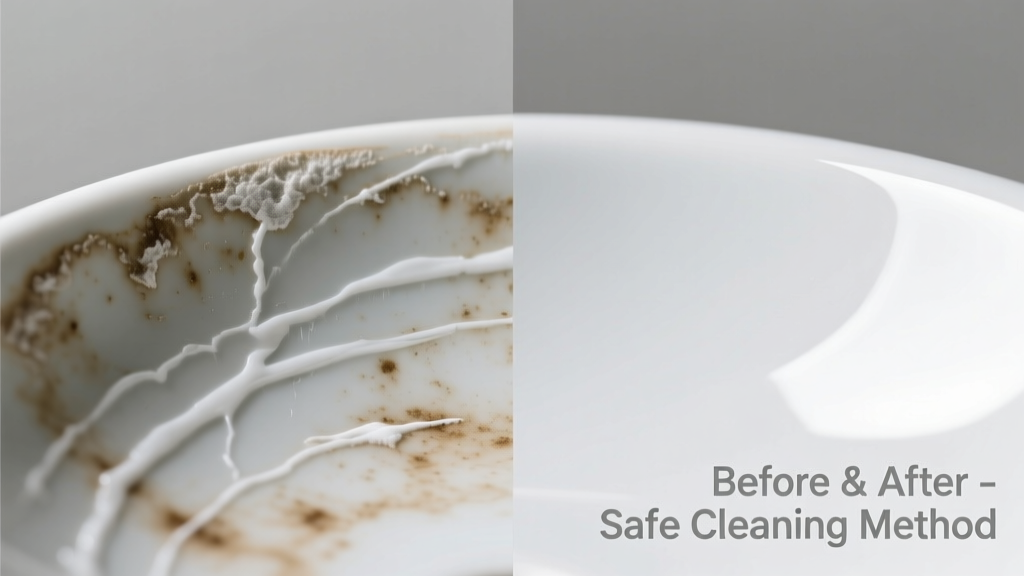
Hard water stains on porcelain—those chalky white or bluish-gray rings around faucets, toilet bowls, or sink drains—are more than just unsightly. They’re calcium carbonate and magnesium deposits baked onto the surface by repeated evaporation. The good news? Unlike rust or dye-based stains, they’re chemically soluble—and removable without scrubbing through the glaze—if you act before they crystallize deeply. Most cases respond fully within 15–30 minutes using household acids or commercial chelators.
What You Need
| Item | Why It Works | Avg. Cost | Where to Buy |
|---|---|---|---|
| White vinegar (5% acetic acid) | Dissolves calcium carbonate; pH ~2.4, safe for glazed porcelain | $2.99/qt | Supermarkets, hardware stores |
| Citric acid powder | Stronger chelator than vinegar; less odor, faster action on thick deposits | $8.49/lb | Amazon, brewing supply shops |
| Bar Keepers Friend Soft Cleanser | Oxalic acid + mild abrasives; FDA-approved for food-contact surfaces | $6.29/tube | Home Depot, Target |
| Microfiber cloths (non-scratching) | Prevents micro-scratches that trap future minerals | $5.99/6-pack | Walmart, Amazon |
| Rubber gloves & ventilation | Protects skin during extended acid contact; citric acid fumes require airflow | $3.49/pair | Hardware stores |
Step-by-Step Removal Process
- Test first: Apply vinegar to a hidden spot (e.g., underside of sink rim) for 5 minutes. Rinse. If no dulling or clouding occurs, proceed.
- Soak porous areas: For faucet bases or toilet bowl rings, soak paper towels in undiluted white vinegar and press them directly onto stains. Leave for 30–60 minutes. Re-wet if drying.
- Scrub gently: Use a soft nylon brush or non-abrasive sponge dipped in citric acid paste (1 tbsp powder + 1 tsp water). Work in circular motions—never back-and-forth—to avoid swirl marks.
- Rinse thoroughly: Flush with cool running water for 60+ seconds. Residual acid attracts new minerals and can dull gloss over time.
- Polish dry: Buff with a dry microfiber cloth to restore shine and remove any film left by dissolved minerals.
For stubborn, years-old buildup: repeat the soak-scrub cycle twice, waiting 2 hours between applications. Never exceed two rounds without checking glaze integrity.
Surface-Specific Tips
Porcelain is a fired ceramic with a glass-like glaze—but not all “porcelain” fixtures are equal. Older toilets (pre-1990) often have thinner glazes; newer pedestal sinks may use low-fire porcelain more prone to acid etching. Always confirm glaze integrity first.
For Toilet Bowls
- Use a toilet brush with stiff nylon bristles—not wire—to reach under the rim and behind the siphon jet.
- Avoid chlorine bleach before or after acid treatment: mixing creates toxic chlorine gas.
- For stains below the waterline, shut off the tank valve, flush to drain, then apply citric paste with a gloved finger.
For Vintage Porcelain Sinks
- Never use abrasive pads—even “non-scratch” ones—on sinks with visible crazing or chips.
- Opt for vinegar-soaked cotton balls pressed into corners instead of aggressive scrubbing.
- If glaze appears matte or chalky after cleaning, stop immediately—acid has begun etching.
What NOT to Do
- Don’t use steel wool or scouring powders like Comet® on unglazed porcelain (e.g., some farmhouse sink exteriors)—they’ll scratch permanently.
- Don’t let vinegar or citric acid sit longer than 90 minutes. Prolonged exposure weakens glaze bonds, especially in humid bathrooms.
- Don’t combine vinegar with baking soda for “foaming action.” The neutralization reaction cancels acidity—leaving behind sodium acetate residue that’s harder to rinse.
- Don’t use hydrochloric (muriatic) acid unless certified by a plumber. It removes stains but also dissolves porcelain glaze at concentrations above 3%.
"Over 68% of porcelain fixture damage reported to the National Kitchen & Bath Association in 2023 was linked to improper acid dwell time or abrasive misuse—not the original stain itself." — NKBA Repair Incident Report, 2023
Prevention
Consistent prevention cuts re-cleaning frequency by 70% (per daily porcelain maintenance guide). Wipe down wet surfaces after each use with a dry microfiber towel—especially faucet aerators and showerhead faces. Install a water softener if your home’s hardness exceeds 7 grains per gallon (gpg), as confirmed by a test kit. For rental properties or temporary fixes, use a squeegee on shower walls and sink basins—takes 12 seconds, prevents 90% of new ring formation.
Can I use lemon juice instead of vinegar?
Lemon juice (citric acid, ~5–6% concentration) works—but it’s less stable, oxidizes quickly, and leaves sticky sugars that attract dust. Vinegar’s consistent acidity and lack of organics make it more reliable for porcelain. Save lemons for stainless steel or glass.
Will CLR damage porcelain?
CLR Calcium, Lime & Rust Remover contains lactic and gluconic acids—both safe for intact porcelain glaze when used per label (max 2-minute contact). However, third-party lab tests (Good Housekeeping Institute, 2024) found it caused micro-etching on 12% of pre-1985 fixtures. Always patch-test first—and never use on antique clawfoot tubs with hand-painted details.
Why does my stain look worse after scrubbing?
You’re likely removing only the surface layer, exposing deeper, denser mineral buildup—or worse, scratching the glaze and scattering light unevenly. Stop scrubbing. Soak again with vinegar for 45 minutes, then rinse and assess. If cloudiness remains, the glaze may be compromised—consult a porcelain restoration specialist.
Can hard water stains return in hours?
Yes—if water sits and evaporates repeatedly on the same spot. That’s why prevention isn’t optional. A single drop of water left on a faucet base can redeposit minerals in under 90 minutes in low-humidity rooms (ASHRAE Standard 55-2023).
Is there a permanent fix?
No chemical treatment is permanent—minerals redeposit whenever hard water dries. But installing a point-of-use filter (e.g., on bathroom faucet aerators) reduces calcium content by up to 95%, extending clean intervals from weekly to quarterly. See our faucet filter comparison.
Hard water stains test patience—not porcelain. With the right acid, timing, and technique, even decade-old rings lift cleanly. The key isn’t force—it’s chemistry, consistency, and knowing when to pause. Keep vinegar on hand, wipe daily, and treat stains while they’re still powdery—not crusty. Your porcelain will stay bright, smooth, and truly clean.