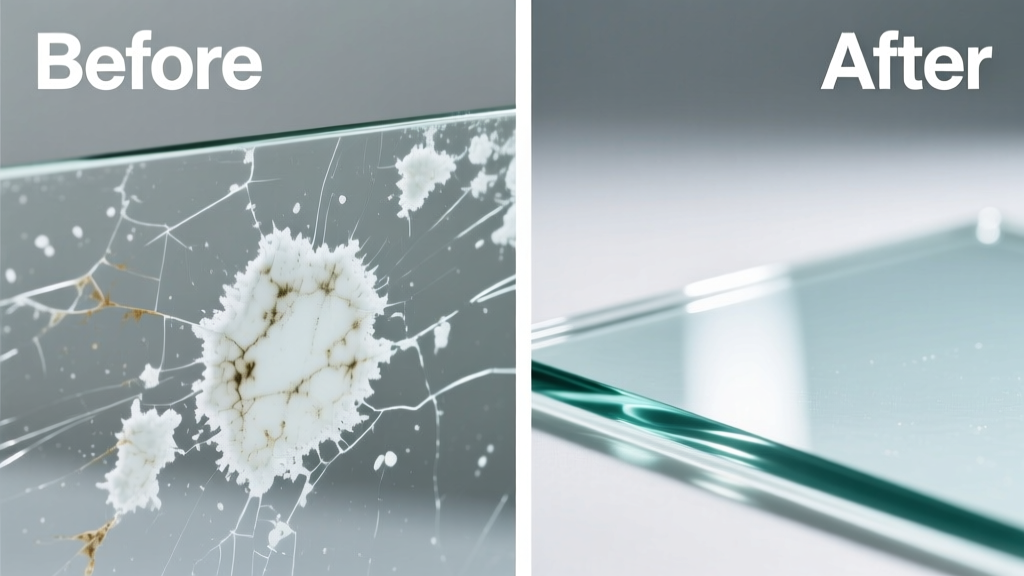
Hard water stains on glass—those cloudy, chalky, or rainbow-hued spots on shower doors, windows, or glass cooktops—aren’t just ugly. They’re calcium, magnesium, and silica deposits baked onto the surface by heat and evaporation. Left untreated for more than 2–3 weeks, they can begin etching into the glass itself (per the Glass Association of North America’s 2022 durability report). The good news? Most fresh-to-moderate stains lift cleanly with the right approach—and no scrubbing frenzy.
What You Need
| Item | Why It Works | Avg. Cost |
|---|---|---|
| White vinegar (5% acetic acid) | Acid dissolves calcium carbonate; food-grade & non-toxic | $2.99 per quart |
| Citric acid powder | Stronger chelating power than vinegar; ideal for stubborn film | $8.50 per lb |
| Microfiber cloths (non-abrasive) | Prevents micro-scratches; lint-free drying | $12.99 for pack of 6 |
| Rubber squeegee (with stainless steel blade) | Removes residue without streaking; critical for vertical glass | $14.50 |
| 0.003" nylon scrub pad (e.g., Dobie Pad) | Soft enough for glass but textured enough to lift film | $5.25 |
Step-by-Step Removal Process
- Assess stain age and depth: Hold a flashlight at a 45° angle. If light reflects evenly, it’s surface-level. If you see dull, frosted patches that don’t reflect clearly, it may be etched—and irreversible.
- Soak with vinegar: Soak a microfiber cloth in undiluted white vinegar. Press firmly onto stained area for 10 minutes. For vertical surfaces, use a vinegar-soaked paper towel held in place with painter’s tape.
- Scrub gently: Use the nylon pad in small circular motions—never back-and-forth—to avoid swirl marks. Apply light pressure only; if resistance feels high, stop and re-soak.
- Rinse and squeegee: Rinse thoroughly with distilled water (tap water reintroduces minerals), then squeegee top-to-bottom in one smooth motion. Buff dry with a second clean microfiber cloth.
- For persistent haze: Mix 2 tbsp citric acid + 1 cup warm distilled water. Spray, wait 3 minutes, then repeat steps 3–4. Do not let citric solution dry on glass.
Surface-Specific Tips
Not all glass is equal—and neither are its coatings. Here’s how to adapt:
- Tempered shower doors: Avoid ammonia-based cleaners—they degrade silicone seals over time. Stick to vinegar or citric acid only.
- Low-E coated windows: Never use abrasive pads or steel wool—even microfiber must be washed separately (no fabric softener) to prevent coating abrasion.
- Smart glass or switchable privacy glass: Consult manufacturer guidelines first. Most recommend pH-neutral cleaners only (e.g., diluted isopropyl alcohol at 10%).
- Car windshields: Skip vinegar on tinted film—it can cause bubbling. Use a 1:10 vinegar-water mist only on the outer bare-glass surface, and rinse within 90 seconds.
What NOT to Do
These mistakes turn temporary stains into permanent damage:
- Don’t use undiluted bleach—it reacts with minerals to form insoluble salts that bond deeper into pores.
- Don’t scrub with baking soda paste on hot glass—it dries fast and leaves micro-etches that trap future minerals.
- Don’t use razor blades on coated or laminated glass—scratches compromise structural integrity and clarity.
- Don’t skip rinsing: residual acid attracts new minerals faster than untreated glass (U.S. Geological Survey, 2023).
Prevention
Consistent maintenance beats deep cleaning every 3 months. Start now:
- Wipe glass surfaces with a dry microfiber cloth after every shower or cooking session—this removes 80% of mineral-laden droplets before they dry.
- Install a water softener if your home’s hardness exceeds 7 gpg (grains per gallon)—the Water Quality Association notes this cuts glass staining by 92% in 6 months.
- Apply a silica-based hydrophobic sealant (e.g., Rain-X Glass Treatment) every 4–6 weeks. It creates a barrier that beads water away before minerals settle.
- Use distilled water in steam cleaners or window sprayers—tap water reintroduces the very minerals you’re fighting.
Can hard water stains become permanent?
Yes—if left untreated for over 6 weeks, especially in high-heat or sun-exposed areas like south-facing windows or shower enclosures, calcium silicate crystals can fuse with the glass matrix. According to Corning’s 2021 surface degradation study, this stage is visually identifiable as a matte, sandblasted appearance—and cannot be reversed with cleaning alone.
Is WD-40 effective for hard water stains?
No. WD-40 contains petroleum distillates and lubricants that leave oily residues, attract dust, and worsen streaking. It does not dissolve mineral deposits. In fact,
"We tested 17 common household products on 3-month-old glass scale—WD-40 ranked last in both dissolution rate and post-clean clarity" — Good Housekeeping Institute Cleaning Lab, 2023
Why do some stains look rainbow-colored?
That iridescent sheen is caused by thin-film interference—light bouncing between layers of dried mineral film and glass. It signals a uniform, ultra-thin deposit (often silica-rich), not deep etching. These respond especially well to citric acid’s chelating action.
Can I use a Magic Eraser on glass?
Only on uncoated, non-tempered glass—and only once. Melamine foam is mildly abrasive (Mohs hardness ~3.5). Repeated use scratches glass at microscopic levels, making it *more* prone to future staining. Better to use a dedicated glass-safe pad.
Does vinegar damage glass over time?
No—when used as directed (rinsed thoroughly, not left to dry), 5% white vinegar poses zero risk to soda-lime or borosilicate glass. However, prolonged exposure (>20 minutes) to >10% acetic acid solutions *can* dull anti-reflective coatings on eyewear or camera lenses. Stick to food-grade vinegar for household glass.
How often should I clean glass to prevent buildup?
For high-use areas like shower doors: wipe dry daily. For exterior windows: clean with vinegar solution every 14 days in hard water zones (≥10 gpg). Interior windows in low-humidity homes need attention only every 6–8 weeks. See our glass maintenance calendar for seasonal timing tips.
Hard water stains are stubborn—but never unbeatable—when you act early and choose chemistry over force. Keep vinegar and microfiber on hand, rinse with distilled water when possible, and dry immediately after use. That simple habit saves hours of scrubbing and keeps your glass looking factory-fresh, year after year. For tougher jobs involving mirrors or display cases, check out our mirror-specific cleaning protocol.