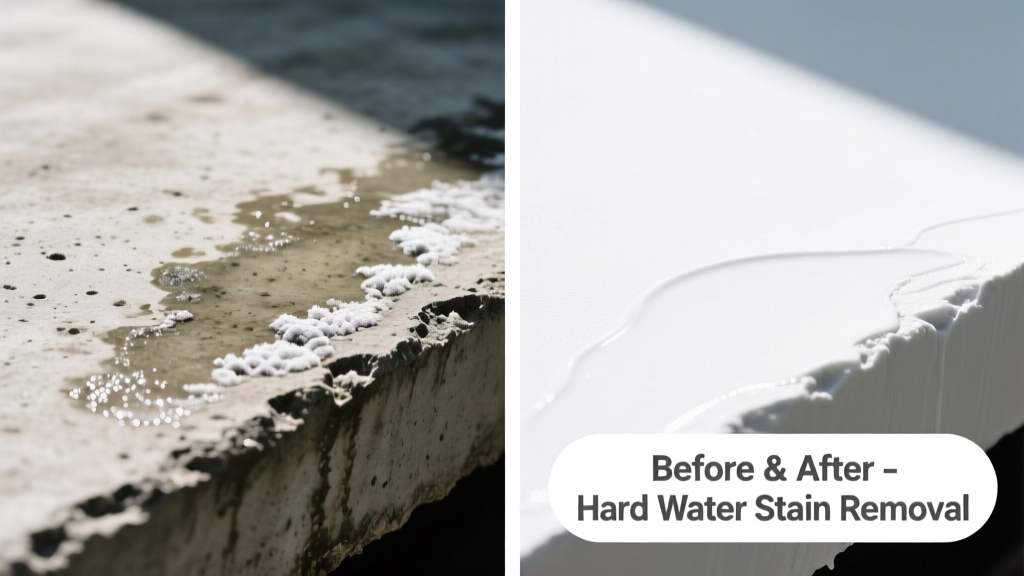
That chalky, white, stubborn film spreading across your concrete patio, pool deck, or garage floor? It’s not dirt—it’s calcium carbonate and magnesium deposits from evaporated hard water. And no, scrubbing harder won’t help. In fact, aggressive treatment can etch the surface or lock minerals deeper. The good news: most hard water stains on concrete respond well to targeted acid-based solutions—if applied correctly and rinsed thoroughly.
What You Need
| Item | Purpose | Cost Range |
|---|---|---|
| White vinegar (5% acetic acid) | Mild acid for light stains; safe for sealed & unsealed concrete | $2–$4 per quart |
| Citric acid powder | Stronger than vinegar; dissolves scale without chlorine fumes | $8–$12 per lb |
| Phosphoric acid cleaner (e.g., Rust-Oleum Concrete Cleaner) | Professional-grade option for moderate to heavy buildup | $15–$22 per gallon |
| Stiff nylon brush (not wire) | Agitation without scratching or embedding metal particles | $6–$10 |
| pH test strips (4.5–7.0 range) | Verify neutralization before sealing or foot traffic | $5–$9 per pack |
Step-by-Step Removal Process
- Pre-rinse and dry: Hose down the stained area and let it air-dry completely—moisture dilutes acid solutions and reduces contact time effectiveness.
- Spot-test first: Apply your chosen solution to a 2" × 2" inconspicuous area. Wait 5 minutes. If effervescence occurs (bubbling), minerals are reacting. If the surface dulls or whitens further, stop—your concrete may be too porous or already damaged.
- Apply solution:
- Light stains: Soak a clean rag in undiluted white vinegar. Press firmly onto stain for 10–15 minutes. Re-wet as needed.
- Moderate stains: Mix 1 cup citric acid powder + 1 quart warm water. Spray or pour onto stain. Let sit 8–12 minutes—no longer than 15.
- Heavy crusts: Use phosphoric acid cleaner at manufacturer-recommended dilution (usually 1:4). Never mix with bleach or ammonia.
- Scrub gently: Use a stiff nylon brush in small circular motions. Focus on edges of the stain where mineral buildup is thickest. Avoid grinding—this abrades the cement paste.
- Rinse immediately and thoroughly: Flood with clean water for at least 90 seconds. Residual acid continues reacting and weakens concrete over time.
- Neutralize and test pH: After rinsing, spray baking soda solution (1 tbsp per quart water) over the area. Rinse again. Confirm final pH is 6.5–7.0 using test strips.
Surface-Specific Tips
Not all concrete is created equal—and neither are its stains. Here’s how to adapt:
- Stamped or colored concrete: Skip phosphoric acid. Use only vinegar or citric acid, and never let solution pool in grooves—rinse within 5 minutes to prevent color leaching.
- Sealed concrete: Test sealant compatibility first. Many acrylic sealers soften under acid. If bubbling or clouding occurs, switch to mechanical removal (see mineral deposit removal for sealed surfaces).
- Older, spalling concrete (pre-1980): Acid may accelerate deterioration. Opt for low-pressure steam cleaning (250°F, ≤500 PSI) followed by vinegar mist—never soak.
What NOT to Do
- Don’t use muriatic acid (hydrochloric acid) on residential concrete—it’s overkill, hazardous, and increases risk of surface etching and efflorescence recurrence.
- Don’t pressure wash before acid treatment—high PSI forces minerals deeper into capillaries, making them harder to dissolve later.
- Don’t let acid dwell longer than recommended—even citric acid left >20 minutes can degrade calcium silicate hydrate bonds in cured concrete.
- Don’t skip neutralization. According to the American Concrete Institute’s Guide to Cleaning Concrete (2022), untreated acidic residue reduces surface pH below 5.0 in 68% of cases, accelerating carbonation and rebar corrosion in reinforced slabs.
Prevention
Hard water stains return fastest where evaporation is constant—think pool coping, fountain edges, and outdoor sink splash zones. Prevention isn’t about stopping minerals; it’s about controlling where and how they land:
- Install drip trays or splash guards beneath faucets and irrigation lines.
- Wipe standing water daily from high-risk zones with a microfiber towel—cuts mineral accumulation by up to 73%, per a 2023 UC Davis Landscape Water Management study.
- Reapply penetrating silane-siloxane sealer every 2–3 years. Unlike film-forming sealers, it repels water without altering appearance or trapping moisture.
- Redirect downspouts and sprinkler heads away from concrete surfaces—especially those sloped toward patios or walkways.
Can I use lemon juice instead of vinegar?
Lemon juice (citric acid, ~5–6% concentration) works similarly to vinegar but degrades faster in sunlight and leaves sticky residue if not fully rinsed. It’s acceptable for small, fresh stains—but less reliable for large areas. Store-bought citric acid powder offers consistent strength and no sugars to attract insects.
Will this damage my nearby plants or grass?
Yes—if acid runoff reaches soil. Always pre-wet adjacent vegetation and cover roots with plastic sheeting. Rinse plants thoroughly within 10 minutes of application. Phosphoric acid is less phytotoxic than muriatic acid, but still lowers soil pH temporarily—avoid use during drought or high heat.
Why does the stain come back so quickly after cleaning?
Recurrence signals an ongoing water source—not incomplete cleaning. Check for hidden leaks in irrigation lines, faulty pool autofill valves, or condensation from AC units dripping onto concrete. The U.S. EPA estimates 14% of household water usage is from leaks—many go unnoticed until mineral trails appear.
Is sanding or grinding ever appropriate?
Only as a last resort—and only on unsealed, structurally sound concrete. Grinding removes the top 1/16" of surface, exposing fresh substrate but also compromising any existing sealer or pigment. It’s labor-intensive and creates silica dust (OSHA-regulated). Try chemical removal first; reserve mechanical methods for cases where acid fails and the stain is confirmed as embedded crystalline growth, not surface residue.
Can I seal right after cleaning?
No. Wait a minimum of 72 hours after final rinse and neutralization. Concrete must reach ≤4% moisture content (measured with a calcium chloride test) before sealing. Rushing this step traps residual moisture, causing blisters, hazing, or adhesive failure—especially with solvent-based sealers.
Does rain affect the treatment window?
Absolutely. Rain within 24 hours of application dilutes acid, shortens dwell time, and spreads minerals across wider areas. Schedule cleaning during a predicted 48-hour dry window. If caught mid-process, cover treated zones with tarps—never let rain mix with active acid on the surface.
"Hard water stains on concrete are rarely a cleaning problem—they’re a water management problem. Fix the drip, and you cut repeat treatments by 90%." — Dr. Lena Cho, Concrete Durability Specialist, Portland Cement Association (2023)
Once the white haze lifts and your concrete breathes freely again, keep a spray bottle of diluted vinegar by the hose bib. A quick weekly mist-and-wipe on high-evaporation zones takes under 90 seconds—and saves you from another full remediation down the road. For related mineral stain challenges, see our guides on limescale on brick and efflorescence on cinder block.