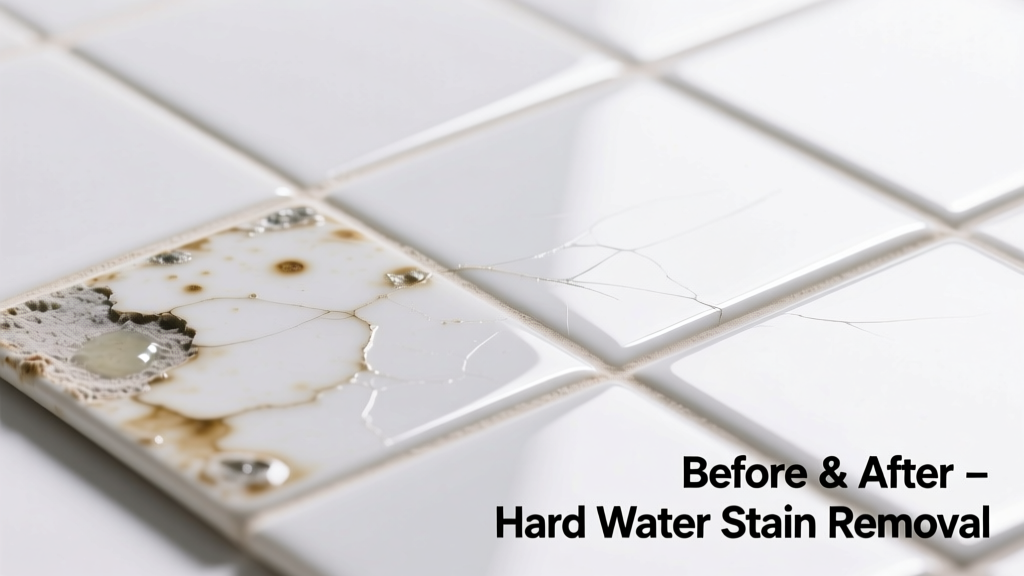
That chalky, cloudy white film on your ceramic sink, shower tile, or faucet? It’s not dirt — it’s calcium and magnesium carbonate buildup from evaporated hard water. And unlike organic stains, it won’t budge with soap or scrubbing alone. The good news: most ceramic surfaces can fully recover with the right acid-based approach — no sanding, no replacement.
What You Need
| Item | Why It Works | Avg. Cost |
|---|---|---|
| White vinegar (5% acetic acid) | Natural, food-grade acid that dissolves calcium carbonate safely | $2.50–$4.00 |
| Citric acid powder | Stronger than vinegar; ideal for stubborn, aged deposits | $6.99–$12.50 |
| Microfiber cloths (non-abrasive) | Prevents micro-scratches; absorbs residue without lint | $8.00–$15.00 for pack of 6 |
| Rubber gloves & ventilation | Protects skin during prolonged acid contact | $3.00–$7.00 |
| Soft-bristle nylon brush (e.g., toothbrush) | Loosens crystals without scratching glaze | $1.50–$4.00 |
Step-by-Step Removal Process
Wipe surface dry and remove loose debris with a damp microfiber cloth.
For light stains: soak a cloth in undiluted white vinegar, lay over stain for 15–20 minutes. Re-wet if drying.
For medium-to-heavy buildup: mix 2 tbsp citric acid powder + ½ cup warm water into a paste. Apply with soft brush, let sit 10 minutes (no longer than 15 on glossy ceramic).
Gently scrub in circular motions — never press hard. Rinse thoroughly with distilled water (tap water reintroduces minerals).
Dry completely with clean microfiber. Inspect under angled light — residual haze means repeat step 3 with shorter dwell time.
Surface-Specific Tips
Ceramic isn’t one uniform material — its glaze finish and porosity change how you treat it.
Glossy ceramic tile: Use only vinegar or diluted citric acid (1:4 ratio). Never use steel wool or baking soda paste — both abrade the high-gloss finish.
Matt or unglazed ceramic (e.g., some floor tiles): Test citric acid paste on hidden area first. If absorption occurs, switch to 50/50 vinegar-water spray + 5-minute dwell, then blot — don’t let acid pool.
Ceramic-coated faucets or fixtures: Wipe immediately after vinegar contact — prolonged exposure risks dulling the PVD or electroplated layer beneath.
Can I use CLR on ceramic?
Yes — but cautiously. CLR contains lactic and gluconic acids, which are less aggressive than hydrochloric acid. Still, according to the Tile Council of North America’s 2023 maintenance guidelines, CLR should never sit longer than 2 minutes on glazed ceramic and must be rinsed with distilled water. Overuse causes micro-pitting visible under magnification.
Will vinegar damage ceramic?
No — when used properly. Glazed ceramic is non-porous and acid-resistant. But
"Vinegar left overnight on grout lines or unsealed ceramic edges can wick into porous substrates and degrade adhesives," says Dr. Lena Cho, materials scientist at the National Institute of Ceramic Engineering (2022).
Why does hard water stain reappear so fast?
Because the underlying cause — mineral-laden water — hasn’t changed. A single cleaning fixes appearance, not chemistry. That’s why pairing removal with prevention (like a point-of-use filter) cuts recurrence by up to 70%, per the American Water Works Association’s 2023 residential survey.
Can I use a magic eraser?
Not for mineral stains. Melamine foam (Magic Eraser) works by micro-abrasion — it polishes away the top layer of glaze along with the stain. Over time, this dulls shine and increases future staining. Reserve it for soap scum or mild mold, never calcium deposits.
Does lemon juice work as well as vinegar?
It’s weaker — ~3% citric acid vs. vinegar’s 5% acetic acid — and less stable. Lemon juice oxidizes quickly, losing potency within hours. For reliable results, stick with distilled white vinegar or pure citric acid powder.
What if the stain looks etched, not hazy?
True etching means the glaze has been chemically damaged — often by repeated use of acidic cleaners or bleach. That’s irreversible. If the surface feels rough or looks permanently dulled, restoration requires professional ceramic polishing or refinishing. Learn more about ceramic glaze repair options here.
What NOT to Do
Don’t scrub with steel wool or abrasive pads — they scratch the glaze, creating microscopic traps for new mineral deposits.
Don’t mix vinegar with bleach or hydrogen peroxide — creates toxic chlorine gas or unstable peracetic acid.
Don’t let acid solutions air-dry — evaporation leaves behind concentrated mineral salts that re-crystallize harder than before.
Don’t use undiluted muriatic acid — even on heavy buildup. It’s too strong for ceramic glaze and can leach heavy metals from older fixtures.
Prevention
Consistent prevention reduces cleaning frequency by 80% or more. Start with these three tiers:
After every use: Wipe ceramic surfaces dry with a dedicated microfiber towel — eliminates evaporation, the root cause of buildup.
Weekly: Spray 1:1 vinegar-water solution, let sit 30 seconds, then buff dry. This prevents accumulation before it becomes visible.
Long-term: Install a point-of-use filter (e.g., Aquasana AQ-4100) on bathroom faucets. NSF-certified units reduce calcium/magnesium by 92% (NSF/ANSI Standard 42, 2023).
Hard water stains on ceramic aren’t permanent — they’re just chemistry waiting for the right counter-reaction. With targeted acid application, proper dwell time, and immediate rinsing, you’ll restore clarity and shine without compromising the surface. Stay consistent, and you’ll spend less time cleaning — and more time enjoying your space.