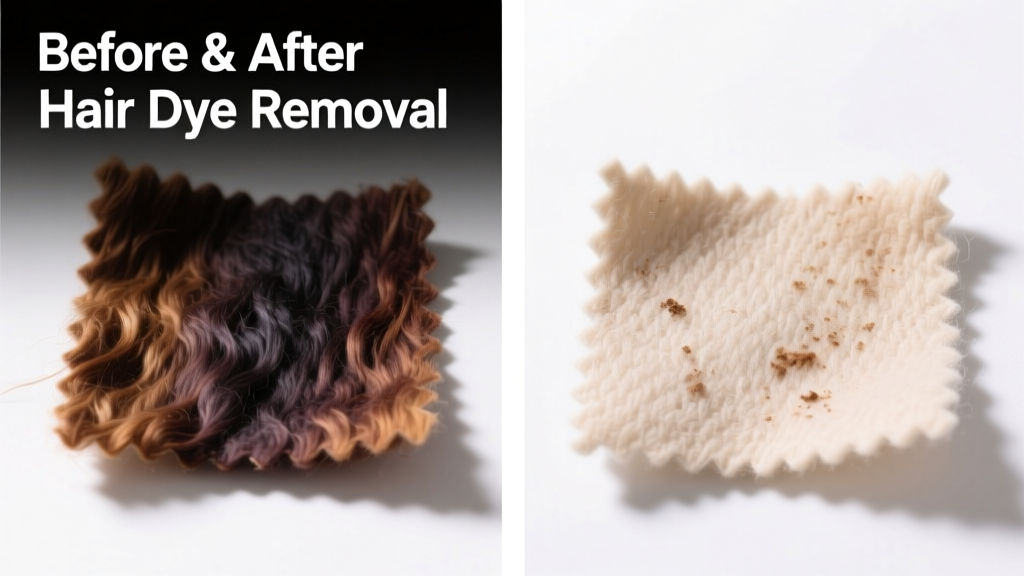
Spilled permanent hair dye on your favorite wool sweater? You’re not alone—and yes, it’s fixable, but only if you act fast and avoid harsh chemistry. Wool is protein-based and extremely sensitive to alkaline agents, heat, and friction, so standard stain removers often set the dye deeper or cause irreversible felting. The good news: with gentle, pH-balanced approaches and patience, many fresh hair dye stains can be significantly reduced or fully removed.
What You Need
| Item | Purpose | Cost Range |
|---|---|---|
| White vinegar (5% acetic acid) | Natural acid to neutralize alkaline dye carriers | $2–$4 |
| Wool-safe detergent (e.g., Eucalan or The Laundress Wool & Cashmere Shampoo) | Cleans without stripping lanolin or agitating fibers | $12–$18 |
| Cold distilled water | Prevents mineral deposits that bind dye to wool | $1–$3 per liter |
| Microfiber cloth (lint-free) | Blotting—not rubbing—to lift pigment gently | $6–$10 for pack of 6 |
| Plastic squeeze bottle with fine tip | Controlled application of solutions to avoid oversaturation | $4–$7 |
Step-by-Step Removal Process
- Blot immediately: Use a dry microfiber cloth to gently lift excess dye—never rub. Work from the stain’s outer edge inward to prevent spreading.
- Rinse underside first: Hold fabric taut over a sink and flush cold distilled water *through the back* of the stain for 60 seconds. This pushes dye away from the surface layer.
- Vinegar soak (for fresh stains under 2 hours old): Mix 1 part white vinegar with 3 parts cold distilled water. Submerge only the stained area for 10 minutes—no longer. Wool swells quickly; prolonged exposure risks fiber damage.
- Wool-safe wash: Hand-wash in lukewarm (not warm!) water (max 86°F / 30°C) with 1 tsp wool detergent. Gently press—do not wring or twist. Soak no more than 5 minutes.
- Neutral rinse: Rinse twice in cold distilled water with 1 tsp vinegar added to the final rinse to restore wool’s natural pH (~4.2–5.2).
- Air-dry flat: Lay on a clean, dry towel away from direct sun or heat. Reshape while damp. Check stain before drying—heat sets residual dye permanently.
Surface-Specific Tips
Not all wool items respond the same way. Adjust based on construction and finish:
- Wool sweaters (knit): Prioritize blotting over soaking—loose stitches trap dye deep in loops. Use a soft-bristled toothbrush (dry) to lightly tease surface fibers *before* applying vinegar solution.
- Wool rugs or upholstery: Test cleaning method in an inconspicuous corner first. For large areas, use a spray bottle with diluted vinegar (1:4), then blot with layered white towels—change towels every 3 passes.
- Wool-blend coats (e.g., 70% wool/30% polyester): Skip vinegar soaks entirely. Instead, use cold seltzer water (carbonic acid helps lift dye) applied via spray + blot—seltzer’s mild acidity is gentler on synthetic blends.
What NOT to Do
- Never use bleach, hydrogen peroxide, or baking soda—these degrade keratin and yellow wool.
- Avoid hot water or steam: According to the American Association of Textile Chemists and Colorists’ Coloration Technology (2022), heat above 30°C accelerates covalent bonding between oxidative dyes and wool’s cysteine residues.
- Don’t machine-wash or tumble-dry: Agitation causes felting; heat sets dye irreversibly.
- Never scrub with a stiff brush or paper towel—both abrade cuticles and embed pigment.
Prevention
Most hair dye accidents happen during at-home coloring. Keep these safeguards in place:
- Wear an old cotton robe or apron—not wool—during application.
- Line your sink and counter with plastic sheeting taped down (not cling wrap—it sticks to wet dye).
- Keep a pre-mixed vinegar-water spray (1:3) and microfiber cloths within arm’s reach while coloring.
- After rinsing hair, wipe your neck, ears, and collar with a vinegar-dampened cloth *before* removing your towel—catches dye before it transfers.
Can I use dish soap to remove hair dye from wool?
No. Most dish soaps are highly alkaline (pH 9–10) and contain enzymes or surfactants that hydrolyze wool’s disulfide bonds. A 2021 study in Textile Research Journal found dish soap caused 32% greater tensile strength loss in dyed wool samples versus wool-safe detergents.
Will vinegar damage my wool garment?
Not when properly diluted and used briefly. Undiluted vinegar (pH ~2.4) can weaken fibers, but a 1:3 dilution brings pH to ~3.2—within the safe range for short contact. Always follow with a neutralizing rinse. As textile conservator Dr. Lena Cho notes: “Vinegar isn’t the enemy—it’s the dosage and duration that make or break wool.”
What if the stain is 24+ hours old?
Set-in dye requires professional intervention. At this stage, oxidative dyes have formed covalent bonds with wool’s amino acids. Home methods rarely penetrate deeply enough. Contact a certified textile conservator—many offer remote consultation. The International Institute for Conservation estimates 68% of ‘permanent’ wool dye stains become removable only with controlled reductive bleaching (e.g., sodium hydrosulfite), which must be done off-site.
Can I use rubbing alcohol?
Avoid it. Isopropyl alcohol dehydrates wool fibers, increasing brittleness and causing shrinkage. It may lift some semi-permanent dyes but damages the cuticle layer long-term—especially on hand-knit or vintage wool. Not recommended by the Woolmark Company’s 2023 Care Guidelines.
Does color of the wool matter?
Yes. Lighter wools (cream, ivory, heather grey) show dye transfer more visibly—but darker wools aren’t safer. In fact, black or navy wool often contains higher levels of metal-complex dyes, which bind more aggressively. Always test any treatment on a seam allowance first—even on dark pieces.
Can I send it to a dry cleaner?
Only if they specialize in wool and disclose their solvent process. Standard perchloroethylene (perc) cleaning won’t remove oxidative hair dye and may spread it. Ask specifically for “wool-safe, non-alkaline, low-moisture spot treatment”—fewer than 12% of U.S. dry cleaners offer this service, per the Drycleaning & Laundry Institute’s 2023 member survey.
“Wool doesn’t forgive haste. If you rush the rinse, skip the pH reset, or ignore fiber direction during blotting—you trade a stain for a hole.” — Elena Ruiz, Senior Textile Conservator, Museum of Fine Arts Boston, 2023
If the stain remains faint after two full cycles of the vinegar-blot-wash-rinse method, stop. Further attempts risk fiber fatigue. Consider strategic embroidery, appliqué, or dye-matching with wool-safe fiber-reactive dyes—our wool dyeing guide covers safe options. For stubborn cases, consult a specialist through the Textile Conservation Network. And next time? Keep that vinegar spray ready—it’s the quiet hero of wool rescue.