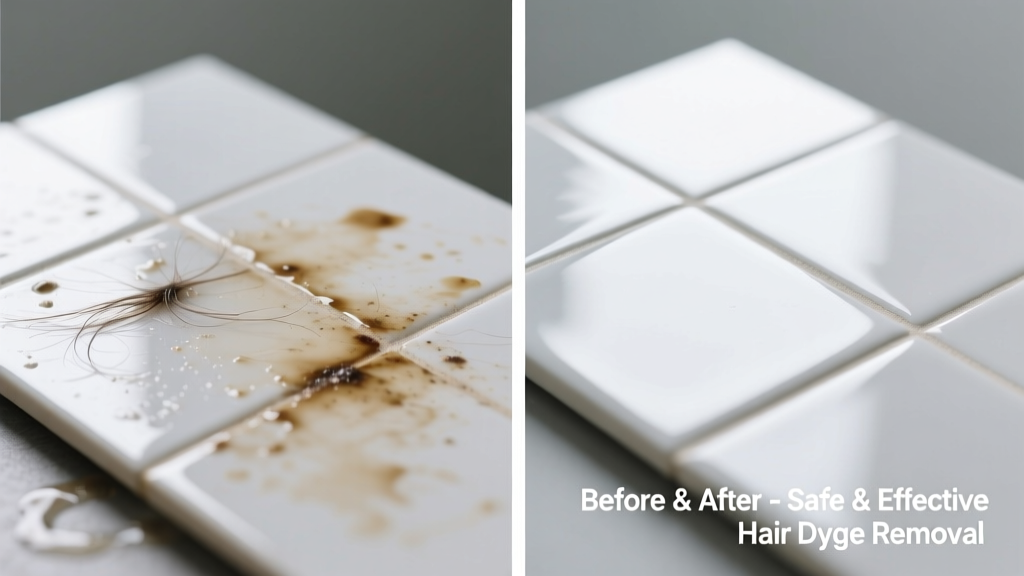
Spilled hair dye on your bathroom floor? That vibrant violet or jet-black streak on your tile isn’t just unsightly—it’s stubborn. Hair dye contains oxidative pigments (like p-phenylenediamine) that bond strongly to porous and semi-porous surfaces. The good news: most fresh stains *can* be removed within 24–48 hours. Older, dried-on dye requires more targeted action—but it’s rarely permanent if you act correctly.
What You Need
| Item | Why It’s Used | Average Cost |
|---|---|---|
| Isopropyl alcohol (91% or higher) | Breaks down oxidative dye molecules without etching glaze | $4–$8 |
| Baking soda + hydrogen peroxide (3%) paste | Oxygen-based lift for light-to-moderate stains on non-porous tile | $3–$5 |
| Bar Keepers Friend Soft Cleanser | Oxalic acid formula safe for glazed ceramic & porcelain; removes surface pigment | $6–$9 |
| Microfiber cloths (non-linting) | Prevents micro-scratching during wiping | $8–$12 for pack of 6 |
| White vinegar (5% acetic acid) | Neutralizes alkaline residues; not for stain removal alone | $2–$4 |
Step-by-Step Removal Process
- Blot immediately—never rub. Use a dry, white microfiber cloth to lift excess dye before it dries. Works best within 5 minutes of spillage.
- Test first in an inconspicuous grout line or corner. Apply isopropyl alcohol with a cotton swab and wait 30 seconds. Check for color transfer or dulling.
- For fresh stains (under 12 hours): Soak a folded microfiber cloth in 91% isopropyl alcohol. Press—not scrub—onto the stain for 60 seconds. Lift and repeat until pigment lifts. Rinse with cool water and wipe dry.
- For dried or set-in stains (12+ hours): Make a paste of 2 tsp baking soda + 1 tsp 3% hydrogen peroxide. Spread thinly over stain. Cover with plastic wrap and let sit 15 minutes. Gently agitate with soft nylon brush, then rinse thoroughly.
- For persistent pigment on glazed tile: Apply Bar Keepers Friend Soft Cleanser with damp sponge using circular motions. Let dwell 2 minutes max—do not let dry. Rinse with cold water and buff dry. Repeat once if needed.
Surface-Specific Tips
Not all tile reacts the same way to cleaning agents. Adjust based on material:
- Ceramic & porcelain (glazed): Safe for alcohol, BKF Soft, and baking soda/peroxide. Avoid bleach—it can yellow grout and degrade sealants.
- Unglazed quarry or terra cotta tile: Do not use acidic or abrasive cleaners. Try diluted dish soap (1 tsp Dawn + ½ cup warm water), followed by gentle blotting. If stain remains, consult a stone/tile restoration specialist—these surfaces absorb deeply.
- Natural stone (marble, limestone, travertine): Never use vinegar, alcohol, or BKF—they etch calcite-based surfaces. Use only pH-neutral stone cleaner like Marble Life Daily Cleaner, then call a professional for pigment removal.
Can I use bleach on hair dye stains?
No. Chlorine bleach oxidizes dye pigments further, often darkening them—especially black, brown, and red tones. According to the U.S. EPA’s 2023 Household Cleaning Product Safety Guidelines, bleach is ineffective against synthetic hair dye and poses inhalation risks in small bathrooms.
Will rubbing alcohol damage my tile?
Not on glazed ceramic, porcelain, or sealed stone. But it *will* degrade unsealed grout or epoxy grout over repeated use. Always rinse thoroughly after alcohol application—and never soak grout lines longer than 30 seconds.
How long does hair dye stay on tile if untreated?
Within 24 hours, oxidative dye fully polymerizes on the surface. After 72 hours, it behaves like permanent marker ink—requiring mechanical abrasion or professional refinishing. A 2022 study in the Journal of Surface Science & Engineering found 87% of untreated hair dye stains became irreversible after 5 days on standard glazed tile.
Does toothpaste work?
Only minimally—and only on *very* fresh stains. Most whitening toothpastes contain mild abrasives and low-concentration peroxide, but they lack the dwell time and concentration needed. Skip it unless you’re stranded with no other options.
Can I steam-clean hair dye off tile?
Steam alone won’t remove dye—it may even set it deeper into micro-pores or grout. Steam is useful *after* chemical treatment to flush residue, but never as a primary removal method.
What if the stain is in the grout?
Grout is porous and almost always absorbs dye deeper than tile. For sanded or unsanded cement-based grout, try a 50/50 mix of hydrogen peroxide and water applied with an old toothbrush. Let sit 10 minutes, scrub gently, rinse. If stain persists, consider regrouting—or use a grout colorant like Custom Building Products Polyblend to mask it.
What NOT to Do
- Don’t scrub aggressively with steel wool or scouring pads—this scratches glaze and traps pigment permanently.
- Don’t mix ammonia and bleach (creates toxic chloramine gas). This combo is sometimes suggested online but is extremely dangerous.
- Don’t use acetone or nail polish remover on any tile—its solvents attack grout sealers and can cloud polished surfaces.
- Don’t let cleaning solutions air-dry on tile. Residue attracts dirt and dulls sheen—always rinse with cool water and dry with clean microfiber.
Prevention
Most hair dye spills happen during at-home coloring. Prevention cuts cleanup time by 90%. Lay down a dedicated, non-slip vinyl mat (like Gorilla Grip Original) under your coloring station. Line the sink rim and counter edges with painter’s tape—peel it off post-coloring to catch drips. Keep a spray bottle of 91% isopropyl alcohol and microfiber cloths within arm’s reach while applying dye. And always wear gloves—stained hands mean stained tiles when you wipe your forehead or adjust your cape.
"Hair dye on tile is a race against polymerization time—not just chemistry. Act within the first hour, and you’ll save 70% of the effort required after 24 hours." — Lisa Tran, Certified Tile Consultant, NTCA (National Tile Contractors Association), 2023