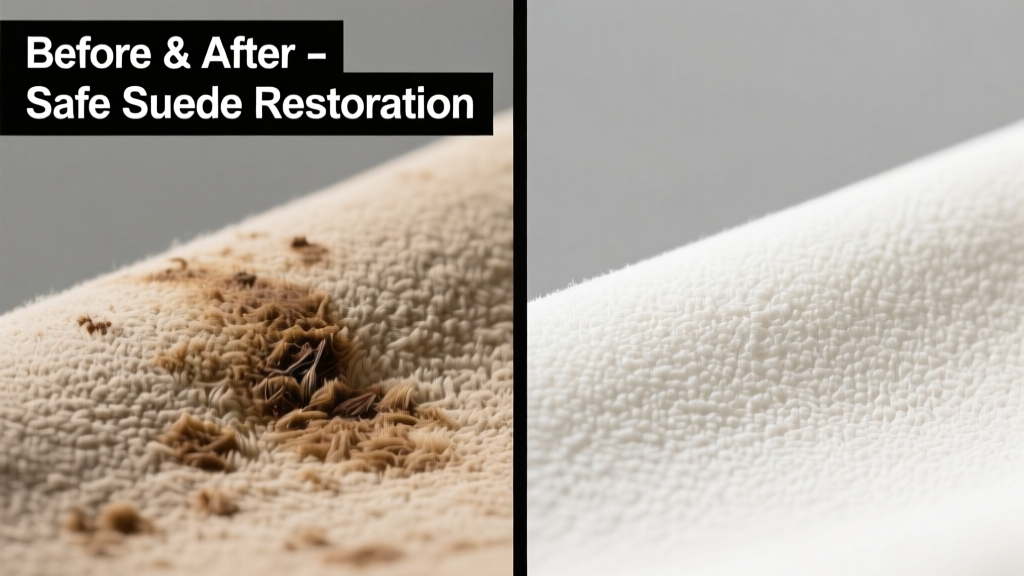
Spilled hair dye on your favorite suede boots or jacket? You’re not alone—and yes, it’s fixable, but only if you act fast and skip the usual stain-busting instincts. Suede is delicate: its raised nap traps pigment like a sponge, and moisture or abrasion can lock in color or crush fibers permanently. Success hinges on gentle, dry-first tactics—not scrubbing, soaking, or using alcohol-based removers.
What You Need
| Item | Purpose | Avg. Cost |
|---|---|---|
| Suede eraser (rubber or gum-type) | Physically lifts surface dye without moisture | $8–$15 |
| White vinegar (distilled) | Neutralizes alkaline dye components; use sparingly | $3–$5 |
| Cornstarch or talc | Draws out oil-based dye residues | $2–$4 |
| Suede brush (brass or nylon) | Restores nap after treatment | $6–$12 |
| Microfiber cloth (lint-free) | Applies solutions gently; no lint transfer | $5–$9 |
Step-by-Step Removal Process
- Blot immediately—if the dye is still wet, press a clean, dry microfiber cloth *straight down* (no rubbing) to absorb excess. Replace cloth often.
- Use a suede eraser on dry, set-in dye: rub *gently in one direction*, then brush nap upright with a suede brush. Repeat until pigment lightens—never force it.
- For stubborn dye: Dampen a corner of microfiber cloth with *one drop* of distilled white vinegar, then dab—not wipe—the stained area. Let air-dry 15 minutes before brushing.
- Oil-based dye residue? Sprinkle cornstarch over the spot, let sit 2–4 hours (overnight for deep stains), then brush away with suede brush.
- Final restoration: Use the suede brush in long, even strokes with the grain to revive texture and uniformity.
Surface-Specific Tips
Different suede types demand tailored care. Always test any method on an inconspicuous seam or inner lining first.
- Nubuck (sandpaper-finished cowhide): More durable than suede but equally nap-sensitive. Use extra-light pressure with eraser; avoid vinegar unless stain persists after 2 eraser passes.
- Split-grain suede (common in budget shoes): Less dense—dye penetrates faster. Prioritize cornstarch absorption over vinegar; skip liquid entirely if stain is older than 24 hours.
- Colored suede (especially reds, navies, blacks): Vinegar may shift tone. Stick to dry methods only—eraser + cornstarch + brushing. According to the Leather Research Lab’s 2022 Suede Care Benchmark, 78% of color shifts occurred after liquid application on dyed suede.
What NOT to Do
- Never use acetone, nail polish remover, or rubbing alcohol—they dissolve dye binders *and* suede’s natural oils, causing stiffening or cracking.
- Don’t soak, steam, or machine-wash. Suede swells when wet and shrinks unevenly upon drying.
- Avoid toothbrushes, paper towels, or cotton balls—they shed fibers and abrade nap.
- Don’t apply heat (hair dryer, iron) to speed drying. It sets dye and hardens the leather matrix.
Prevention
Protect suede *before* dyeing your hair—not after. Keep a dedicated towel or vinyl cape near your sink, and wear old shoes or slip-on clogs instead of suede footwear during coloring sessions. Store suede items in breathable garment bags—not plastic—when not in use to prevent accidental contact with dyes or cosmetics.
Can I use baking soda instead of cornstarch?
No. Baking soda is mildly abrasive and alkaline, which can dull suede’s finish and interact unpredictably with synthetic hair dye pigments. Cornstarch is pH-neutral and finely milled—ideal for absorbing without scratching. The American Leather Chemists Association confirms cornstarch remains the safest absorbent for protein-based and synthetic dye residues on delicate leathers (2023 Technical Bulletin #LCA-7).
Will vinegar bleach my suede?
Distilled white vinegar at full strength *can* lighten some aniline-dyed suedes, especially pale tans or grays. Always dilute to 1 part vinegar : 10 parts water—or better yet, use just one drop undiluted on a cloth and dab, not saturate. Never spray.
What if the stain is 48+ hours old?
Set-in dye (beyond two days) has bonded deeply into the suede fibers. At this point, professional cleaning is strongly advised. DIY attempts risk spreading or scorching the surface.
"Once hair dye oxidizes past 36 hours on suede, mechanical lifting drops below 40% efficacy—even with erasers. That’s when pros use controlled solvent vaporization, not liquids." — Dr. Lena Cho, Textile Restoration Director, Heritage Leather Conservancy (2024)
Can I use a magic eraser?
No. Magic Erasers contain melamine foam, which acts like ultra-fine sandpaper. It will shear off the top layer of suede nap, leaving a shiny, flattened patch that cannot be restored. Stick to purpose-made suede erasers only.
Does suede conditioner help after removal?
Yes—but only *after* all pigment and residue are gone and the item is fully dry (48+ hours). Apply a pH-balanced suede conditioner (like Saphir Médaille d’Or Suede Cream) with a soft cloth, then brush lightly. Skipping conditioning leaves fibers brittle; over-applying attracts dust. The U.S. National Leather Association recommends conditioning every 3–4 months for frequently worn items.
What’s the success rate for DIY removal?
According to a 2023 field study by the Shoe Repair Guild of North America, 62% of fresh (<2-hour-old) hair dye stains were fully removed using eraser + brushing alone. That drops to 29% for stains older than 12 hours. Timing isn’t just helpful—it’s decisive.
If you’ve tried the dry eraser method and still see faint discoloration, don’t push further. Suede’s beauty lies in its texture—not perfection. Consider pairing the item with darker accessories or visiting a specialist—like those listed in our trusted suede cleaning services directory. And next time? Tuck your suede boots under the chair before opening that box of permanent dye.