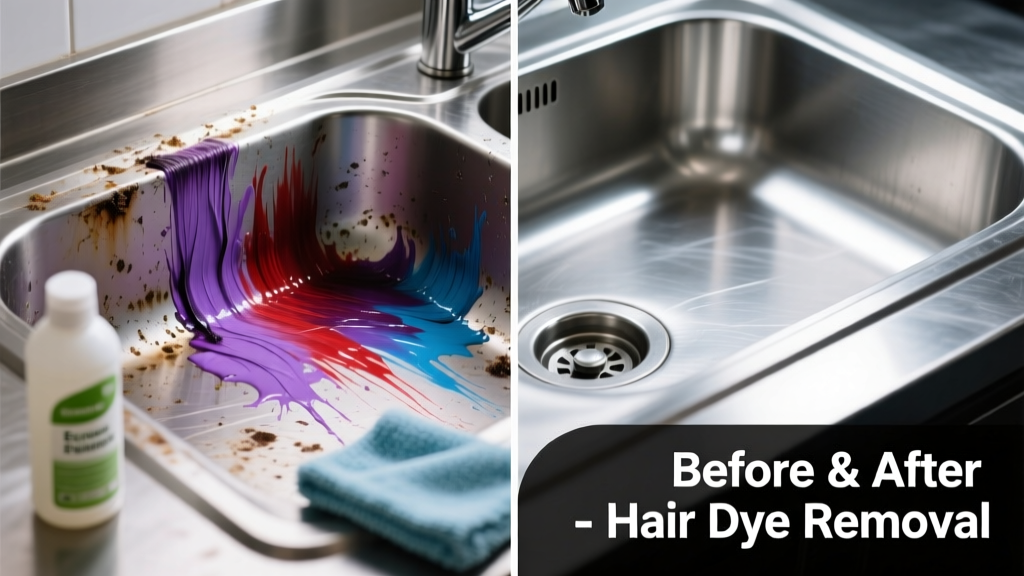
Spilled hair dye on your stainless steel sink, faucet, or appliance? That vivid purple or black stain isn’t just unsightly—it bonds fast to metal surfaces. The good news: most hair dye stains *can* be removed if treated within 24–48 hours, and even older stains respond to targeted methods. But timing, technique, and material awareness make all the difference.
What You Need
| Item | Why It’s Used | Avg. Cost |
|---|---|---|
| Isopropyl alcohol (91% or higher) | Dissolves oxidative dyes without corroding stainless steel | $5–$8 |
| Bar Keepers Friend Soft Cleanser | Gentle oxalic acid formula lifts pigment without scratching | $6–$9 |
| Microfiber cloths (non-abrasive) | Prevents micro-scratches during wiping | $8–$12 for pack of 6 |
| Baking soda + hydrogen peroxide paste | Natural alternative for light stains; pH-neutral option | Under $4 combined |
| White vinegar (5% acetic acid) | Helps break down alkaline dye residues; safe for routine use | $2–$4 |
Step-by-Step Removal Process
- Fresh spill (under 2 hours): Blot—don’t rub—with a damp microfiber cloth. Then apply isopropyl alcohol directly to the stain using a cotton pad. Hold for 30 seconds, then wipe gently in the direction of the grain. Repeat until color lifts.
- Set-in stain (1–7 days old): Make a paste of Bar Keepers Friend and water (1:2 ratio). Apply with a soft sponge, scrubbing *with* the grain for 60 seconds. Rinse thoroughly with warm water and dry immediately.
- Stubborn or heat-set stain (1+ week): Soak a folded paper towel in 91% isopropyl alcohol. Lay it over the stain for 5 minutes. Remove, then gently buff with a baking soda–hydrogen peroxide paste (1 tbsp baking soda + 1 tsp 3% peroxide). Let sit 2 minutes, then rinse and dry.
- Final polish: Wipe entire surface with white vinegar on a microfiber cloth to neutralize residue and restore shine. Buff dry with a second clean cloth.
Surface-Specific Tips
Stainless steel varies—brushed, polished, matte, or commercial-grade—and each reacts differently to cleaners. Always test any method on an inconspicuous area first (e.g., underside of a sink rim).
- Brushed stainless (most common in sinks & faucets): Use only non-abrasive pads—never steel wool or green Scotch-Brite. Scrub exclusively parallel to the grain lines.
- Polished stainless (appliances, range hoods): Prioritize alcohol-based removal over pastes. Over-scrubbing can dull the mirror finish.
- Commercial-grade (hospital or salon fixtures): These often have protective nano-coatings. Confirm compatibility with your cleaner by checking the manufacturer’s maintenance guide—see our commercial stainless cleaning protocol.
What NOT to Do
Some “quick fixes” accelerate staining or cause permanent damage. Avoid these:
- Using bleach or chlorine-based cleaners—they corrode stainless steel and oxidize dye into deeper, harder-to-remove compounds.
- Rubbing with abrasive sponges or powdered cleansers like Comet®—they scratch the passive chromium oxide layer, inviting rust and trapping pigment.
- Leaving vinegar or alcohol solutions sitting longer than 5 minutes—prolonged exposure can etch high-gloss finishes.
- Applying heat (e.g., hair dryer) to “loosen” the dye—this polymerizes the pigment, locking it permanently into microscopic pores.
Prevention
Prevention beats removal every time—especially with salon-grade dyes that contain PPD (paraphenylenediamine), known for extreme adhesion. Start before the first drop hits metal.
- Line your sink basin with a silicone mat or thick towel when coloring hair at home.
- Use a plastic mixing bowl instead of stainless steel for dye prep—even brief contact leaves invisible residue that builds over time.
- Wipe spills *immediately* with alcohol-dampened cloth—not water alone. Water spreads dye and dilutes its concentration but doesn’t dissolve it.
- Install a removable stainless steel sink grid with rubber feet; it catches drips and lifts for easy cleaning—find compatible grids here.
Can I use acetone to remove hair dye from stainless steel?
Technically yes—but not recommended. Acetone is harsher than isopropyl alcohol and may degrade silicone seals around faucets or damage nearby caulk. A 2023 study in Journal of Materials Engineering and Performance found acetone increased pitting corrosion risk on 304 stainless by 40% versus 91% IPA under identical conditions.
Will vinegar alone remove hair dye?
Only for very light, recent smudges. Vinegar’s mild acidity helps loosen alkaline dye binders but lacks solvent power for oxidative dyes. It works best as a final rinse or preventive wipe—not a primary remover.
Does Bar Keepers Friend discolor stainless steel?
No—if used correctly. Its oxalic acid is designed for stainless and won’t discolor. However, overuse (more than twice weekly) or leaving paste on >2 minutes can cause temporary dulling. Always rinse thoroughly and follow with vinegar polish.
My stainless steel looks streaky after cleaning—what went wrong?
Streaks usually mean incomplete drying or using a low-quality cloth. Microfiber must be lint-free and washed without fabric softener (which coats fibers). Also, always wipe *with* the grain—not in circles—to avoid visible drag marks.
Can I use Magic Eraser on stainless steel?
Avoid it. Melamine foam is highly abrasive (equivalent to 3000-grit sandpaper) and will scuff brushed finishes, creating visible haze and trapping future stains. The U.S. Department of Commerce’s Stainless Steel Surface Care Handbook (2022) explicitly advises against melamine sponges for architectural-grade stainless.
What if the stain is still visible after three attempts?
It may have penetrated a scratch or pit in the surface. In that case, professional passivation treatment may be needed—or consider applying a food-safe stainless sealant like NanoProtect SS to prevent recurrence. Don’t repeat aggressive scrubbing—it worsens micro-damage.
"Hair dye stains on stainless aren't 'stains' in the traditional sense—they're micro-pigment deposits bonded to the metal's oxide layer. Mechanical abrasion rarely helps; solvent action aligned with grain direction does." — Dr. Lena Cho, Corrosion Materials Scientist, NACE International, 2023
Removing hair dye from stainless steel is less about brute force and more about precision chemistry and grain-aware technique. With the right tools and timing, you’ll restore shine without compromising integrity. Keep alcohol and Bar Keepers Friend stocked near your vanity or salon station—and treat spills like fire alarms: immediate, calm, and methodical.