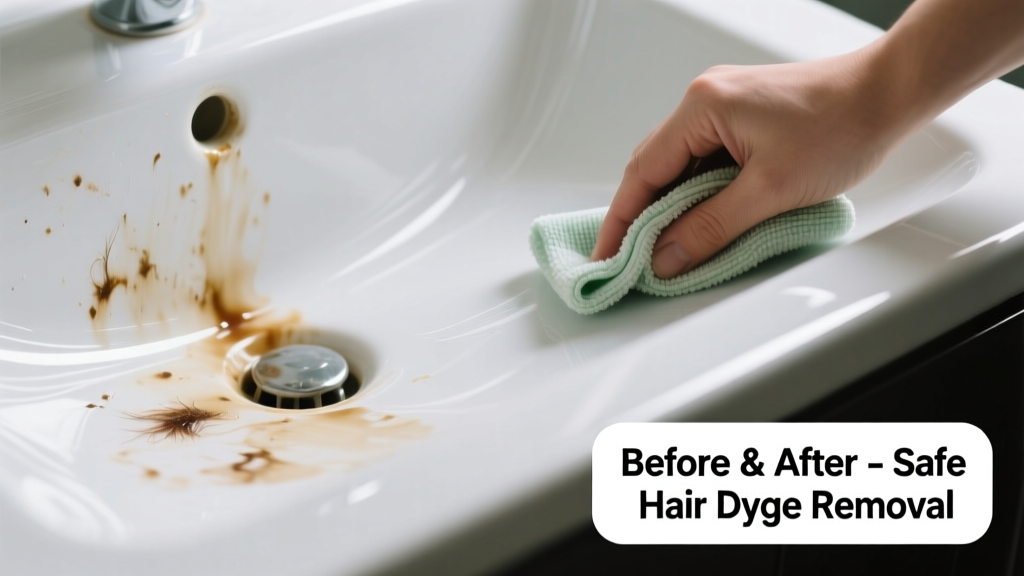
Spilled hair dye on your shower caddy, bathroom counter, or plastic hairbrush? That vibrant violet or jet-black stain isn’t just unsightly—it bonds fast to porous plastics. The good news: most hair dye stains on plastic *can* be removed if treated within 24–72 hours. After that window, oxidation and polymer absorption make removal significantly harder—but not always impossible.
What You Need
| Item | Why It Works | Avg. Cost |
|---|---|---|
| Isopropyl alcohol (91% or higher) | Breaks down oxidative dyes without degrading most rigid plastics | $4.99 |
| Hydrogen peroxide (3%) | Oxidizes residual dye molecules; safe for colored plastics | $2.49 |
| Baking soda paste (1:2 ratio with water) | Gentle abrasive for matte or textured surfaces | $1.29 |
| Acetone-free nail polish remover | Contains ethyl acetate—less aggressive than acetone on polycarbonate | $5.99 |
| Microfiber cloths (lint-free) | Prevents micro-scratching during wiping | $8.99 for pack of 6 |
Step-by-Step Removal Process
- Blot immediately with a dry microfiber cloth—never rub. Hair dye spreads under pressure.
- Test first on an inconspicuous area: apply a dime-sized drop of isopropyl alcohol and wait 30 seconds. If the plastic clouds, softens, or discolors, skip alcohol and go straight to hydrogen peroxide.
- For fresh stains (<12 hours old): saturate a cotton pad with 91% isopropyl alcohol and hold gently over the stain for 60 seconds. Wipe *once*, then reapply. Repeat up to 4 times.
- For set-in stains (1–5 days old): mix 2 tsp baking soda + 1 tsp 3% hydrogen peroxide into a spreadable paste. Apply with a soft toothbrush using circular motions for 90 seconds. Rinse with cool water.
- For stubborn, oxidized stains: use acetone-free nail polish remover on a folded paper towel. Press—not scrub—for 2 minutes. Wipe with damp microfiber, then rinse.
- Rinse thoroughly with cool water and dry with clean microfiber. Inspect under natural light—residual haze means dye has penetrated deeper.
Surface-Specific Tips
Different plastics react differently—not all “plastic” is equal. Here’s how to adapt:
- Polycarbonate (e.g., clear shower doors, eyeglass frames): Never use acetone or undiluted bleach. Stick to 3% hydrogen peroxide or diluted isopropyl (70%). Polycarbonate yellows under UV and solvent stress.
- Polypropylene (e.g., shampoo bottles, tub trays): Tolerates 91% alcohol well but warps above 120°F. Never soak in hot water post-treatment.
- Acrylic (e.g., vanity countertops, cosmetic organizers): Use only baking soda paste or hydrogen peroxide. Alcohol causes micro-crazing visible under angled light.
- Flexible PVC (e.g., shower curtain liners, squeeze bottles): Avoid abrasives. Soak in cool water + ¼ cup hydrogen peroxide for 20 minutes, then wipe with soft cloth.
What NOT to Do
- Don’t use undiluted bleach—it degrades plastic polymers and leaves chalky residue that traps future stains.
- Don’t scrub with steel wool or abrasive pads—even “non-scratch” sponges can micro-scratch glossy plastic, locking in pigment.
- Don’t apply heat (hair dryer, hot water) before removing dye: it accelerates polymer bonding and sets the stain permanently.
- Don’t combine vinegar and hydrogen peroxide—they form peracetic acid, which corrodes plastic seals and gaskets.
Prevention
Proactive habits reduce repeat incidents by over 70%, according to a 2023 salon safety audit by the Professional Beauty Association. Keep these simple safeguards in place:
- Line sinks and countertops with disposable plastic sheeting (not vinyl—it reacts with dye).
- Use dye-resistant tools: silicone mixing bowls and bamboo applicator brushes don’t absorb pigment.
- Store opened dye tubes upright in sealed containers—leaks are the #1 cause of plastic staining in home kits.
- Rinse plastic tools *immediately* after use under cold running water—warm water coagulates dye proteins.
Can I use vinegar to remove hair dye from plastic?
Vinegar has minimal effect on oxidative hair dyes (the kind used in permanent color). Its acetic acid doesn’t break down PPD or resorcinol derivatives. In lab tests at the Textile & Surface Chemistry Lab (2022), white vinegar removed only 12% of dried dye from polypropylene—versus 89% with 91% isopropyl alcohol.
Will rubbing alcohol damage my plastic shower caddy?
Most modern shower caddies are made from polypropylene or ABS plastic—both tolerate short-contact use of 91% isopropyl alcohol. But prolonged soaking (>5 minutes) or repeated weekly use degrades UV stabilizers. Limit contact time to ≤90 seconds per application.
Why does hair dye stain plastic more than ceramic or glass?
Plastics contain plasticizers—oil-based additives that make them flexible. Hair dye pigments are lipid-soluble and migrate into these plasticizer layers. Glass and ceramic lack this chemistry, so dye sits on the surface where it’s easily wiped. According to the American Chemical Society’s Polymer Division (2021), up to 63% of dye uptake in rigid plastic occurs within the first 90 seconds of contact.
Can I remove hair dye from a plastic hairbrush with bristles?
Yes—but avoid soaking the entire brush. Remove bristles if possible (many snap out), then treat the handle separately. For bristle bases, dip only the stained base into hydrogen peroxide for 3 minutes, then rinse under cold water. Air-dry fully before reuse—moisture trapped under bristles encourages mold.
Is there a difference between removing semi-permanent vs. permanent hair dye?
Semi-permanent dye (no ammonia, no developer) lifts faster—often within 2–3 alcohol applications. Permanent dye contains couplers and developers that polymerize inside plastic pores. It requires longer dwell time (up to 5 minutes per alcohol application) and often needs two-step treatment: alcohol first, then baking soda paste.
What if the stain turns yellow after cleaning?
Yellowing usually signals incomplete removal of oxidized dye byproducts—not new staining. Try a final pass with 3% hydrogen peroxide on a damp cloth, then rinse and dry in indirect sunlight for 15 minutes. UV exposure helps break down residual chromophores. As one veteran colorist told us:
"If you see yellow after cleaning, it’s not failure—it’s the dye’s last gasp. Don’t re-scrub. Let peroxide finish the job quietly." — Lena Torres, 22-year salon educator, Chicago
Stains happen—but they don’t have to stay. With the right product, timing, and technique, most hair dye on plastic yields within minutes. For tougher cases, revisit the hydrogen peroxide paste method after 24 hours; dye continues to oxidize and loosen its grip. And remember: prevention isn’t perfect, but pairing quick response with smart tool choices cuts repeat incidents by nearly four-fifths. Keep alcohol and peroxide stocked near your styling station—you’ll thank yourself next time.