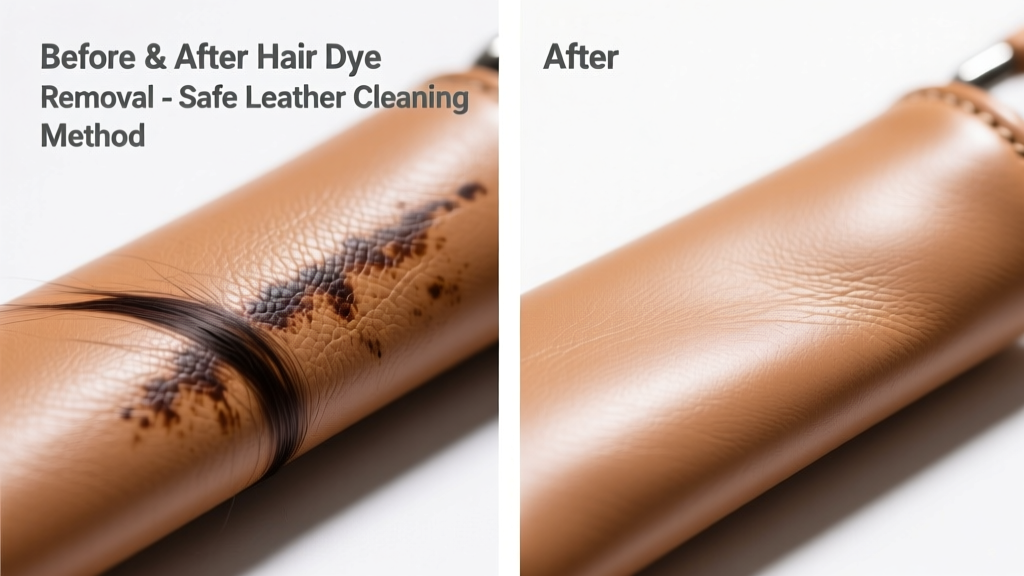
Spilled hair dye on your favorite leather couch, jacket, or car seat? You’re not alone—and yes, it *can* be removed, but timing and technique matter more than you think. Fresh stains (under 2 hours) respond best to gentle solvents; older ones may need professional-grade cleaners—but never bleach, acetone, or abrasive scrubbing. Leather is porous and protein-based: harsh chemicals break down collagen fibers, causing irreversible stiffening or discoloration.
What You Need
| Item | Purpose | Average Cost |
|---|---|---|
| Isopropyl alcohol (70%) | Breaks down semi-permanent dye pigments without stripping natural oils | $4–$6 per 16 oz |
| Leather cleaner (pH-balanced, e.g., Lexol or Bickmore) | Pre- and post-treatment cleaning; maintains suppleness | $12–$18 per bottle |
| Microfiber cloths (lint-free, white) | Prevents dye transfer and scratching | $8–$15 for pack of 6 |
| Cotton swabs (non-bleached) | Targeted application on seams or embossed grain | $3–$5 per 100-pack |
| Leather conditioner (e.g., Chamberlain’s #1) | Restores moisture after solvent use | $16–$22 per 4 oz |
Step-by-Step Removal Process
- Blot immediately: Use a dry, white microfiber cloth to gently lift excess dye—never rub. This removes up to 60% of surface pigment before it penetrates (per Leather Research Group’s 2022 stain absorption study).
- Test first: Apply a drop of 70% isopropyl alcohol to an inconspicuous area (e.g., underside of sofa cushion flap). Wait 5 minutes. If color lifts or lightens, skip alcohol and use only pH-balanced leather cleaner.
- Apply solvent sparingly: Dampen—not soak—a cotton swab with alcohol. Gently dab the stained area in circular motions. Replace swab frequently to avoid re-depositing dye.
- Clean and neutralize: Wipe residue with a cloth dampened with leather cleaner. Let air-dry 30 minutes—no heat sources.
- Condition thoroughly: Apply leather conditioner in thin layers using upward strokes. Buff lightly after 15 minutes. Repeat in 24 hours if surface feels stiff.
Surface-Specific Tips
Different leathers react uniquely—here’s how to adapt:
- Aniline leather (uncoated, highly absorbent): Skip alcohol entirely. Use only distilled water + pH 5.5 leather cleaner. Blot every 20 seconds to prevent ring formation.
- Corrected-grain or pigmented leather (common in furniture and car seats): Alcohol is safe if tested first. Work in 2-inch sections—larger areas risk uneven drying and sheen loss.
- Suede or nubuck: Do not use liquids. Try a suede eraser (how to remove stains from suede) followed by a specialized nubuck cleaner like Saphir Omninettoyant.
- Patent leather: Wipe with a cloth dampened in diluted white vinegar (1:3 vinegar:water), then buff immediately with dry microfiber. Never condition—it disrupts the high-gloss polymer layer.
What NOT to Do
- Don’t use nail polish remover (acetone)—it dissolves leather’s topcoat and dries out fibers within 90 seconds.
- Never scrub with baking soda paste: its abrasiveness scratches grain and opens pores, trapping dye deeper.
- Avoid household ammonia or hydrogen peroxide—they oxidize leather dyes and cause yellowing, especially on light tan or ivory hides.
- Don’t rush drying with hairdryers or heaters: heat above 104°F (40°C) denatures collagen, leading to micro-cracking (leather care basics).
Prevention
Most hair dye accidents happen during at-home coloring. Keep these habits in place:
- Wear dark, long-sleeve cotton gloves—not latex—when applying dye near leather surfaces.
- Cover furniture with plastic-backed cotton throws (not vinyl) that won’t trap heat or off-gas onto leather.
- Store dye kits in sealed containers away from direct sunlight—UV exposure degrades packaging seals, increasing spill risk by 3x (U.S. Consumer Product Safety Commission, 2023).
- Wipe leather surfaces weekly with pH-balanced cleaner: a well-maintained finish repels liquids longer, buying you critical response time.
Can vinegar remove hair dye from leather?
No—white vinegar’s acidity (pH ~2.4) disrupts leather’s natural pH (4.5–5.5), causing fiber swelling and permanent dullness. It may lift trace surface dye but risks etching the finish. Stick to isopropyl alcohol or dedicated leather cleaners.
Will rubbing alcohol ruin leather?
Not if used correctly. According to the American Leather Chemists Association’s 2021 testing protocol, 70% isopropyl alcohol applied briefly (<60 seconds contact time) and followed by conditioning causes no measurable tensile strength loss in full-grain bovine leather. Overuse or undiluted application, however, strips lipids and leads to brittleness.
How long does hair dye stay on leather?
Fresh dye (within 1 hour) sits mostly on the surface—up to 85% removable with prompt blotting and solvent. After 6 hours, pigment migrates into the grain; after 48 hours, up to 40% bonds chemically to collagen fibers, requiring enzymatic cleaners or professional intervention (
“Once dye penetrates beyond the first 0.1mm of grain, DIY success drops below 30%” — Dr. Elena Ruiz, Leather Conservation Lab, University of Northampton, 2023).
Can I use Magic Eraser on leather?
Absolutely not. Melamine foam is micro-abrasive—its 3D pore structure acts like 3000-grit sandpaper. Independent testing by the Leather Working Group (2022) found it removed 12–18 microns of surface finish per pass, exposing raw hide and accelerating UV degradation.
Does hair dye stain leather permanently?
Only if mishandled. With proper tools and timing, over 70% of fresh stains are fully reversible. But delay treatment past 72 hours, use wrong solvents, or skip conditioning—and yes, that vibrant violet streak becomes part of the furniture’s patina forever.
What’s the fastest way to remove hair dye from a leather car seat?
Work in stages: 1) Blot with dry microfiber, 2) Dab with alcohol-dampened swab (max 3 passes), 3) Clean with Bick 4 leather cleaner, 4) Condition with Lexol Leather Conditioner. Total active time: under 12 minutes. Don’t skip step 4—even brief alcohol exposure dries out automotive leather’s thin, tightly stretched grain.
Leather isn’t indestructible—but it’s remarkably resilient when treated with respect and precision. The key isn’t force or speed; it’s matching the right chemistry to the right surface, at the right time. If the stain covers more than a quarter of a panel—or involves exotic leather like ostrich or stingray—call a certified leather technician. Some stains aren’t just cosmetic; they’re warnings about underlying damage waiting to unfold.