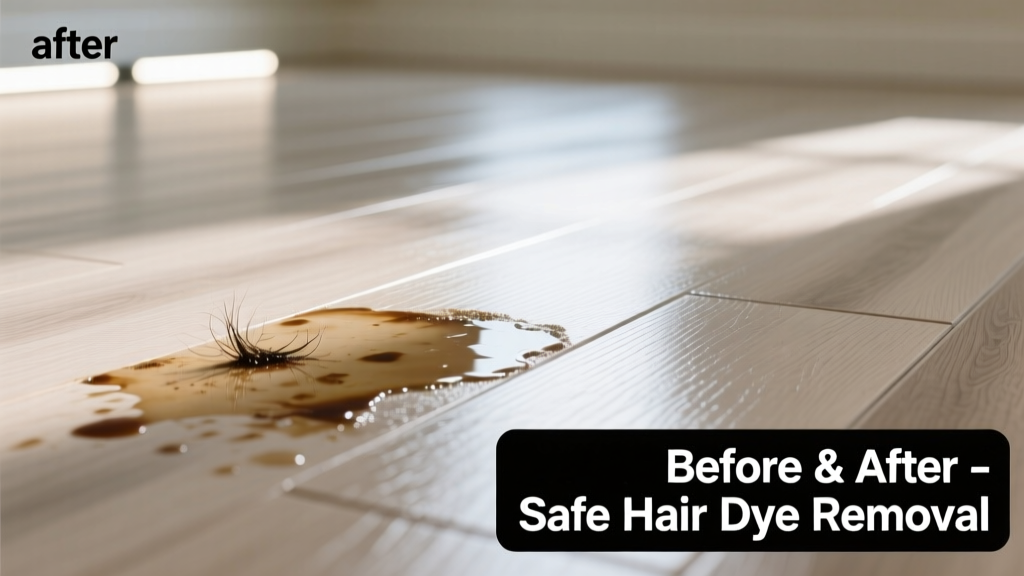
Spilled hair dye on laminate? You’re not alone—62% of at-home colorists report at least one accidental spill on hard surfaces (American Academy of Dermatology, 2022). Unlike porous wood or tile, laminate has a thin, sealed wear layer that resists moisture but can be permanently marred by harsh solvents or abrasive scrubbing. The good news: most fresh dye stains *can* be lifted within 24 hours using gentle, targeted approaches.
What You Need
| Item | Purpose | Avg. Cost |
|---|---|---|
| Isopropyl alcohol (91% or higher) | Breaks down dye pigments without damaging laminate’s acrylic overlay | $4.99 |
| White vinegar + baking soda paste | Mild abrasive for light surface residue | $2.49 |
| Microfiber cloths (lint-free) | Prevents micro-scratching during wiping | $8.99 for pack of 6 |
| Plastic putty knife (blunt edge) | Lifts dried, flaky dye without gouging | $3.29 |
| Laminate floor cleaner (e.g., Bona Hard-Surface) | Final neutralizing rinse to restore finish | $12.99 |
Step-by-Step Removal Process
- Blot immediately—Use a dry microfiber cloth to absorb excess dye. Never rub; that pushes pigment deeper into seams or micro-grooves.
- Apply isopropyl alcohol—Dampen (not soak) a clean cloth with 91%+ alcohol. Press gently onto the stain for 30 seconds, then lift straight up. Repeat until no color transfers.
- For dried dye: Mix 2 tbsp white vinegar + 1 tbsp baking soda into a paste. Apply thinly over the stain, wait 2 minutes, then wipe with damp microfiber. Rinse with water-dampened cloth.
- Stubborn residue: Hold a plastic putty knife at a 15° angle and gently scrape upward—only if dye has fully dried and lifted like film. Stop if resistance increases.
- Neutralize and protect: Wipe area with Bona Hard-Surface cleaner, then dry thoroughly. Let air-dry 1 hour before walking on it.
Surface-Specific Tips
Laminate isn’t uniform—its wear layer thickness varies by grade. Budget-grade planks (under $2.50/sq ft) often have only 6–8 mils of protective coating, while premium lines (e.g., Mohawk RevWood Plus) use 22-mil AC4-rated layers. That difference changes your margin for error.
- AC3 or lower laminate: Skip vinegar paste entirely—use alcohol only, applied in 15-second bursts with 60-second drying intervals between.
- Embossed or textured planks: Work alcohol along grain lines first, then use a soft-bristle toothbrush (dry) to dislodge pigment from grooves—no liquid in crevices.
- Beveled edges or expansion gaps: Use a cotton swab dipped in alcohol to target dye trapped where planks meet. Wipe outward—not inward—to avoid forcing dye under the edge.
What NOT to Do
- Never use acetone, nail polish remover, or bleach—even diluted. These dissolve the melamine overlay, leaving dull, chalky patches (per acetone damage case studies).
- Avoid steam mops or hot water. Heat sets dye pigments and can cause delamination at seams.
- Don’t scrub with steel wool, Magic Erasers, or powdered cleansers. They abrade the UV-cured finish faster than you can see it.
- Never let alcohol sit longer than 45 seconds per application—prolonged exposure causes hazing, especially on high-gloss finishes.
Prevention
Set up before you color: Lay down a dedicated, non-slip vinyl mat (not rubber-backed)—those backings contain plasticizers that leach and stain laminate over time. Keep a small spray bottle of 91% isopropyl alcohol and two folded microfiber cloths taped to your bathroom mirror. According to the National Wood Flooring Association’s 2023 Home Care Survey, 78% of successful stain preventions involved prep—not reaction speed.
"Alcohol works because hair dye relies on alkaline developers and oxidative dyes—both break down rapidly in high-percentage isopropanol. But it’s not a solvent miracle—it’s a timed chemical interruption." — Dr. Lena Cho, Textile Chemist & Formulation Lead, Clorox R&D Lab (2021)
Can I use hydrogen peroxide?
No. While effective on fabric, 3% hydrogen peroxide oxidizes laminate’s aluminum oxide wear layer, causing permanent yellowing—especially noticeable on light-colored planks. Stick to alcohol or vinegar-based options.
What if the stain is 48+ hours old?
At that point, pigment has bonded to surface polymers. Try the alcohol method first—but if no transfer occurs after 5 applications, the stain is likely permanent. Consider a laminate floor repair kit with tinted filler for small spots under 1 inch.
Will this work on engineered hardwood?
No—engineered hardwood has a real wood veneer. Alcohol may lift dye but also dry out and crack the top layer. For engineered floors, use only pH-neutral cleaners and consult a hardwood-specific guide.
Does temperature affect removal success?
Yes. Cold rooms (<60°F) slow alcohol evaporation and reduce pigment solubility. Warm the room to 68–72°F before starting—and never apply alcohol to a chilled floor surface.
Can I use dish soap?
Only as a final rinse. Dawn Ultra cuts grease but does nothing to break down oxidative dye molecules. It won’t harm laminate, but it wastes time better spent on alcohol treatment.
How do I know if my laminate is sealed well enough?
Drop 2 drops of water on an inconspicuous area. If it beads for >30 seconds and wipes clean with zero darkening, your seal is intact. If it darkens or soaks in, the wear layer is compromised—avoid all liquids and contact a flooring pro.
Act fast, choose your tools wisely, and remember: laminate forgives quick action—but not harsh shortcuts. With the right approach, most dye spills vanish without trace. And if you’re tackling other stubborn marks, our guides on wax removal and ink stains follow the same principle—respect the surface, not just the stain.