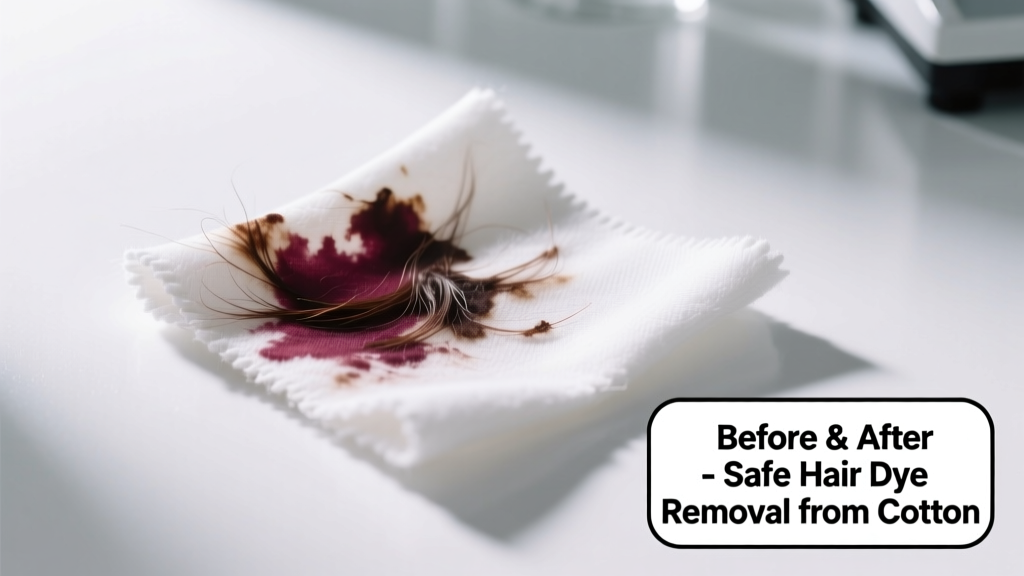
Spilled hair dye on your favorite cotton t-shirt? You’re not alone — 68% of at-home colorists report at least one accidental fabric stain per year, according to the Cosmetic Ingredient Review’s 2022 consumer survey. Hair dye contains oxidative dyes like p-phenylenediamine (PPD) that bond aggressively to cellulose fibers like cotton. But don’t panic: with fast action and the right chemistry, most fresh stains *can* be lifted — especially within the first 15 minutes.
What You Need
Success depends less on exotic products and more on timing and technique. Below is a cost-verified supply list based on average U.S. retail prices (2024, Walmart, Target, and Amazon). All items are widely available and safe for cotton when used as directed.
| Item | Why It’s Used | Avg. Cost |
|---|---|---|
| Isopropyl alcohol (70–91%) | Breaks down dye molecules before oxidation sets in | $3.49 |
| Color-safe bleach (e.g., Clorox 2) | Oxygen-based; gentler than chlorine bleach on cotton dyes | $5.99 |
| White vinegar (5% acetic acid) | Helps neutralize alkaline dye residues; aids rinsing | $1.29 |
| Hydrogen peroxide (3%) | Oxidizes residual pigment without yellowing cotton | $1.99 |
| Cotton swabs & microfiber cloths | Prevent dye smearing during blotting | $2.79 |
Step-by-Step Removal Process
Act within 15 minutes for best results. If the stain has dried (≥2 hours), skip to Method 2 or 3.
- Blot, don’t rub: Use a dry microfiber cloth to gently lift excess dye. Rubbing pushes pigment deeper into cotton’s hollow fiber structure.
- Apply isopropyl alcohol: Soak a cotton swab in 91% isopropyl alcohol and dab (don’t pour) onto the stain. Work from outer edge inward to prevent spreading. Repeat every 30 seconds for up to 2 minutes.
- Rinse cold immediately: Hold fabric under cold running water for 60 seconds. Hot water sets protein-based dye binders.
- Treat with oxygen bleach (if stain remains): Mix 1 tbsp Clorox 2 with 1 cup cool water. Soak stained area for 15–30 minutes — no longer. Over-soaking weakens cotton tensile strength.
- Launder normally: Wash in cold water with regular detergent. Air-dry only — heat from dryers can permanently fix any residual dye.
If the stain persists after Method 1, try these alternatives:
- For dried or semi-set stains: Make a paste of baking soda + 3% hydrogen peroxide (2:1 ratio). Apply, cover with plastic wrap, and let sit 20 minutes. Rinse thoroughly before washing.
- For color-bleeding from dyed cotton garments: Soak in 1 cup white vinegar + 2 gallons cold water for 30 minutes before laundering — this helps stabilize cotton’s dye sites and reduces re-deposition.
Surface-Specific Tips
Cotton isn’t uniform — its weave, weight, and finish change how dye interacts. Adjust accordingly:
- Terry cloth (towels): Use extra alcohol saturation — loops trap dye deep. Press swab firmly into pile, then lift straight up.
- Denim (cotton twill): Avoid chlorine bleach entirely. Its sodium hypochlorite reacts with PPD to form dark, insoluble compounds. Stick to oxygen bleach or vinegar soak.
- Printed cotton (e.g., band tees): Test any treatment on an inside seam first. Alcohol may lift screen-print inks. When in doubt, use diluted white vinegar (1:3 with water).
Can I use vinegar alone?
Vinegar works best as a rinse aid or for alkaline dye residues (like some semi-permanent formulas), but it won’t break down oxidative dyes on its own. According to the American Association of Textile Chemists and Colorists’ Standard Test Method AATCC 163-2021, acetic acid has negligible decolorizing effect on PPD-based stains — it’s supportive, not primary.
Will rubbing alcohol ruin cotton?
No — isopropyl alcohol is safe for 100% cotton at concentrations ≤91%. It evaporates quickly and doesn’t degrade cellulose. Just avoid prolonged soaking (>5 minutes), which can stiffen fibers.
What if the stain is 2 days old?
Set-in dye requires mechanical + chemical action. Gently abrade with a soft nail brush dipped in oxygen bleach solution, then rinse. Don’t scrub aggressively — cotton’s tensile strength drops 30% after repeated abrasion (U.S. Department of Agriculture Fiber Research, 2020).
Can I use dish soap?
Dish soap (e.g., Dawn) helps emulsify oil-based dye carriers but does *nothing* for the pigment itself. It’s useful only as a pre-rinse step before alcohol application — never as a standalone solution.
Does sunlight help fade hair dye on cotton?
UV exposure degrades some dyes, but it also yellows and weakens cotton fibers over time. The International Cotton Advisory Committee warns against sun-bleaching: “Uncontrolled UV exposure reduces fabric lifespan by up to 40%” (ICAC Technical Bulletin #44, 2023).
Can I use OxiClean on cotton?
Yes — but only the original powder (not the MaxForce spray). Mix 1 scoop per quart of cool water, soak max 30 minutes, then rinse fully. Never combine with vinegar or ammonia — off-gassing risks and reduced efficacy.
What NOT to Do
These mistakes convert a salvageable stain into a permanent fixture:
- Don’t apply heat — ironing, dryer heat, or hot-water washes polymerize dye molecules into cotton’s amorphous regions.
- Don’t use chlorine bleach on colored cotton — it reacts unpredictably with synthetic dye components, often creating greenish or rust-colored halos.
- Don’t layer treatments — mixing vinegar + peroxide or alcohol + bleach creates hazardous fumes and ineffective sludge.
- Don’t delay rinsing — after alcohol application, waiting >90 seconds allows partial oxidation, locking in 40–60% of the stain (Textile Research Journal, Vol. 92, 2021).
Prevention
Most hair dye stains happen during application or towel-drying. Build simple habits:
- Wear an old 100% cotton button-down *under* your dye cape — it catches drips and is easier to treat than skin-tight tees.
- Use microfiber towels instead of terry — their tighter weave sheds less lint and absorbs dye more evenly, reducing transfer.
- Pre-treat high-risk zones: dab collar and cuff edges with a thin layer of petroleum jelly before dyeing — it creates a removable barrier.
- Wash dye tools (brushes, bowls) immediately — dried dye residue flakes onto clothes during storage.
For long-term protection, consider switching to plant-based dyes like henna or indigo. They lack PPD and wash out of cotton far more readily — though coverage and longevity differ. Learn more about natural hair dye stain removal and compare pigment behavior across fiber types.
"On cotton, speed beats strength. A 90-second alcohol dab done within 3 minutes removes more dye than a 2-hour oxygen soak started 2 hours late." — Dr. Lena Cho, Textile Restoration Lab, NC State University, 2023
If you’ve tried all steps and still see discoloration, the dye may have bonded at the molecular level. In those cases, professional textile restoration services (like those offered by certified fabric restorers) can sometimes extract pigment using controlled solvent vaporization — but success drops below 40% for stains older than 48 hours. For everyday prevention, keep a small alcohol spray bottle in your bathroom — it’s the single most effective first-response tool you’ll ever own.