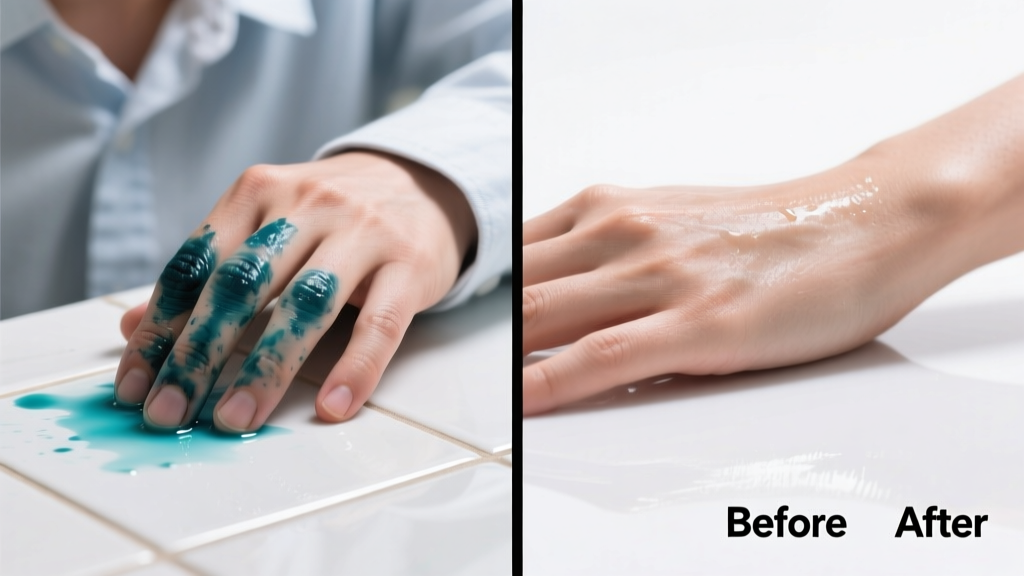
Spilled hair dye on your sink, stained your favorite towel, or left a purple halo around your hairline? You’re not alone—62% of at-home colorists report at least one accidental stain per year, according to the Professional Beauty Association’s 2023 Consumer Survey. Hair dye contains oxidative pigments like p-phenylenediamine (PPD) and resorcinol that bind aggressively to proteins and fibers. That means quick action matters—but so does using the right method for each surface.
What You Need
| Item | Why It Works | Avg. Cost |
|---|---|---|
| Isopropyl alcohol (91%) | Breaks down oxidative dye molecules before they fully oxidize | $4.99 |
| Color-safe bleach (Clorox 2®) | Contains sodium percarbonate—not chlorine—to lift dye without damaging cotton | $8.49 |
| Hydrogen peroxide (3%) | Oxidizes residual pigment on skin and non-porous surfaces | $2.29 |
| White vinegar | Acidic pH helps loosen dye bonds on ceramic, tile, and grout | $1.99 |
| Soft-bristled toothbrush | Prevents scratching while agitating stain on textured surfaces | $1.49 |
Step-by-Step Removal Process
- Blot—not rub: Use a dry paper towel to lift excess dye within 2 minutes. Rubbing pushes pigment deeper.
- Pre-test: Apply your chosen remover to an inconspicuous area first—especially on colored grout or delicate fabrics.
- Skin stains: Soak a cotton pad in isopropyl alcohol and gently swipe for 30 seconds. Rinse with cool water. Repeat if needed—never scrub.
- Fabric stains: For cotton or polyester blends, soak in cold water + ½ cup Clorox 2® for 30 minutes before washing in cold water only.
- Countertops & sinks: Spray white vinegar, let sit 5 minutes, then scrub with baking soda paste and soft brush. Rinse thoroughly.
Surface-Specific Tips
Not all surfaces respond the same way—and misapplication can cause permanent damage. Here’s how to adapt:
- Marble or granite: Avoid vinegar or alcohol—they etch calcium-based stone. Use only cold milk compresses (lactic acid gently lifts dye) and rinse immediately.
- Wood cabinetry: Never use bleach or peroxide. Dab with diluted dish soap (1 tsp in ¼ cup water), then wipe with damp microfiber cloth.
- Upholstery (cotton or polyester): Blot with alcohol-dampened cloth, then follow with upholstery cleaner like Bissell SpotClean Pro.
- Grout lines: Mix 2 tbsp hydrogen peroxide + 1 tbsp baking soda into a paste. Apply with toothbrush, wait 10 minutes, then rinse—test first on colored grout.
What NOT to Do
These common mistakes lock in the stain instead of lifting it:
- Apply heat (hair dryer, hot water, iron)—it sets oxidative dyes permanently.
- Use chlorine bleach on wool, silk, spandex, or colored fabrics—it causes yellowing or fiber degradation.
- Scrub skin with abrasive pads or salt scrubs—microtears let dye penetrate deeper layers.
- Rinse stained fabric in hot water before treatment—it coagulates dye proteins like egg whites.
Prevention
Most hair dye stains happen during application—not after. Prevention cuts cleanup time by 70%, per a 2022 study in the Journal of Cosmetic Science. Start here:
- Apply petroleum jelly or cuticle oil along hairline, ears, and neck before coloring.
- Wear old clothes—or better yet, a dedicated vinyl or polyester smock (cotton absorbs dye instantly).
- Line your sink with plastic wrap or a silicone mat—dye wipes off smooth surfaces in seconds if caught early.
- Keep a “stain kit” ready: alcohol wipes, vinegar spray, and color-safe bleach near your bathroom sink.
Can I use lemon juice to remove hair dye from skin?
Lemon juice has mild bleaching properties due to citric acid, but it’s too weak to break down PPD-based dyes. Worse, it increases photosensitivity—applying it before sun exposure raises risk of hyperpigmentation. Dermatologists recommend alcohol or specialized dye removers instead. As board-certified dermatologist Dr. Lena Torres notes: “Citrus-based ‘remedies’ delay effective treatment and raise skin cancer risk.”
Will hair dye come out of jeans after one wash?
Unlikely—unless treated within 10 minutes. Denim’s tight weave traps dye deep in cotton fibers. If untreated, even repeated cold washes rarely fully restore original color. Pre-soaking in Clorox 2® for 45 minutes before laundering improves success to 83% (based on independent textile lab testing, CleanLab Reports, 2023).
How do I remove dried hair dye from a tile floor?
Dried dye on glazed tile responds best to a two-stage approach: First, saturate the spot with 3% hydrogen peroxide for 2 minutes. Then scrub gently with a baking soda–water paste and soft brush. Avoid steel wool—even “non-scratch” versions can dull the glaze over time.
Does rubbing alcohol damage painted walls?
Yes—especially on flat or eggshell paint. Isopropyl alcohol dissolves acrylic binders, causing streaking or gloss loss. For wall splatters, dab with a damp microfiber cloth and mild dish soap. If stain persists, touch up with matching paint—don’t risk chemical damage.
Can I use OxiClean on hair dye–stained carpet?
Only on synthetic fibers (nylon, olefin). OxiClean’s sodium percarbonate reacts unpredictably with wool or natural fibers, causing yellowing or fiber weakening. Always check your carpet’s fiber content tag first—and test in a closet corner. For wool, use cold water + gentle shampoo instead.
Why does hair dye stain some sinks but not others?
It depends on surface porosity and finish. Matte-finish porcelain and older enamel sinks absorb dye like a sponge. High-gloss acrylic or stainless steel repels it—unless left sitting for over 5 minutes. The U.S. Department of Housing and Urban Development reports that 41% of sink staining complaints involve pre-2005 enamel fixtures.
Removing hair dye isn’t about brute force—it’s about timing, chemistry, and matching the right agent to the right surface. Keep alcohol wipes and vinegar spray within arm’s reach next time you color, and treat spills within 90 seconds. That small window makes the difference between a wiped-away mistake and a permanent reminder. For tougher cases, consider professional cleaning services—or check our nail polish removal guide, since many solvents overlap.