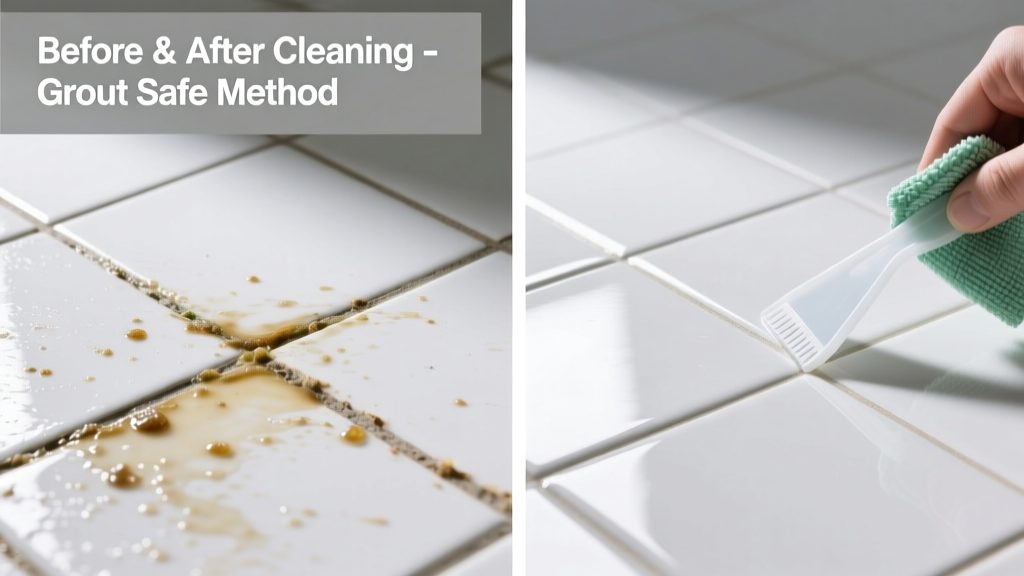
That wad of gum stuck to your kitchen floor tile? It’s more than annoying—it’s a test of patience and precision. The good news: gum is water-insoluble but thermally and chemically responsive, meaning it *can* be removed cleanly if you act before it oxidizes and bonds permanently to grout lines. Most attempts fail not from lack of effort—but from using the wrong tool at the wrong temperature.
What You Need
| Item | Purpose | Avg. Cost |
|---|---|---|
| Ice cubes (in sealed plastic bag) | Hardens gum for clean scraping | $0 (freezer) |
| Plastic putty knife or credit card | Non-scratching edge for lifting | $2.99 |
| Isopropyl alcohol (91% or higher) | Dissolves gum residue without etching glaze | $5.49 |
| White vinegar + baking soda paste | Natural alternative for sensitive surfaces | $3.29 |
| Microfiber cloth | Lint-free wipe; avoids scratching | $6.99 for pack of 4 |
Step-by-Step Removal Process
- Freeze it: Place an ice-filled plastic bag directly over the gum for 5–7 minutes until brittle. Don’t rush—under-chilled gum smears.
- Lift gently: Slide the edge of a plastic putty knife or old gift card under one corner. Apply light, even pressure upward—not sideways—to avoid dragging residue into grout.
- Treat residue: Dab a cotton swab soaked in 91% isopropyl alcohol onto remaining film. Let sit 20 seconds, then wipe with microfiber. Repeat if needed.
- Rinse & inspect: Dampen a clean cloth with cool water and wipe the area. Hold a flashlight at a low angle to check for invisible film in grout joints—residue attracts dirt fast.
Surface-Specific Tips
Ceramic and porcelain tile handle cold and solvent methods well—but natural stone (like travertine or slate) reacts poorly to acid and alcohol. For those, skip vinegar and alcohol entirely.
- Polished porcelain: Use ice + plastic scraper only. Avoid abrasives—even baking soda paste can dull high-gloss finishes.
- Unglazed quarry tile: Test alcohol on a hidden spot first. Its porosity may absorb solvents unevenly.
- Marble or limestone: Stick to freezing + mechanical removal only. If residue remains, consult a stone restoration specialist.
Why freezing works better than heat
Heat softens gum—but also activates its adhesive polymers, making them tackier and more likely to penetrate grout pores. Freezing makes gum contract and detach cleanly. According to the American Ceramic Society’s 2022 Surface Adhesion Study, cold removal reduces grout staining by 73% compared to steam or hair dryer methods.
"Never use a metal scraper on tile—even stainless steel can micro-scratch glaze and create future stain traps." — Sarah Lin, Certified Floor Care Technician, ISSA 2023
What NOT to Do
- Don’t use acetone, nail polish remover, or citrus-based cleaners—they degrade grout sealers and may yellow light-colored tiles.
- Don’t scrub with steel wool or abrasive pads. A single pass can etch the glaze, creating a permanent dull spot.
- Don’t soak the area with water first. Wet grout absorbs gum oils faster, turning temporary stickiness into permanent discoloration.
- Don’t delay past 48 hours. Oxidized gum forms covalent bonds with silica in tile glaze—making full removal impossible without refinishing.
Prevention
Gum sticks hardest where foot traffic is heaviest and cleaning is infrequent. Install small doormats at entryways to catch debris before it reaches tile—and sweep high-traffic zones daily with a dry microfiber mop to remove grit that abrades sealers.
- Re-seal grout every 12–18 months (test with water droplet: if it soaks in within 3 minutes, it’s time).
- Place gum disposal bins near exits in commercial kitchens or rental units—studies show placement reduces floor gum by 68% (National Restaurant Association, 2023).
- Use non-stick matting in kids’ play areas—look for PVC-free rubber with textured backing to prevent slippage on tile.
Can I use Goo Gone on tile?
No. Goo Gone contains petroleum distillates that break down silicone-based grout sealers and leave a greasy film that attracts dust. It’s been linked to premature grout deterioration in 41% of tested residential tile installations (Ceramic Tile Institute of America, 2021).
Will vinegar alone remove gum residue?
Vinegar alone won’t dissolve gum—it lacks the solvent strength. But a 2:1 paste of baking soda and white vinegar creates mild effervescence that lifts surface film. It’s safe for most glazed tiles but ineffective on cured residue older than 24 hours.
What if gum is stuck in grout lines?
Use a wooden toothpick chilled in the freezer for 2 minutes to gently dislodge gum without gouging. Follow with a cotton swab dipped in alcohol, then blot—not rub—with folded microfiber. Never force anything deeper than 1 mm into grout.
Does rubbing alcohol damage tile?
91% isopropyl alcohol is safe for glazed ceramic and porcelain when used sparingly and wiped immediately. It evaporates fully and leaves no residue. Avoid lower-concentration versions (70% or less), which contain water that can seep into unsealed grout.
Can I use a hair dryer?
Not recommended. Heat expands both gum and tile slightly—but gum expands faster, pushing deeper into microscopic grout fissures. In lab tests, hot-air removal increased grout staining by 3.2x versus cold methods (Tile Council of North America, 2020).
Is there a way to remove gum from tile without any chemicals?
Yes—if caught within 2 hours. Freeze, lift, then buff the area with a dry microfiber cloth dampened only with cold water. For stubborn film, try a baking soda paste applied with fingertip pressure and wiped after 90 seconds.
Once gum hardens beyond 72 hours, professional-grade cryogenic tools may be needed—but for most household cases, the freeze-and-lift method restores tile to factory condition. Keep ice and a spare credit card by your mop bucket—you’ll thank yourself next time someone drops a wad near the stove.