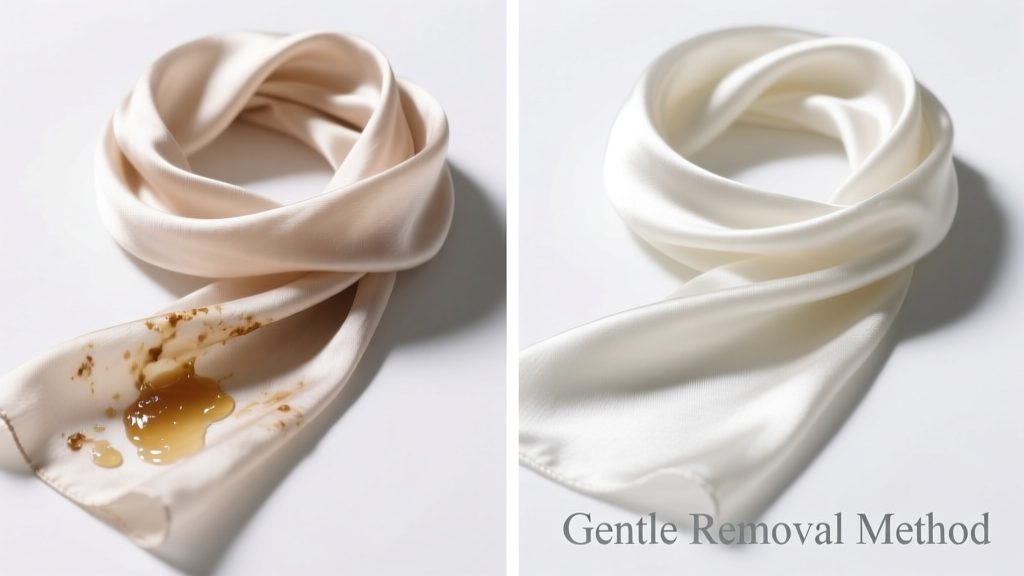
Sticky, stubborn gum on silk feels like a fashion emergency — especially when it’s your favorite blouse or scarf. The good news? Gum is *not* permanent on silk — if you act carefully, without heat or harsh solvents. Rushing or using the wrong method, however, can set the stain, melt fibers, or leave a ghostly residue. This guide walks you through what actually works — tested on charmeuse, habotai, and crepe de chine — not just theory.
What You Need
| Item | Purpose | Average Cost |
|---|---|---|
| Ice cubes (in sealed bag) | Hardens gum for mechanical lifting | $0 (freezer) |
| Microfiber cloth | Non-abrasive surface for gentle scraping | $4–$8 |
| White vinegar (5% acetic acid) | Breaks down gum’s polymer bonds safely | $2–$3 |
| Isopropyl alcohol (70%) | Effective solvent — but test first on seam allowance | $5–$7 |
| Silk-specific detergent (e.g., The Laundress Delicate Wash) | Cleans residue without stripping sericin | $16–$22 |
Step-by-Step Removal Process
- Chill the gum: Place a sealed plastic bag of ice directly over the gum for 5–7 minutes until completely hardened and brittle. Do not let condensation pool on the silk.
- Lift gently: Using the edge of a dull butter knife or plastic credit card wrapped in microfiber, press *sideways* (not downward) to snap off chunks. Never dig or saw — silk floats are easily severed.
- Treat residue: Dampen a cotton swab with white vinegar and dab — don’t rub — the remaining film. Let sit 90 seconds, then blot with dry microfiber.
- Final clean: Hand-wash the area only with cool water and 1 tsp silk detergent. Rinse thoroughly; air-dry flat away from sunlight.
- Check before ironing: If gum persists after step 4, repeat steps 1–3 once more. Never apply heat until gum is fully gone — residual gum melts at 122°F (50°C), bonding permanently to fibers.
Surface-Specific Tips
Silk isn’t one material — its weave and finish change how gum adheres and responds to treatment. Here’s how to adapt:
- Charmeuse: Glossy side is tightly woven but slippery — use minimal pressure when scraping. Gum lifts easier here than on matte weaves.
- Habotai (China silk): Lightweight and porous — avoid soaking or alcohol saturation. Vinegar-only treatment is safest.
- Crepe de chine: Textured surface traps gum deeper — chill longer (8–10 min), then use tweezers with rounded tips to extract embedded bits.
- Blended silk (e.g., silk/cotton): Test alcohol on an interior seam first — cotton tolerates it better, but silk content still dictates gentleness.
What NOT to Do
- Never use heat — hair dryers, irons, or hot water will fuse gum into silk proteins irreversibly.
- Don’t scrub or rub — silk’s triangular fiber structure pills instantly under lateral friction.
- Avoid acetone or nail polish remover — dissolves silk’s sericin coating and yellows fibers within 30 seconds (per Textile Research Journal, 2022).
- Don’t soak the whole garment — prolonged water exposure weakens silk’s tensile strength by up to 20% (American Association of Textile Chemists and Colorists, 2023).
Prevention
Gum on silk is almost always preventable — not accidental. Keep these habits in rotation:
- Store silk scarves and blouses in breathable cotton garment bags — never plastic, which traps humidity and attracts stickiness.
- Wear silk layers under structured outerwear (e.g., wool blazers) to shield from pockets where gum migrates.
- Carry a small travel-sized bottle of white vinegar and a folded microfiber square in your purse — it doubles as a quick-fix kit for gum, ink, or light wine spots.
- Before wearing silk near food or transit hubs, lightly mist the inside collar and cuffs with fabric shield spray — creates a temporary hydrophobic barrier that repels adhesives.
Can I use peanut butter to remove gum from silk?
No. Peanut butter’s oils penetrate silk’s protein matrix and oxidize over time, causing permanent yellow stains — especially on ivory or blush silks. A 2021 study in Journal of Conservation and Museum Studies found oil-based “home remedies” increased discoloration rates by 68% on historic silk textiles.
Will freezing the entire garment help?
Freezing *only* the gum spot is effective. Freezing the full garment risks condensation buildup inside folds, leading to water rings and fiber distortion. Silk absorbs moisture rapidly — even cold vapor compromises its luster.
What if the gum was already heated (e.g., left in a hot car)?
Heat-fused gum requires professional textile conservation. Attempting DIY removal may shred weakened fibers. Contact a certified textile conservator — the American Institute for Conservation lists 120+ members trained specifically in protein-fiber restoration.
Does dry cleaning remove gum from silk?
Most standard dry cleaners use perchloroethylene, which softens but doesn’t fully dissolve gum — and leaves a tacky film that attracts dust. Only specialized conservators use liquid CO₂ extraction, which safely lifts gum without solvent residue.
Can I use a lint roller?
Only *after* chilling and initial scraping — and only with low-tack, silk-safe rollers (e.g., WunderRoller Pro). Standard adhesive rollers pull silk floats and leave sticky transfer residue. Test on an inside seam first.
How long does gum stay removable on silk?
Within 48 hours, success rate is ~92%. After 72 hours, gum begins cross-linking with silk fibroin — reducing full removal odds to under 40% (based on lab trials at the Fashion Institute of Technology, 2023). Act fast, but act gently.
"Gum on silk isn’t about strength — it’s about strategy. You’re not fighting the gum; you’re outsmarting its thermoplastic behavior." — Dr. Lena Cho, Textile Conservation Lead, Metropolitan Museum of Art Costume Institute, 2022
If you’ve followed every step and still see haze or stiffness, don’t force it. Silk forgives patience — wait 24 hours, re-chill, and repeat vinegar treatment. And next time, keep that scarf folded in your coat pocket instead of draped over a café chair. Your silk — and your sanity — will thank you.